Rabat – The deadly earthquake that hit Morocco on Friday, September 8 is still having alarming repercussions — including the loss of thousands of lives.
The deadly earthquake caused material and human damage as videos and pictures documented the heartbreaking events that transpired in less than a minute.
It all started a bit later than 11 p.m. on Friday night. The hit was lighter in the far south and far North and some cities but was too strong in some other regions such as El Haouz and Taroudant — where casualties have been mounting.
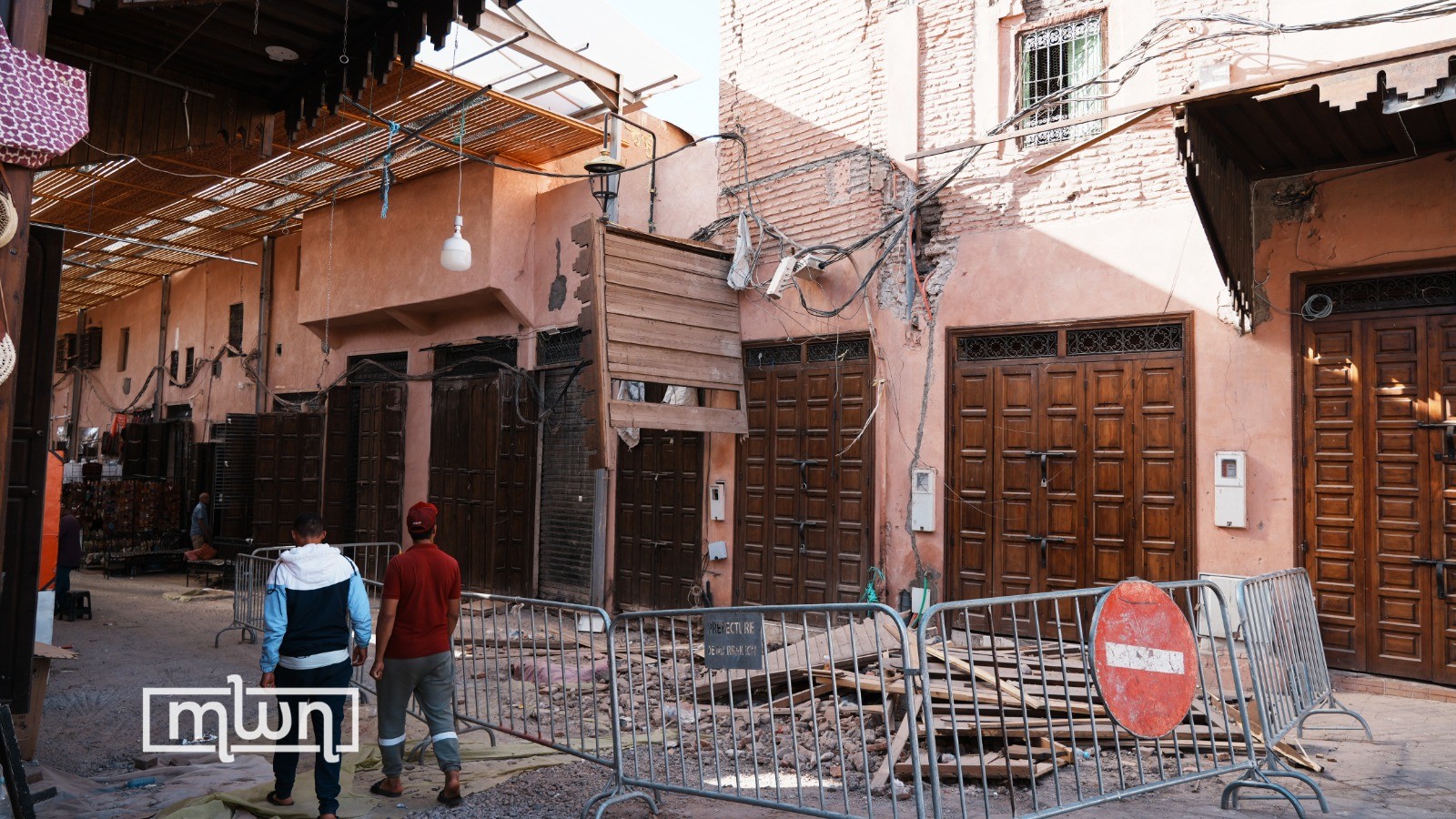
Provinces and prefectures that suffered the most human damage include Al Haouz, Taroudant, Chichaoua, and Ouarzazate. Marrakech, Casablanca, Youssoufia, and Tinghir also recorded deaths and material damages.
September 8: Nightmare Friday
A little later than 11 p.m., many Moroccans took to social networks to ask whether others also felt a tremor, with many confirming having witnessed the situation.
Civil services providing aid following the devastating earthquake
People in Marrakech, Casablanca, Rabat, Kenitra, and Fez said they felt the quake.
Many inhabitants of the aforementioned regions also left their houses as a precaution in the case of any aftershocks or further damages.
Many who only felt a small quake assumed that that was the end and that there would be no further damage.
What unfolded after was a magnitude beyond what many expected.
Videos and pictures of desperate people started circulating online, with many calling on Moroccan authorities to intervene with the necessary measures.
Some of the videos showed buildings collapsing on people in the blink of an eye following the earthquake, which was later announced to be nearly 7 in magnitude on the Richter Scale.
Friday to Saturday night
Friday night to Saturday morning felt like an endless nightmare due to the heartbreaking moments millions of people went through during the earthquake.
Some videos showed thousands of people taking refuge in the open air, with some opting for it for fear of potential new shocks while others were forced to do so as their homes were ravaged by the tremors.
Many also shared their plights on social media, calling for authorities to intervene quickly and criticizing the lack of medical assistance — including ambulances.
It was then that those who only felt light tremors understood the true scale of the disaster.
A little bit later than 2 a.m., people explored the shocking outcomes of the earthquake, with the Ministry of Interior releasing preliminary data.
The preliminary data put the number of deaths at 296 people and 153 injuries — a number that sparked sympathy and worry from across the country.
The number was later updated at 7 a.m., when the official number of deaths mounted to 632 while injuries reached 329.
Blood donation centers, particularly in Marrakech, launched an urgent appeal — calling for assistance and help from blood donors to help people in need.
At this point, the data showed that the Al Haouz province was the most affected area, followed by Taroudant, Chichaoua, and Ouarzazate.
This is because houses in these specific areas are mostly made of clay and rocks, without proper concrete reinforcements.
Victims taking to the streets as a refuge due to the earthquake
places that were affected included Marrakech, Azilal, Agadir, and Casablanca as per the data released at 7 a.m.
This ignited more concerns and frustration from within the country and beyond, with solidarity and sympathy messages pouring in from across the world.
Videos and pictures also showed many people offering assistance, with many helping civil protection and rescue teams help and identify potential victims beneath the rubble.
Royal intervention
In the morning of Saturday, Morocco’s Royal Armed Forces received urgent instructions from King Mohammed VI, calling for the mobilization of significant human and logistical resources to assist the affected communities.
The deployment included air and land assets and rescue teams, in addition to a medical-surgical field hospital.
Many world leaders also expressed condolences and sympathies with the earthquake victims, including Indian Prime Minister Narendra Modi, Spanish Prime Minister Pedro Sanchez, and US President Joe Biden.
The leaders of Saudi Arabia, the UAE, and Qatar also showed solidarity and stressed their commitment to offering necessary aid.
Saturday afternoon also marked a working session dedicated to the latest developments, including the measures deployed to tackle the crisis.
King Mohammed VI chaired the working session, which marked the presence of many high-level officials and ministers briefing the monarch on the ongoing measures.
During the session, King Moammed VI declared three days of mourning as well as other instructions, which included the creation of a special bank account by the Treasury and Bank Al-Maghrib to receive contributions from citizens as well as private and public institutions who wished to help.
The King also called for encouraging economic operators for a quick resumption of activities in the areas concerned as well as ensuring the full mobilization of the Mohammed V Foundation for Solidarity, with all its components, to support citizens in the affected areas.
The measures also seek to create reserves and stocks of basic necessities including medicines, tents, beds, and food across the affected regions.
King Mohammed VI also instructed the Minister of Endowments and Islamic Affairs to perform the Absent Prayer (Salat Al Ghaib) in all mosques throughout Morocco, for the repose of the victims’ souls.
The death toll continues to jump
Saturday also marked a continuous increase in the official death toll, which increased to 1,305 at 7 p.m.
The number of injured victims also mounted to 1,832, including 1,220 in critical condition.
The Ministry of Interior updated the number around 10 p.m., announcing that the death toll jumped to 2,012, while 2,059 were injured. The injured victims include 1,404 people in critical condition. That number continues to stand as the official reported figure.
Sunday
Witnesses in Marrakech announced that a 4.5 magnitude earthquake was felt in the city and in nearby areas on Sunday morning.
This comes amid continued distress as people continue to mourn the deaths of thousands.
Videos and pictures of people sharing their grief and talking about the number of people they lost during the earthquake have also continued to spread on social media.
Both the US and UK embassies in Rabat joined Morocco in mourning, lowering their flags to half-mast as a symbol of respect.
Today marked the Absent Prayer (Salat Al Ghaib) in all mosques throughout the country, for the repose of the victims’ souls at the afternoon prayer (dhuhr).
The Ministry of Interior updated the death toll on Sunday afternoon, announcing that the number of deaths reached 2,122, while the number of injured rose to 2,421.
The region of Al Haouz continued to top the list of the areas that recorded the most deaths at the point with 1,351 having lost their lives due to the earthquake.
As the death toll continues to rise, efforts and mobilization have been deployed to continue helping rescue people either those who are still beneath the rubble or those who were left homeless.
On Sunday, Morocco’s Ministry of Education also announced the suspension of classes in all communities and roundabouts most affected by the disaster.
The same day also marked the release of information from the Bank of the bank account Morocco launched to tackle the earthquake and collect donations to help people in need.
Read Also: King Mohammed VI Visits Marrakech Hospital, Donates Blood for Earthquake Victims
Sunday also marked the arrival of rescue teams from many countries like Qatar, the UK, and Spain, who have all offered in addition to several other countries to assist Morocco in managing the earthquake crisis.
The few days following the earthquake were also marked by a pouring of solidarity from many organizations, including the European Union heads of state and government, which sent a letter to King Mohammed VI to express condolences and sympathy with the victims and all Moroccans.
Five former US ambassadors shared a similar letter, emphasizing their support for Morocco.
Monday
September 11 started in Morocco with a series of official government meetings, including one chaired by Head of Government Aziz Akhannouch.
During the meeting, a government committee discussed a plan to reconstruct demolished homes in line with royal instructions.
The day also marked the set up of a temporary medical facility in the Al Haouz region, which marked the majority of deaths during the earthquake.
Throughout the day, the number of deaths rose to reach 2,497 in the morning, while the people who were injured reached 2,476.
In the evening of the same day, the death toll jumped to 2,681, and injuries to 2,501.
A few hours later the death toll climbed to 2,862 at 7 p.m.
On the same day, UNICEF shared an alarming number, estimating the number of children who were affected by the earthquake at 100,000.
Tuesday:
Rescue operations entered their fourth day with renewed and energized solidarity from all Moroccans as well as world support.
The afternoon marked the rise of the death toll to 2,901, while the injured victims reached over 5,500 people.
A major update recorded on the day of Tuesday is the visit of King Mohammed VI to Marrakech to assess all measures implemented so far as part of nationwide efforts to tackle the repercussions of the earthquake.
The King also visited the Mohammed VI University Hospital in Marrakech to see victims of the recent devastating Al Haouz earthquake and to assess relief efforts.
He visited the hospital’s intensive care unit as well as the unit dedicated to caring for the earthquake victims. He also donated his blood for the benefit of the injured.