
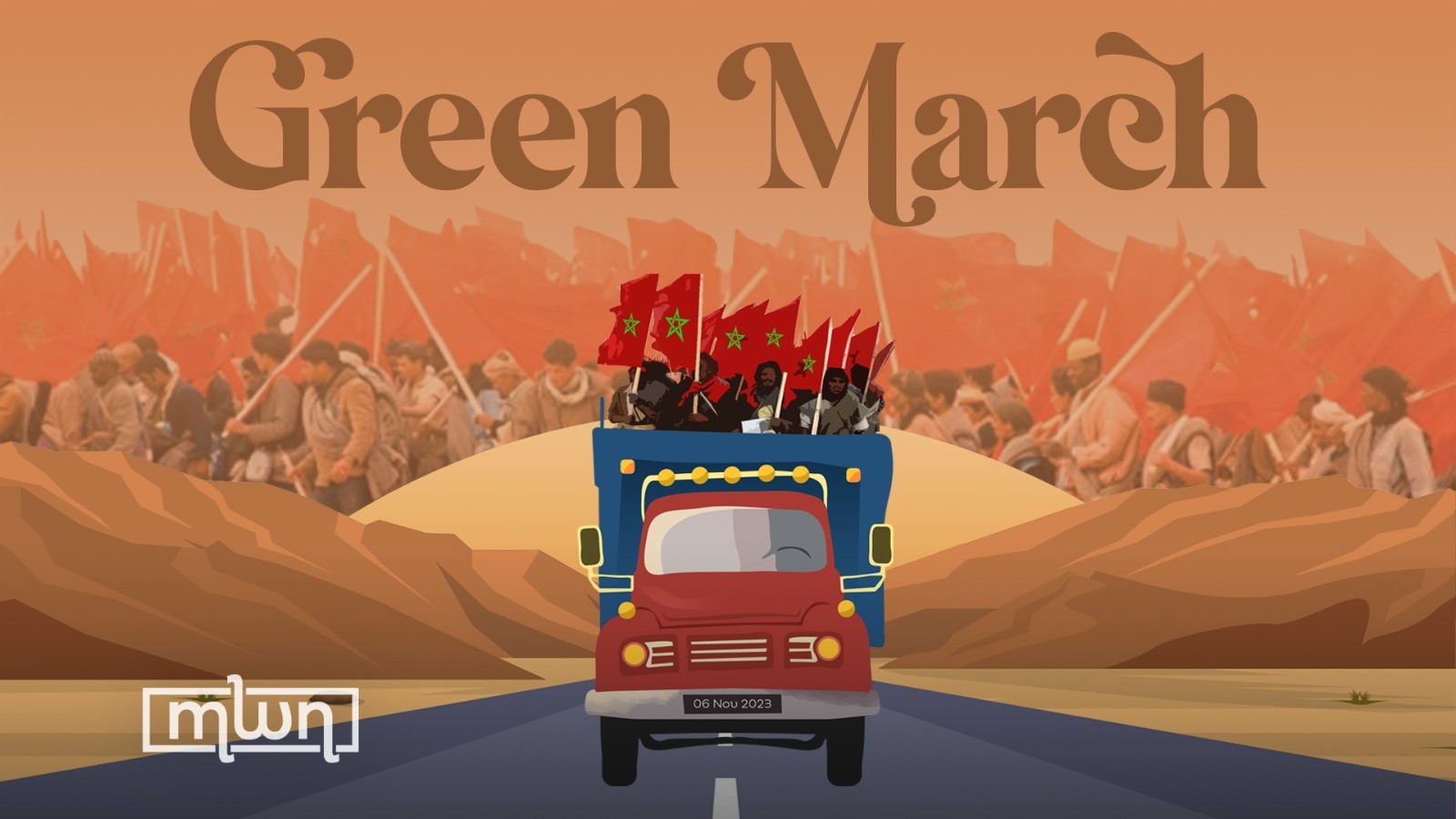
Rabat – The Green March stands as an extraordinary chapter in the history of Morocco and the broader context of North Africa. This event unfolded in 1975 and symbolizes the determination, unity, and peaceful resolve of the Moroccan people.
More than just a historic milestone, the Green March was a testament to Morocco’s post-colonial pursuit of self-determination. This historic event, which transpired on November 6, 1975, is commemorated annually as a national holiday in Morocco on the same date.
Historical background
Following its independence from France in 1956, Morocco consistently asserted its claim to the Spanish Sahara, now known as Western Sahara. This claim was rooted in the historical allegiance of local nomadic populations in the region to the Moroccan monarchy.
Moroccans taking part in the Green March
In 1973, King Hassan II adopted a more assertive stance in advocating post-colonial Morocco’s quest for completing its decolonization by reuniting with its southern provinces. To achieve this ambition of national reunification, the Moroccan monarch notably pledged to collaborate closely with the leaders of Algeria and Mauritania.
This shift in policy was well-received by the Moroccan public, while the United Nations exerted pressure on Spain to expedite the decolonization of Western Sahara. A series of liberation movements then emerged in the region with the backing of Morocco, Algeria, and Mauritania.
On October 16, 1975, the International Court of Justice in The Hague issued an advisory judgment that established Sahrai tribes’ historical links to the Moroccan monarchy and declared that the region had the right to self-determination. 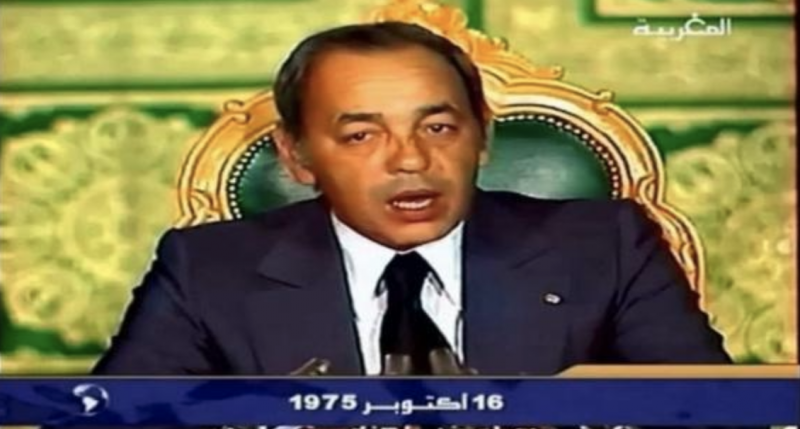
King Hassan II delivering the Green March call-to-action on October 16, 1975
In response to this announcement, on the same night, King Hassan II of Morocco made a nationwide radio broadcast in which he declared his intention to organize and lead a “Green March” with the aim of “reclaiming” the Western Sahara region as part of Morocco’s pre-colonial territory.
“We have to do one thing dear people and that is to undertake a peaceful march from the north, the east, the west to the south. It behooves us to act as one man in order to join the Sahara,” King Hassan II said in his speech.
Morocco discreetly positioned troops along Western Sahara’s northwest region on October 31 to discourage potential external involvement from other African nations.
The fruit of a unique royal leadership and vision
The late King Hassan II addressed his people on November 5, 1975, in his renowned speech: “… Tomorrow Inshaa’Allah (if God is willing), you will break through the borders. Tomorrow, Inshaa’Allah, the Green March will be launched. Tomorrow, Inshaa Allah, you will step on a part of your territory and you will touch the sand of your sands and you will embrace a land of your beloved country…”
Simultaneously, in the southern city of Tarfaya, a prominent assembly of volunteers from various regions of Morocco eagerly congregated, awaiting the signal from King Hassan II to commence the march for the liberation of the Moroccan Sahara from Spanish colonial rule.
On November 6, King Hassan issued the signal to commence the march, and the Moroccans who had assembled in southern Morocco proceeded to enter the Western Sahara region.
Guided by King Hassan II’s leadership, a staggering 350,000 Moroccans participated in the Green March, a non-violent demonstration opposing the Spanish presence in the Western Sahara region.
Ahead of the march, King Hassan II had specified that 306,500 of the volunteers would be drawn from the general public, with the remaining 43,500 consisting of local and provincial officials as well as other government employees.
The participants carried portraits of King Hassan II, the Qur’an, and flags of Morocco, Jordan, the United States, and Saudi Arabia. The name “Green March” was chosen due to the religious significance of the color green, representing Islam.
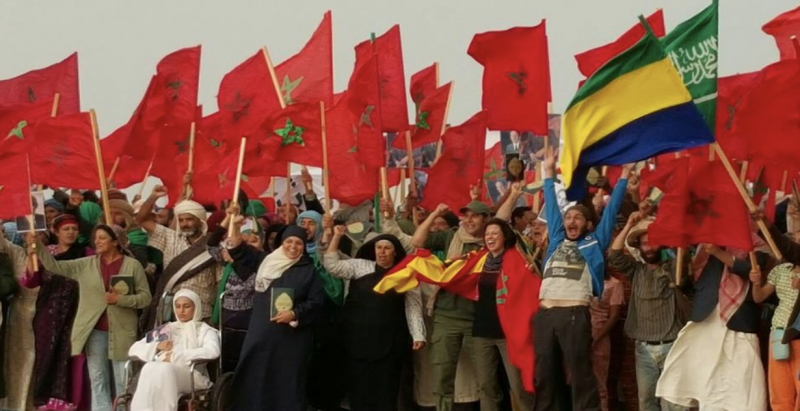 Moroccans taking part in The Green March on November 6, 1957
The significance of the march
The Green March was a symbolic and assertive move by Morocco to assert its historical claim to the Western Sahara region as part of its pre-colonial territory. It effectively led to Spain’s agreement to transfer administrative control of the Western Sahara region, thereby marking a defining moment in restoring the territorial integrity of Morocco.
As Moroccans celebrate this significant event annually, they pay tribute to their country’s enduring spirit and unity, reflecting on the past while considering the challenges and opportunities that lie ahead. A symbol of Morocco’s historical legacy and its commitment to a just and lasting solution for the Western Sahara region, the Green March remains a cornerstone of national pride and a topic of international significance.
As Morocco commemorates this year the 48th anniversary of this unique chapter in the country’s ongoing quest to fully recover its southern provinces, memories of this momentous march toward full-fledged decolonization evoke deep patriotism and pride among Moroccans. In this sense, the commemoration of this historic march is a poignant celebration of Morocco’s triumphant endeavor to reclaim its southern territories.
Indeed, as a uniquely significant chapter in Morocco’s rich history, the Green March remains a perpetual source of inspiration and collective memory for generations of Moroccans. It vividly underscores the potency of peaceful determination in the pursuit of justice, leaving an indelible mark on the Moroccan nationalist imaginary.
This annual observance not only reaffirms the cherished values of unity and sovereignty but also signifies the profound connection between Moroccan monarchs and their people. It also provides an opportunity to reflect on the enduring importance of this event, emphasizing the link between Morocco’s past, present, and future.