
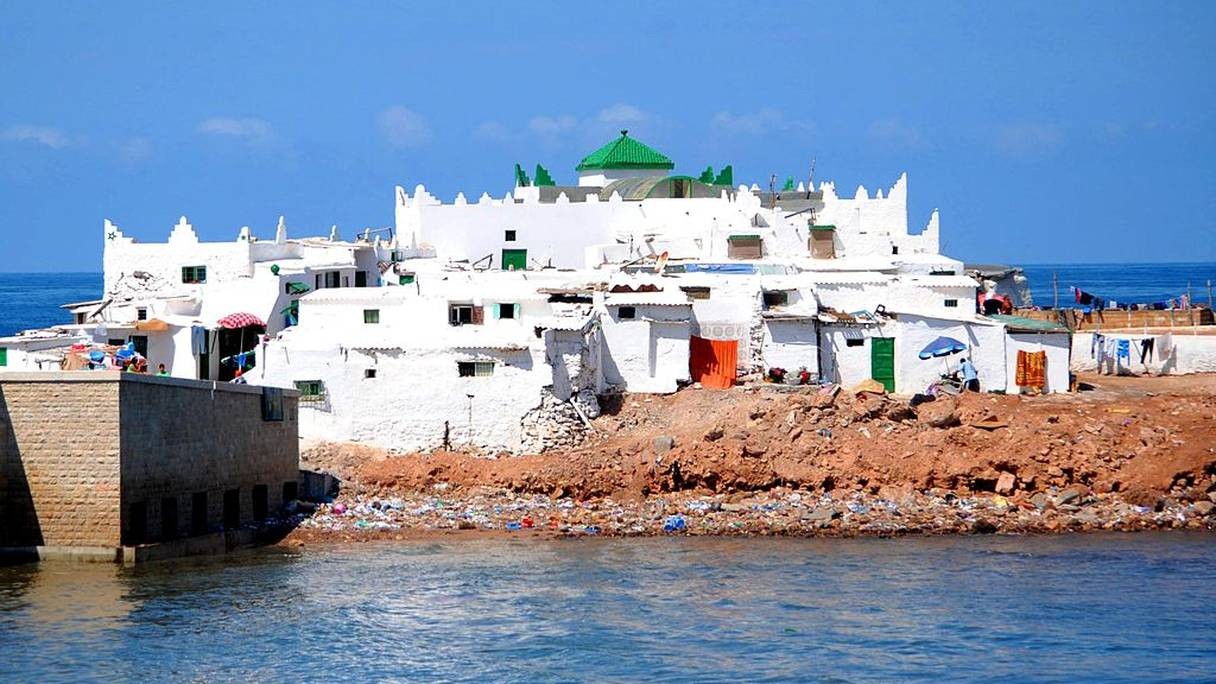
Rabat – Casablanca authorities have executed an administrative order to demolish unauthorized dwellings adjacent to the Sidi Abderrahmane Mausoleum in Aïn Diab. The decision, implemented at the crack of dawn on Friday, has sparked a heated debate among Moroccans.
The wilaya of the Casablanca-Settat region had issued an order ten days prior for occupants to vacate the premises immediately.
The targeted area had long been associated with dubious practices, including networks of charlatanism and sorcery, particularly by fortune tellers. Recent social media campaigns called for the eviction of these occupants.
Wali of the Casablanca-Settat region Mohamed Mhidia had previously directed the demolition of random constructions in the vicinity. However, the mausoleum itself, with its historical and cultic symbolism, remains untouched.
In recent weeks, local authorities in Casablanca have undertaken various operations to reclaim illegally occupied public spaces across different districts of the city, targeting unauthorized constructions.
Many Moroccans applauded the move, citing the need to reclaim public spaces and fight superstition. Some even called for the demolition of the mausoleum itself, saying it goes against the teachings of Islam.
In Islam, seeking assistance from or making supplications to deceased individuals, along with the belief in their ability to bring harm or benefit, is considered a major form of shirk, the sin of associating partners with Allah.
Such practices are seen as a serious violation of Islamic monotheism, as they go against the fundamental concept of Tawhid, the oneness of God.
Meanwhile, others asserted that the mausoleum holds historical significance and cultural value for Morocco, with many arguing that destroying such a site goes against the preservation of the country’s heritage.
Who is Sidi Abderrahmane?
The mausoleum is located on the rocky island of Sidi Abderrahmane, just off the coast, in the Ain Diab neighborhood.
Legend has it that Sidi Abderrahmane was a saintly figure from Baghdad in the 19th century. Seeking solitude and connection with the sea and nature, he chose to reside on the island.
The saintly man lived a devout and solitary life, spending his days and nights in prayer. His deep reverence for nature led him to forgo conventional shelter.
Over time, Sidi Abderrahmane’s reputation for generosity and kindness spread, prompting the residents of Casablanca to build a sanctuary for him.
Despite their efforts to provide him with a dwelling, Sidi Abderrahmane continued to sleep outdoors, turning his abode into a welcoming space for pilgrims.
The mausoleum has become an iconic symbol, attracting visitors who seek spiritual solace and connect with Sidi Abderrahmane’s legacy.