
 Join on WhatsApp
 Join on Telegram
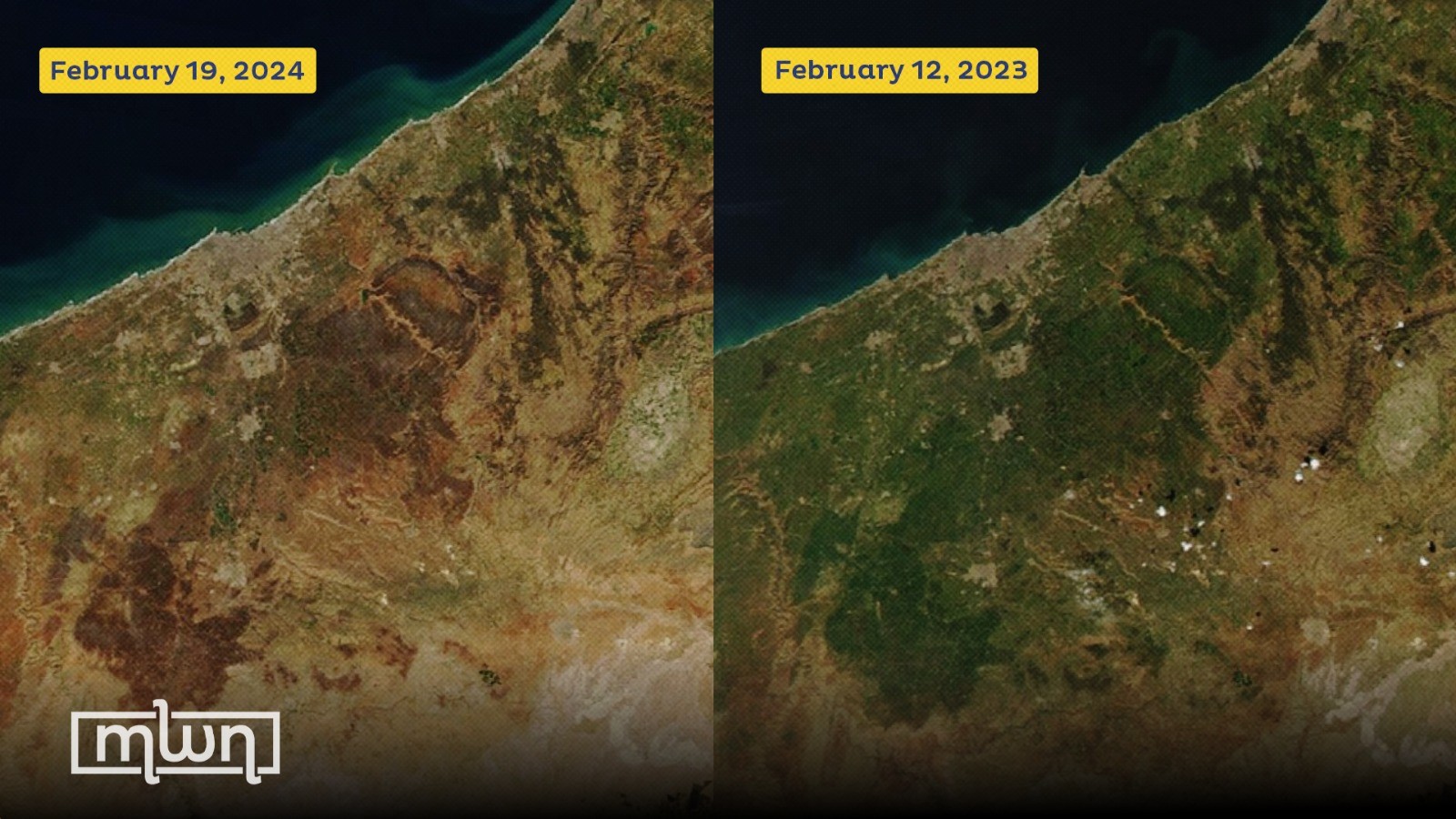
Rabat – Recent satellite observations by NASA’s Earth Observatory have captured the severity of the drought crisis gripping Morocco, comparing images from February 2023 and February 2024.
Released on February 19, images captured by the Moderate Resolution Imaging Spectroradiometer (MODIS) on NASA’s Terra and Aqua satellites showed the stark transformation of Moroccan landscapes around the Casablanca region.
“Satellite observations of the North African country show that croplands and wildlands that are normally green and lush in the rainy winter months are instead parched and brown, and reservoirs that once brimmed with water are nearly empty,” the report said.
While Morocco suffered from drought in winter 2023 as well, “the situation worsened in 2024,” according to the report.
It noted that Moroccan officials have deemed the situation “disastrous” amid a concerning 70% reduction in rainfall over the past few months compared to average years.
The Global Drought Observatory’s analysis pointed to a “prolonged” rainfall deficit exacerbated by unprecedented heat. This has amplified the strain on vegetation and water resources.
The report shared alarming data on the state of Morocco’s reservoirs, with the second-largest reservoir, Al Massira Dam, plummeting to a mere 1 to 2% of its capacity in February 2024.
Read also: Drought: Morocco’s Water Restrictions Extend to Hammams, Car Washes
Morocco’s reservoirs stood at a concerning 25% capacity in mid-February, a significant decline from the previous year’s 32%.
Farmers are particularly bearing the brunt of the dwindling water reserves as they have been forced to reduce planting sizes and water usage for irrigation.
Recent observations from the AGMET Earth Observation Indicators, a tool developed by NASA Harvest and GEOGLAM, indicated a notable decline in the health of winter wheat crops in northern Morocco.
A recent report by the European Union’s Joint Research Council (JRC) warned about the impacts of the drought crisis in Morocco and the wider Mediterranean Region. It noted that the six consecutive years of drought that Moroccan has witnessed resulted in “critically” low levels of water in reservoirs.
In response to the crisis, Moroccan cities have recently implemented strict water-saving measures, including restrictions on activities such as car washing, lawn irrigation, and public baths and spas.