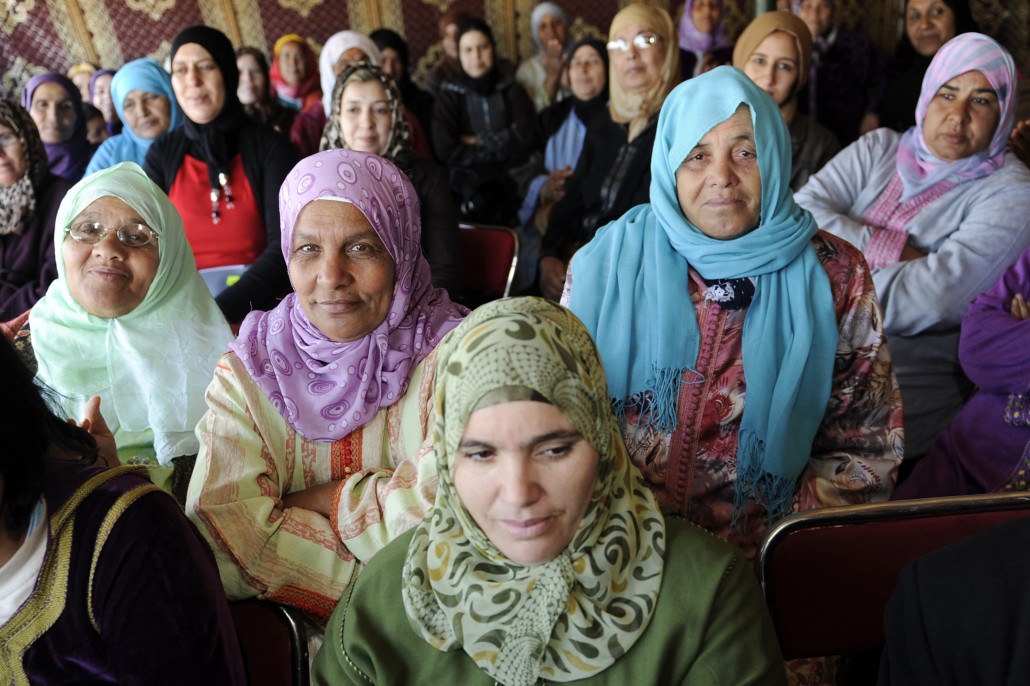
Rabat – Morocco secured the 114th place in a global ranking for women’s safety 2024 from the Georgetown Institute for Women, Peace, and Security (GIWPS).
The country scored 0.637 on the index scale, which ranges from 0 to 1. The index assesses the status of women, their rights, and their contributions to peace and security across 177 nations.
It comprises indicators such as education, perceptions of security, parliamentary representation, maternal mortality, legal protections, and proximity to armed conflicts.
Compared to other Arab countries, Morocco takes 10th place, trailing behind the United Arab Emirates, which ranked first, followed by Bahrain, Kuwait, and Saudi Arabia.
Meanwhile, Morocco outperformed other regional countries such as Algeria, Libya, and Lebanon in the rankings.
Morocco scored well in education, financial inclusion, and mobile phone usage, while also making strides in parliamentary representation and legal discrimination. However, challenges persist in areas like domestic violence and political security.
On the global level, Denmark emerged as the leader in women’s safety for 2024, with Switzerland, Sweden, Finland, and Iceland following closely behind. On the other end of the ranking, Afghanistan landed at the bottom of the list.
While Morocco has made significant strides in recent years to promote women’s rights, the country continues to lag behind. Women in Morocco are still three times less likely to enter the labor force, putting them at a structural social and economic disadvantage.
The report, issued by the Higher Commission of Planning (HCP), showed that in 2022, 73% of the 15 million active population outside the labor force were women.
HCP data further indicates that a sweeping 80% of Morocco’s female population of working age remains outside the labor market.
Low female labor participation rates have long been a problem in Morocco. In fact, Morocco is the only country in the Middle East and North Africa (MENA) region where the rate of female labor participation has been on a gradual decline in recent years, World Bank data points out.
Read Also: Women in Morocco Still 3 Times Less Likely to Enter Labor Force