


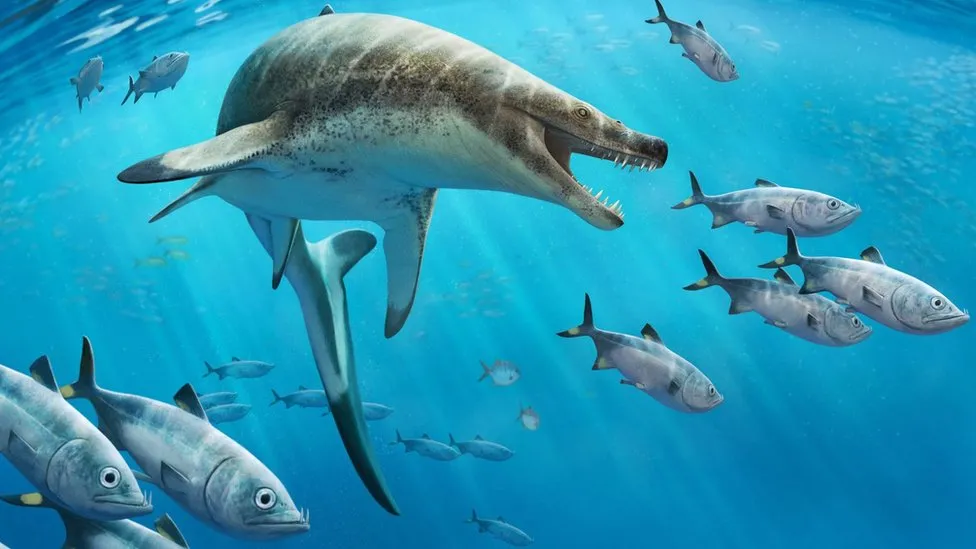
Rabat – Scientists have unearthed in Morocco the fossil of a “nightmarish” sea lizard; an orca-sized predator that lived in ancient oceans some 66 million years ago.
The creature, scientifically named Khinjaria acuta, measured a staggering 8 meters in length, boasting dagger-like teeth and a jaw capable of delivering a formidable biting force.
Led by Nick Longrich from the University of Bath in England, the research team found a skull and other skeletal remains found in a Moroccan mine. Longrich described the species as possessing “a demon’s face and teeth like knives,” according to a BBC report.
The reconstruction image of the Khinjaria acuta shows the sea lizard’s jawline and razor-sharp teeth. Its name was derived from the Arabic word for “dagger” and Latin for “sharp.”
Belonging to the family of giant marine lizards known as mosasaurs, Khinjaria acuta was among the apex predators that dominated the Atlantic Ocean during the late Cretaceous period.
These ancient behemoths coexisted with renowned dinosaurs such as Tyrannosaurus rex and Triceratops.
Longrich remarked on the unprecedented diversity of marine life during this period, highlighting the presence of numerous top predators that roamed the seas.
The creature went extinct in the same event that led to the extinction of all mosasaurs as well as dinosaurs.
Researchers say that their extinction opened the seas up for whales, seals, and fish including swordfish and tuna. However, in modern ocean food chains, there are less apex predators.
“There seems to have been a huge change in the ecosystem structure in the past 66 million years,” Longrich said.
He continued: “Whether there’s something about marine reptiles that caused the ecosystem to be different, or the prey, or perhaps the environment, we don’t know.”




