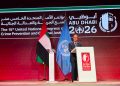
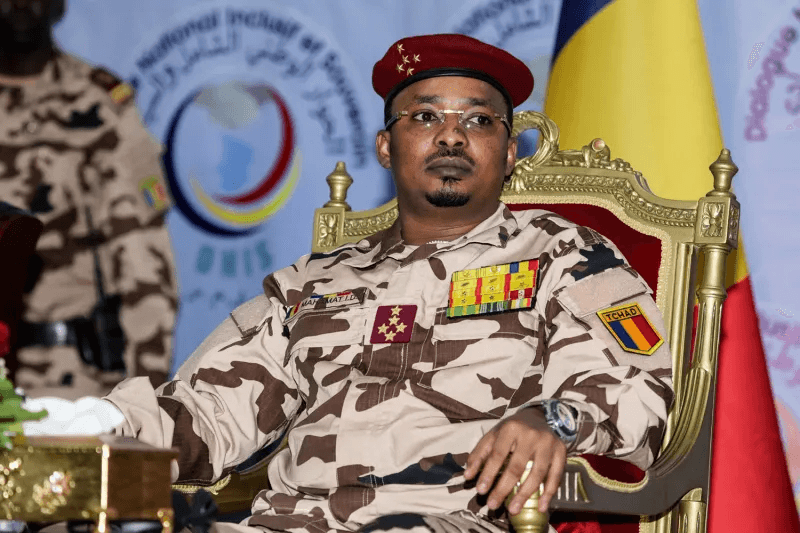
After a three-year transitional presidency, Mahamat Idriss Déby Itno, elected in the presidential election of May 6, was officially sworn in on May 24 in N’Djamena, in the presence of many national and international dignitaries.
Chad is a pivotal country in the geopolitics of the Sahel with a population of more than 17 million, surrounded by conflict zones in Libya, Sudan, the Central African Republic and the Lake Chad region. The country is facing socio-economic problems, internal tensions and inter-ethnic relations in addition to the impact of climate change (drying up of Lake Chad).
The recent wave of coups in the Sahelian states, as well as the outbreak of a civil war in Sudan in April 2023, have made Chad an island of stability in the vast Sahel, and one of the few reliable allies for Western powers. Chad also prides itself on being the first country in the region to experience political transitions.
Since the death of its first president François Ngarta Tombalbaye in 1975, Chad has witnessed the first peaceful transfer of power, but this achievement will have to be consolidated by providing the country with strong institutions and an independent and multi-confessional professional army loyal to the Republic of Chad and its institutions (such as the Republic of Senegal).
Mahamat Deby has shown signs of democratic openness, launching negotiations with the opposition and civil society, and allowing several long-time dissident activists, such as Abel Maina, Makaila Nguebla, Tahirou Hissein Dagga, and Habib Ben, to return to the country after years of exile. The president also initiated a national dialogue that resulted in a new constitution.
The recent presidential elections of May 6 are of paramount international importance due to their implications for political stability and regional security in Sahel and West and Central Africa. Mahamat Deby, son of the late President Idriss Deby, won the election with 61% of the vote, concluding a three-year transition to civilian rule after the 2021 military coup. The outcome of this election not only shapes Chad’s future, but also has critical consequences for the stability and geopolitical dynamics of the entire Sahel region.
Republic of Chad’s Regional Influential diplomacy
In the heart of Africa’s Sahel region, Chad’s foreign policy, under the leadership of President Idriss Deby Itno, drew significant regional and international attention. Deby, who ruled the country for over three decades until his death in 2021, skillfully navigated domestic stability, regional security, and international alliances.
The late president tamed several neighboring countries thanks to his ingenuity and skill; during his rule Chad recorded several successes on the diplomatic level, in particular the fight against terrorism and positioning in several regional and international organizations. It should be noted that two Chadian diplomats preside over the destinies of the African Union and the Organization of Islamic Cooperation as well as former Secretaries General of the Community of Central African Countries CEMAC, the Presidency of the Central Bank of Central Africa, hosts the headquarters of CENCAD since 2020, role in the C4 Cotton group at the WTO, obtaining a non-permanent seat on the Security Council in 2014-2015).
The Domestic Security/External Security Nexus
Like his father, Mahamat Deby’s foreign policy focuses on security, seeking to ensure that Chadian rebel movements could not use neighboring countries as rear bases (Sudan, Libya, Central African Republic).
To this end, he has strengthened ties with President Faustin-Archange Touadera in the Central African Republic and with Marshal Khalifa Haftar in Libya, as well as abandoning the policy of neutrality vis-à-vis the protagonists in Sudan by supporting the “Rapid Intervention Forces” of Hamdan Dagalo alias Hemedti. These closer ties have allowed Chad to conduct military operations against rebels in the Central African Republic and southern Libya.
He has therefore continued to position Chad as a pivot in the fight against terrorism in the Sahel. Indeed, the Chadian army has been actively engaged in operations against militant groups such as Boko Haram and Al-Qaeda in the Islamic Maghreb (AQIM), earning it a reputation as a key ally in multinational counterterrorism efforts. The country’s participation in the Multinational Joint Task Force founded on 21 March 1994 to combat organized crime in the Lake Chad region and in the G5 Sahel are eloquent examples of the significant role played by Chad in regional security efforts.
With his strategy of “Military Diplomacy,” late President Idriss Déby solidified Chad’s influence in regional affairs, establishing it as a pivotal player in conflicts across Central Africa and the Sahel. Chad’s reputation as a primary source of skilled soldiers and officers for peace missions and ad hoc coalitions against terrorism further accentuated its significance.
Strategic Alliances with Western Powers
Chad has maintained close ties with Western powers, including France and the United States, leveraging these relationships to strengthen its military capabilities and improve internal security but not unfortunately its economic development. The French military presence in Chad, as part of Operation Barkhane and the support of the United States and the EU through military aid and training, provided crucial support to the regime and contributed to the country’s international legitimacy.
Mahamat Déby has started a new diplomatic game, while positioning himself in the Western camp and preserving his relationship with France, he has initiated new partnerships in terms of security and economy with the United Arab Emirates, Hungary, Turkey, China which has canceled part of the debt, and more recently, Russia, although the contours of this latest agreement remain unclear. He used his trip to Moscow in January 2024, described as a “historic act of sovereignty and independence”, not only to send a signal to the West but also to reassure domestic public opinion (rise of anti-Western sentiment).
He is also said to have deliberately spread doubt that he would maintain security arrangements with the West. In this regard, its Chief of military Staff asked the United States on April 4, 2024, to cease its activities on Chadian soil for technical reasons (lack of supporting documents).
The Kingdom of Morocco and the 5th Chadian Republic: what prospects?
Relations between the Kingdom of Morocco and Chad are centuries old; the two countries maintain ties of brotherhood and cooperation that continue to strengthen and extend to various fields, in accordance with the High directives of the two Heads of State.
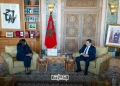
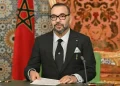
In May 2023, H.M King Mohammed VI sent a congratulatory message to Mahamat Idriss Déby Itno on the occasion of his election and sent the speaker of the House of Representatives (second personality in the Kingdom’s protocol) to represent him at the inauguration ceremony that took place on May 24 in N’djamena.
It should be noted that Chad withdrew its recognition of the so-called “SADR” in March 2006, and in 2022 it opened a consulate general in Dakhla in the Moroccan Sahara, thus marking its commitment to Morocco.
The two countries have concluded numerous agreements covering areas such as education, health, agriculture, trade, etc.
With regard to training, Morocco continues to grant scholarships to Chadian students through AMCI and has played an important role in training more than 1000 Chadian executives, including 200 Chadian imams trained at the Mohammed VI Institute for the Training of Imams, Murshidines and Murchidates (kind of ecclesiastics). In addition, Morocco has built a mosque in N’Djamena, strengthening the spiritual and religious ties between the two Sunni countries.
Morocco is also a strategic partner for Chad to support the transformation of Chadian economy, notably the agro-pastoral activities and the cotton sector; the Moroccan supply of fertilizers and expertise in agro-industrial development and in the leather and by products sector would be of great usefulness; joint ventures in these areas could benefit both parties (Business Forums and targeted missions are recommended).
The most important turning point in bilateral relations will certainly be the initiative of King Mohammed VI to allow the countries of the Sahel, including Chad, to access the ocean via Moroccan ports in the Sahara and the opening of a corridor for Chad to access the Atlantic.
Moreover, Chad welcomed and adhered to the Royal initiative by participating in the ministerial meeting held in Marrakech in December 2023, its Minister of Communication government spokesman said on November 25, 2023 that:
“More than ever in this context of unrest, more than ever in this context where the routes to the sea are closing against Chad, the government will seize this opportunity of the open route to the Atlantic Ocean through Morocco to be able to trade better with the rest of the world and particularly with the Kingdom.” The Royal initiative comes at the right time with the new approach of the newly elected President who intends to give primacy to the economic development and well-being of the population of his country Chad is also well suited to play a cardinal role in this initiative, in particular the aspect of securing the route of the corridor to the Atlantic. (Chad’s foreign trade is handicapped by landlockedness),
Challenges and way forward
Despite Chad’s apparent stability, many challenges remain that could potentially erode it in the future; internal political tensions, ethnic and social divisions, as well as complex geopolitical relations in the region, are all sources of instability facing the country.
The system of governance is at the center of Chad’s challenges, indeed the system bequeathed by the late President Driss Deby Itno is a kind of “absolute Republican Monarchy” which is based on clientelism and the banishment of any opposition even within his clan the Zaghawa.
According to some studies, Chad inherited a system of political control typical of centralized states with little capacity to provide services and control territory, and which relies on the support of influential and often armed local elites capable of maintaining order at the local level. (A system described by Max Weber as “patrimonialism” and qualified by J Waterbury as a segmentary system).
Unlike other political systems in sub-Saharan Africa, Driss Deby has added his personal touch to this system by instrumentalizing foreign policy and in particular “military diplomacy” and the fight against terrorism in the Sahel region to ensure its stability and longevity, sometimes pushing Western countries to disregard the overstepping in the field of public freedoms and human rights.
What are the other drivers of tension and instability?
-
According to some experts, the latest changes in the Chadian army have exacerbated tensions within the political system because of the place acquired by members of non-Zaghawa groups, in particular the Goranes and Arabs loyal to Mahamat Déby in the army.
-
Chad’s position in the Sudanese conflict and support for the “Rapid Intervention Force” Hamdan Dagalo alias Hemedti (logistical support to the Rapid Support Forces from Chadian territory) is another major source of tension; disputes reportedly broke out within the Zaghawa clans. The eastern provinces, meanwhile, are under unprecedented pressure due to the arrival of more than 600,000 Sudanese refugees.
-
Social and community tensions remain high in Chad, and the measures taken by the transitional government to reduce the impact of the socio-economic crisis have not eased social discontent.
-
Inter-communal clashes: The south and center are plagued by conflicts between farmers and herders, exacerbated by long-standing ethnic and identity divisions, leading to the resurgence of separatist claims.
-
According to some experts, the new alliances initiated by the new president could fuel divisions between pro-Russian and pro-Western elements of the regime, while increased tensions could arise between Chad’s different ethnic and community groups, exacerbating the social and political fissures already present.
The Inauguration Speech, a strong signal for change or a Ceremonial Gesture?
In his inauguration speech, President Mahamat Driss Deby said he would seek to turn the page on the past and change the development model of his country, the 5th Republic (i.e, the fifth President rule).This, he said, would be marked by the seal of good governance and a revolution of mentalities and behaviors.
“Harmful practices that undermine quality, yield and performance must be fought with strength and firmness,” he pledged.
More than half of the speech was devoted to the issues of human and economic development in Chad, announcing strong measures such as the dedication of 70% of public spending to improving access to education, water, health, energy and food sovereignty and decent housing for the population.
This is indeed a change of course, keeping in mind that under the reign of his father most of the state budget was devoted to the maintenance of the army and security forces in order to put an end to political instability and insecurity.
Despite its efforts to secure a large part of the country and guarantee its stability, thus facilitating the exploitation of oil and gold resources in the pacified regions, as well as the modernization of transport and communication infrastructure, the father’s rule suffered from important social deficits; access to education, health, water and electricity remained largely unsatisfactory, as did employment opportunities for youth.
The other strong point of the inauguration speech is the announcement of the implementation of the great project of decentralization, so important and cardinal for the governance of a vast, multi-ethnic and multi-religious country, in order to bring the administration closer to the governed. “Legislative, senatorial and local elections must be organized as soon as possible,” he added.
Last but not least, he conveyed concise yet powerful messages to the outside world, declaring:
“Chad believes in the virtues of an active and mutually beneficial partnership, which will be the lifeblood that fuels our diplomacy. Also, the sovereignty of the Chadian people will never be negotiable, the interest of Chad will be defended with strength and conviction. It will be above all other considerations. I am convinced that Chad and Africa must be masters of their destiny.”
It’s worth noting that the new occupant of the Presidential Palace finds himself ensnared in a challenging dilemma since he inherits a complex political system marked by a mixture of strategic alliances, military commitments and internal challenges that require imperative changes (sort of two-level game). The President has to navigate in a new geopolitical environment imposed by the changes of several regimes in the sub-region and the entry of new international actors, the future trajectory of the country remains uncertain as to its role in regional stability and its alliances with the West.
But will the 5th Chadian President change its paradigm by abandoning the all-security approach and working to change the governance and development model?
It is vital for President Mahamat Deby to achieve national reconciliation, promote inter-community dialogue, strengthen social cohesion in order to prevent conflicts and address the root causes of instability, in particular by addressing economic, social and spatial inequalities, encouraging transparent and inclusive governance, and strengthening institutions. The example of Rwanda is the closest benchmark for Chad is an edifying example of a country that has managed to get out of the spiral of violence and instability and that has carved out a virtuous circle based on the promotion of development and the well-being of its population while continuing to play a role at the regional or even continental level.
In this vein, the 5th President’s inauguration speech augurs apparently a paradigm shift at least internally (primacy of economic and social development and good governance), on the foreign policy side, recent diplomatic behavior suggests a smooth change with a kind of multi-alignment that favors the win-win partnership that is most beneficial to the interests of Chadians.
The reform of the political system is an unfinished business; it would still be necessary to broaden the recruitment geographical and ethnic scope of elites and to establish a political system that allows the rotation and circulation of the elites in power, if only at the level of the regions and municipalities at first, before extending it at the central level. (The insertion of advanced regionalization in the constitution is a final step after the experimentation of decentralization could help alleviate interethnic tensions).
At the external level, the change in the role of “gendarme” and a regional repositioning towards a key player in South-South economic cooperation and regional economic integration would be beneficial for Chad, in particular through the accession to the initiatives of the Kingdom of Morocco, the revitalization and reform of CENCAD, the Economic Community of Central African States and the Lake Chad Basin Commission (LCBC) and why not join ECOWAS after the current crisis has been overcome.
It is also imperative for regional and international actors to adopt a new, proactive and coordinated approach to support Chad’s political stability, economic development, and paradigm shift.