 Join on WhatsApp
 Join on Telegram
Rabat – Simona Mirela Miculescu, the President of UNESCO’s General Conference has made public remarks praising Morocco’s zellige art, emphasizing the organization’s commitment to safeguarding cultural heritage worldwide.
Zellige, an art form found on mosaic tiles, is a signature traditional handicraft that has its roots in Moroccan traditional craftsmanship.
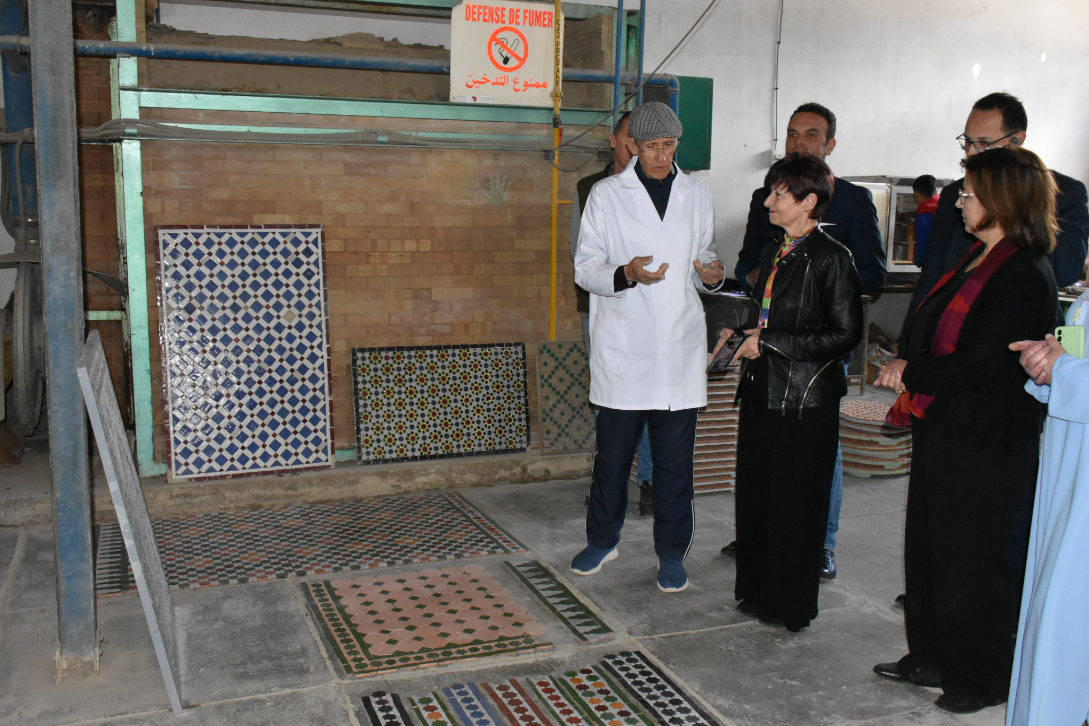
Miculescu made her remarks during her trip to Tetouan, in northern Morocco, where she visited a workshop for zellige earlier this week.
The visit took place on the sidelines of her participation in the International Jazz Day, hosted in the city of Tangier on Tuesday. The Tetouan visit was part of the larger trip for the UN official, with the purpose to familiarize her and UNESCO with Moroccan cultural and civilizational heritage.
According to a press statement about the visit, Miculescu expressed keenness to explore the roots, methods, and means of producing traditional zellige made in Tetouan. This unique craftsmanship revolves around transforming clay into mosaic pieces of various shapes, sizes, and colors.
The UN official expressed that she was “very fortunate” to visit the city of Tetouan, extending gratitude to UNESCO’s office for enabling her to visit one of “the most beautiful places in Morocco.”
“I am impressed by the beauty of the city of Tetouan, its rich history, and its traditions, which I have seen how to celebrate,” she added to the press, noting that she was “greatly influenced” by the zellige workshop, emphasizing the value that UNESCO places on exceptional art.
“This workshop is, in a way, a symbol of UNESCO’s important mission, which is to preserve the treasures and treasures left to us by our ancestors,” the UN official stated.
Moroccan cultural heritage subject to appropriation
Moroccan zellige was registered by Morocco with the World Intellectual Property Organization in 2016.
The North African country has been increasing efforts to safeguard this cultural heritage, which has become a target for cultural appropriation.
Specifically, Algeria has sparked controversy for claiming that zellige is part of the Algerian cultural heritage.
Most recently in April, Algeria’sMinistry of Culture announced that it is preparing a “special file” destined for UNESCO to include “Algerian zellige” in UNESCO’s “Representative List of the Intagine Cultural Heritage of Humanity.”
In 2022, Algeria made headlines again for celebrating zellige in an exhibition as its own cultural heritage.
However, zellige is not the only cultural heritage that has been subject to cultural appropriation by Algeria.
In 2023, Algeria attempted to include Moroccan caftan in its UNESCO file seeking to add famous Moroccan traditional dresses – called caftans –into Algerian cultural heritage.
The controversial file included pictures of Moroccan caftans in the submitted dossier.The photo shows Morocco’s “ntaa caftan,” one of Morocco’s traditional masterpieces in the country’s historic fashion.
Last month, Morocco’s Minister of Culture Minister Mehdi Bensaid addressed possible venues to protect Morocco’s cultural heritage during a meeting with high level officials from the World Intellectual Property Organization (WIPO).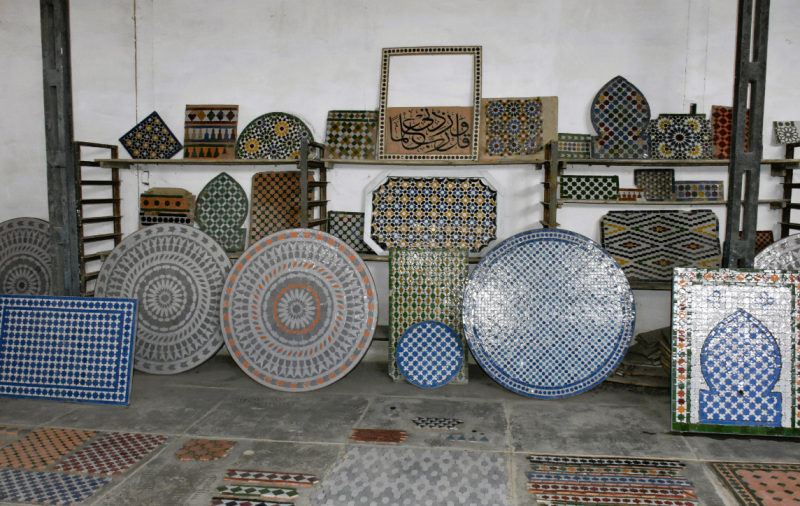
During the meeting, Director General of WIPO, Daren Tang Heng Shim, emphasized Morocco’s legitimate right to protect its historical heritage.
Intellectual property, including zellige, supports all aspects of life in Morocco, in both urban and rural areas, the WIPO official told the press.
He further continued, “the project we implemented in 2016 in Morocco regarding your famous zellige, in addition to the numerous projects we are currently implementing, will be based on a comprehensive approach to intellectual property.”