 Join on WhatsApp
 Join on Telegram
Regional integration is a product of liberalist thinkers, and the functionalist and neo-functionalist approaches to peace suggest that the process of this integration contributes to conflict resolution by reducing territorial tensions and increasing well-being and prosperity in the community space.
This gradual integration process aims to substitute the power politics of states with cooperative dynamics based on the organization of common international public services. States choosing to cooperate in one sector are compelled by a mechanism of spillover to extend their interactions to other sectors. The integration process strengthens over time and promotes the end of conflicts.
However, competition and rivalry still persist in regional integration organizations, especially in the Global South, as state actors strive to maximize their relative power and preserve their autonomy.
The logic behind regionalism is based upon the following three postulates:
First and foremost, regional integration within an expanded market space can significantly enhance trade efficiency, facilitate the division of labor and complementarities, as well as drive economic growth within the region. This approach primarily centers on eliminating tariffs and non-tariff barriers to trade and investment and sharing public goods.
Regional economic integration can help bridge political differences and even reduce the risk of military confrontation within the region so that more resources can be channeled into economic development.
Regional integration can create joint responses to common cross-border challenges, and external threats and shocks, such as a collective defense mechanism. It can also jointly respond to the exploitation of resources and fight the impacts of climate change such as desertification.
On the whole, large states have more choices and options compared to small states, for which regional organizations are a necessity for survival. Joining regional organizations offers a dual advantage to smaller states. These organizations provide a protective shell for their security and enhance small states’ economic well-being by enabling them to benefit from the economies of scale offered by larger regional markets.
Additionally, small states are often under threat from larger neighboring states due to their limited size and resources, and therefore join international organizations or enter in alliances to safeguard their sovereignty and security. In this regard, it’s critical to emphasize that when a larger state exploits a regional organization for its own interests, it can polarize regional dynamics, further dividing member states and impeding the integration process.
In recent times, the Maghreb has experienced significant developments.
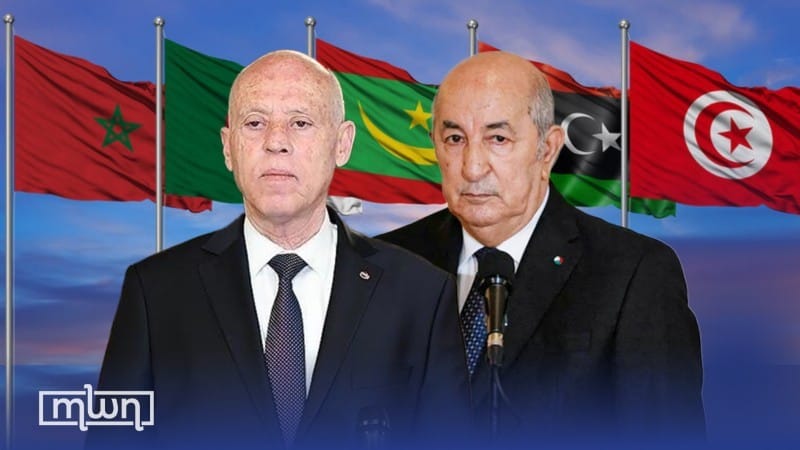
Tunisia departed from its neutrality policy regarding the Moroccan Sahara, aligning with Algeria and escalating tensions within the Arab Maghreb Union (AMU). Additionally, Algeria initiated a trilateral alliance in April 2024, involving Tunisia and Libya, while Tunisia postponed the appointment of a new Secretary General of the AMU. Observers suggest that these events are motivated by geopolitical objectives aimed at isolating the Kingdom of Morocco.
Nonetheless, there seems to be a change in the direction of the Republic of Tunisia following Tunisian President Kais Saied’s decision to appoint Tarek Ben Salem as the new Secretary-General of the AMU for a three-year term starting from June 1, 2024. This move has been interpreted by Algeria as a success, as Tarek Ben Salem’s predecessor, Taieb Baccouche, was perceived as pro Moroccan and not neutral.
It is noteworthy to underline that the rivalry between Morocco and Algeria has resulted in collateral damage, particularly as a result of the failure of regional integration efforts. The Maghreb is the least integrated region in Africa and the world, according to data from the World Bank and the African Development Bank (ADB). Ideological differences and armed conflicts, such as the Sand War and Moroccan Sahara dispute, have hindered regional integration.
Collateral damage of rivalries in the Maghreb: regional integration failure
According to data by the International Bank for Reconstruction and Development and the African Development Bank, the Maghreb is the least integrated region in Africa and the world. Ideological differences and the aftermath of armed conflicts, such as the Sand War and direct battles since February 1976, have hindered the regional integration process; jeopardizing what could have been an ideal solution to dilute animosities and rivalries, much like the European integration that resolved rivalry between France and Germany.
The persistent rivalry between Algeria and Morocco has severely hindered Maghreb integration, leading to repeated setbacks for regional cooperation efforts like the Maghreb Permanent Consultative Committee (CPCM) and the AMU. Algeria’s hesitations, partly driven by fears of Moroccan and Tunisian economic competition and supremacy, have played a significant role. The Western Sahara conflict is a symptom rather than the cause of the rivalry, with deeper concerns about territorial claims and regional influence driving the antagonism.
The Maghreb Permanent Consultative Committee 1964-1975: a stillborn integration project
Four countries – Tunisia, Morocco, Algeria, and Libya – established the CPCM in 1964 to initiate economic integration, and this project was reinvigorated by the UN Economic Commission for Africa, headed by theExecutive Secretary. The CPCM resulted from a Maghreb need for economic cooperation. This was partially in response to the European Economic Community’s (EEC) early 1960s customs union project (about 70% of Maghreb economic exchanges were with this group) that threatened the Maghreb economies which are dependent on EEC market access under special trade preferences.
The three tasks of the committee set for itself, namely customs harmonization to develop intra-Maghreb economic exchanges, harmonization of secondary and tertiary sectors, and coordination of relations with the EEC, were hardly accomplished. The committee dissolved in 1975, primarily due to the conflict in the Moroccan Sahara and differences in development models between socialist Algeria and Morocco and Tunisia, which had followed the path of economic liberalism.
None of CPCM objectives were achieved due to rivalries and ideological differences among the so-called “heavyweights” of the Maghreb. Colonel Muammar Gaddafi disagreed with the other heads of state due to his alignment with Egypt, while the Algerian president and his Minister of Economy accused Morocco and Tunisia of promoting the penetration of Western economic liberalism.
The Arab Maghreb Union : an inactive organization
A new inter-Maghreb détente allowed, on February 17, 1989, the heads of state of Tunisia, Algeria, Morocco, Libya, and Mauritania to meet in Marrakech to sign the founding acts of the AMU. The Arab Maghreb Union (AMU) was born on February 17, 1989. The AMU’s genesis was closely linked to events in Europe and the EEC, namely the1986 Single European Act, as well as the Islamist threats of the Islamic Salvation Front to Algeria and the Ennahda Movement to Tunisia.
The AMU is an attempt to build a common economic market for member countries. It can also be described as a security community, as its Article 14 states that “Any aggression to which one of the Member States is exposed will be considered as aggression against the other Member States.” Article 15 adds that “The Member States undertake not to allow on their respective territories any activity or organization that threatens the security, territorial integrity, or political system of any of the Member States. – They also undertake not to join any military or political pact or alliance directed against the political independence or territorial unity of the other Member States.”
Thanks to the lifting of the UN embargo on Libya, the election of President Abdelaziz Bouteflika in Algeria, and King Mohammed VI’s ascension to the throne in Morocco, the AMU’s five members relaunched the AMU process in April 1999, however it was stunned by the crisis in Moroccan-Algerian relations and the border closure in 1994.
Despite the conclusion of 37 conventions and agreements in economic and commercial matters, the achievements of the AMU have been very meager, falling far behind the expectations and objectives of integration envisioned by its founders. We can record only a few successful initiatives, such as the establishment of the Maghreb Union of Employers (MUE) in February 2007 and the Maghreb Union of Fairs in January 2008. Additionally, the Maghreb Bank of Investment and Foreign Trade (MBIFT) was founded in December 2015 with a very modest capital of $500 million.
Therefore, it is evident that rivalry has caused significant collateral damage, leading to repeated setbacks in the Maghreb integration process, such as the dissolution of the CPCM and the inactivity of the AMU. These setbacks are primarily due to Algeria’s hesitations, which favored the idea of a “Maghreb of the people,” implying that genuine Maghreb integration would not be possible under the existing regimes. Beyond the slogans, Algeria has always feared the more competitive Moroccan and Tunisian economies, which could take over the Algerian market in the event of trade liberalization, potentially destroying the local industries. Moreover, Algeria has always had apprehensions about a possible Eastern Sahara claim by Morocco.
What are the new avenues for Great Maghreb awakening?
Despite its involvement in new Atlantic initiatives Morocco has not neglected the AMU process, and the new integration strategy is compatible with both the AMU and the African Continental Free Trade Area (AfCFTA). This approach complements these regional frameworks and can help address current geopolitical challenges in Africa.
At the 33rd Summit of the League of Arab States, held in Manama held in may 2024, King Mohammed VI declared in a statement read by Aziz Akhannouche the Head of Government that:
“I regret to say that inter-Arab economic integration has yet to reach the level to which we aspire, despite the fact that our countries have all the ingredients for success[…] Having said that, I cannot but regret, once again, that the Arab Maghreb Union has not been able to play its natural role with respect to supporting co-development in the Maghreb countries by ensuring, in particular, the free movement of people, capital, goods and services between the five countries making up the Union.”
What could be a realistic vision to revitalize the AMU?
The revival of the Arab Maghreb Union (AMU) is contingent upon fulfilling a set of essential prerequisites:
-First of all, the revitalization of AMU involves setting aside the dispute between Morocco and Algeria over the Moroccan Sahara. This is on its way to being solved within the UN Security Council, which has recognized the Autonomy Plan proposed by the Kingdom of Morocco in 2007 as the “only serious and credible solution.”
Certainly, the dispute is only the visible part of the iceberg, as the underlying problem is the strategic competition between the two countries. Algeria aims to secure leadership by preventing Morocco from recovering its territorial integrity and confining it to the borders left by its colonizers, who had severed it from several provinces including, among others, the southern Sahara provinces.
Secondly, it iss also of vital importance to reopen the borders and resume the diplomatic relations between Rabat and Algiers, as this can facilitate the diplomatic visits and the participation of both countries to the meetings and events organized at the headquarters of AMU and in Algeria.
Thirdly, as emphasized by King Mohammed VI, “the adoption of a new realistic vision firmly grounded in collaborative efforts and a commitment to the principles of good neighborliness, respect for national sovereignty and territorial integrity of states, and a pledge to refrain from interfering in their internal affairs or fostering division and secession.” (Address at the 33rd Summit of the League of Arab States, Manama, May 15, 2024)
Undoubtedly, the current AMU strategy, designed under the traditional regional integration paradigm inspired by the Bela Balassa model from European experience, does not fully accommodate the geological realities of the Greater Maghreb. A more pragmatic approach is imperative. The new Moroccan strategy for African integration, as showcased by the Atlantic
Royal initiatives, holds promise for revitalizing the AMU in multiple ways:
This approach does not postpone indefinitely the long-awaited tangible results, the areas chosen can lead to immediate results, in particular the cross-cutting issues that all countries are faced with, notably in pole position, food security, infrastructure development, climate change, illegal migration, terrorism and crime etc.
It prioritizes regional projects as a tool to enhance integration such pipelines corridors; connectivity and cooperation in transport and logistics;
It is based on “open regionalism” and is inclusive, Moroccan initiatives promote synergies and partnership with other regions such as the Sahel and the North Atlantic. In this vein we believe that AMU should be gradually open to membership to Sahel Countries and Senegal in compliance with the article 17 of the Treaty of Marrakech.
Finally, the efficient institutional framework of the Atlantic African States Process (AASP), featuring only a permanent secretariat and focal points, could serve as a model for establishing new AMU cooperation projects and/or institutions. This approach aims to reduce financial burdens on states and mitigate disputes over institutional structures.
Fourthly, the key role of institutions in providing the right framework for regional integration has been widely acknowledged by scholars. In this regard, the Secretary-General and AMU staff bear a weighty responsibility on their shoulders. They must prioritize the collective interests of the community above all else and remain free from influence by any individual country. Balancing the home country interests while fulfilling the collective objectives of the international organizations remains a significant challenge for international secretariats and civil servants.
I believe that the recruitment parameters shall be revised by selecting new high profiles especially technocrats experienced in working in multilateral settings. It is without saying that the payment of arrears and the increasing of the AMU’s secretariat budget along with a recapitalization of the Maghreb Bank of Investment and Foreign Trade (MBIFT) are of vital importance.
Fifth, a reassessment of certain protocols and programs is urgently needed while preserving the overarching decision-making structure and principles established by the Treaty of Marrakech. Priority should be given to implementing the easiest protocols and programs outlined in the AMU agenda. This approach involves postponing more complex and challenging issues, such as establishing the Free Trade Area to a later stage.
Lastly, It is also imperative for regional and international actors (especially the EU) to adopt a new, proactive and coordinated approach to support AMU economic development, and integration paradigm shift.