
Rabat – The quality of inflation control in Morocco and across Africa is only as good as the data underpinning them, Moroccan economist Hassan Hachimi Alaoui said on Thursday.
The current data on inflation and the Consumer Price Index (CPI) in Morocco are based on metrics dating back to 2014, making it difficult to gauge inflation accurately and devise the needed policies, Alaoui explained during a panel discussion at the Africa Economic Symposium (AES) held in Rabat at the Policy Center for the New South (PCNS).
“In Morocco, we have a CPI whose historical weighting groups are from a 2014 census. So, for example, the June 2024 CPI is based on a weighting that dates back 10 years,” Alaoui reckoned.
Outdated metrics have directly reflected the quality of central bank policies targeting inflation as they yield data that are not always “reliable,” he added.
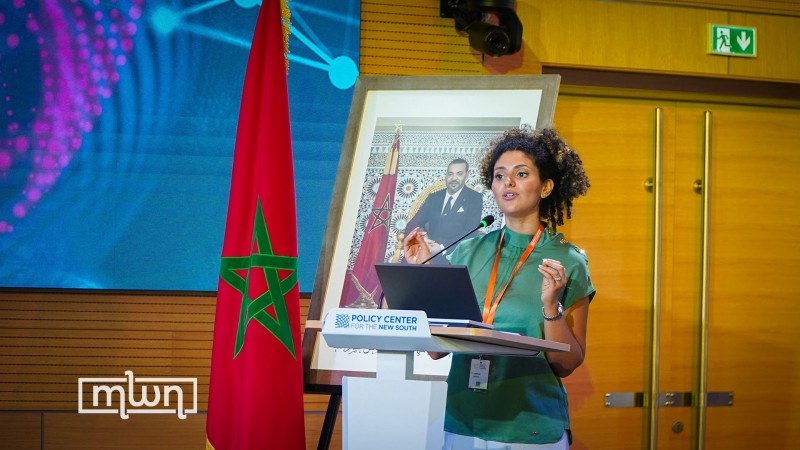
Speaker at the Africa Economic Symposium (AES)
In addition to outdated metrics, the scholar maintains that evaluating inflation expectations should take into account households. “Most central banks in Africa do not conduct, or at least do not publish, data on surveys regarding inflation expectations.”
In Morocco, as in other countries around the world, inflation has become a chronic challenge for the economy. The outbreak of COVID-19 and the spillover from the subsequent shocks have raised inflation to historic-high levels, culminating in a staggering 10% in February 2023.
For Alaoui, when policymakers are aware of the “expectations among market operators, it is information that is integrated into the determination of interest rates, which in turn influences consumer and investment decisions and can have good consequences on influencing macroeconomic aggregates.”
Read Also: World Bank Official: Morocco’s Economic Boom Falls Short of Creating More Jobs
But Morocco’s current surveys focus primarily on market operators, omitting the crucial insights from household expectations.
This gap in data collection means that the broader public’s inflation expectations, which are vital for comprehensive policy formulation, remain unaddressed.

Attendees at the AES
“Expanding the statistical framework to include surveys from households would provide a more accurate reflection of inflation expectations,” Alaoui suggested.
He also highlighted the importance of transparency and communication in central banking, lamenting that “African central banks are lacking in terms of transparency in their dissemination.”
By improving the transparency of models, parameters, and calibrations used within central banks, there can be a better alignment of market expectations and more effective monetary policy transmission.
The call for updated data and improved transparency comes at a crucial time. Morocco, like many African nations, is grappling with high inflation rates driven by food price surges and other economic factors. Ensuring that economic indicators are current and comprehensive is crucial for effective policy-making.
For Morocco, addressing these issues could lead to more informed decision-making, better management of inflation, and ultimately, a more stable economic environment.
As the country looks towards the future, updating its economic measures will be key to navigating the complexities of a rapidly changing global economy.