 Join on WhatsApp
 Join on Telegram
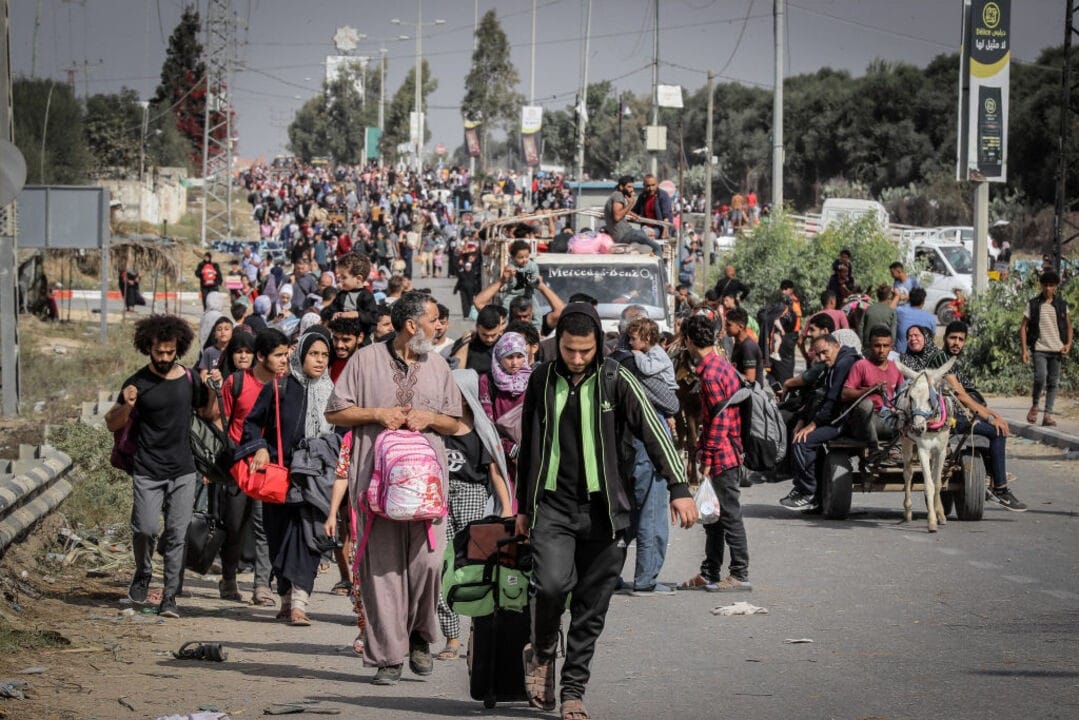
Rabat – The humanitarian crisis in Gaza has reached a new peak as over 150,000 residents fled the town of Khan Younès on Monday, July 22, according to a report by the United Nations Office for the Coordination of Humanitarian Affairs (OCHA).
Khan Younès, situated in the southern part of the Gaza Strip, is currently under severe and relentless bombardment from Israeli Occupation Forces (IOF) targeting what they describe as Hamas strongholds.
As a result, the town has become another epicenter of displacement in a war that has already forced most of Gaza’s 2.4 million inhabitants to flee their homes.
The United Nations reports that over 80% of the Gaza Strip is either under evacuation orders or designated as no-go zones by the IOF.
“No place in Gaza is safe,” stated Louise Wateridge, head of the UN Relief and Works Agency for Palestine Refugees (UNRWA), emphasizing the dire conditions faced by the population.
On Monday, the Israeli Occupation Forces issued an evacuation order for the eastern part of Khan Younès, including the al-Mawasi humanitarian zone, citing the presence of Hamas militants.
The rapid escalation of IOF aggression left residents with little time to evacuate, causing many to flee without their belongings, and others to be trapped amid the conflict.
Displaced residents are moving towards areas like Deir al-Balah and the western parts of Khan Younès, which are already severely overcrowded.
These regions lack adequate infrastructure to support the influx of people, leaving them with limited access to shelter, healthcare, sanitation, and other vital humanitarian aid.
The evacuations are also disrupting essential humanitarian operations. OCHA noted that several health centers and food distribution points are in the affected areas, further complicating efforts to provide aid to those in need.
Since the start of the IOF war, more than 39,000 Palestinians have been killed in Gaza, according to the territory’s Ministry of Health.
Meanwhile, the World Health Organization (WHO) has raised alarms about potential epidemics, including the highly infectious polio virus, after traces were found in sewage.
The healthcare system in Gaza is on the brink of collapse, with only 16 of the 36 hospitals partially operational. The Nasser medical complex is overwhelmed with wounded patients amid severe shortages of blood supplies, medical supplies, and hospital beds.
Dr. Ayadil Saparbekov, WHO team leader, warned, “More people may die from communicable diseases than from war-related injuries” if the situation does not improve.