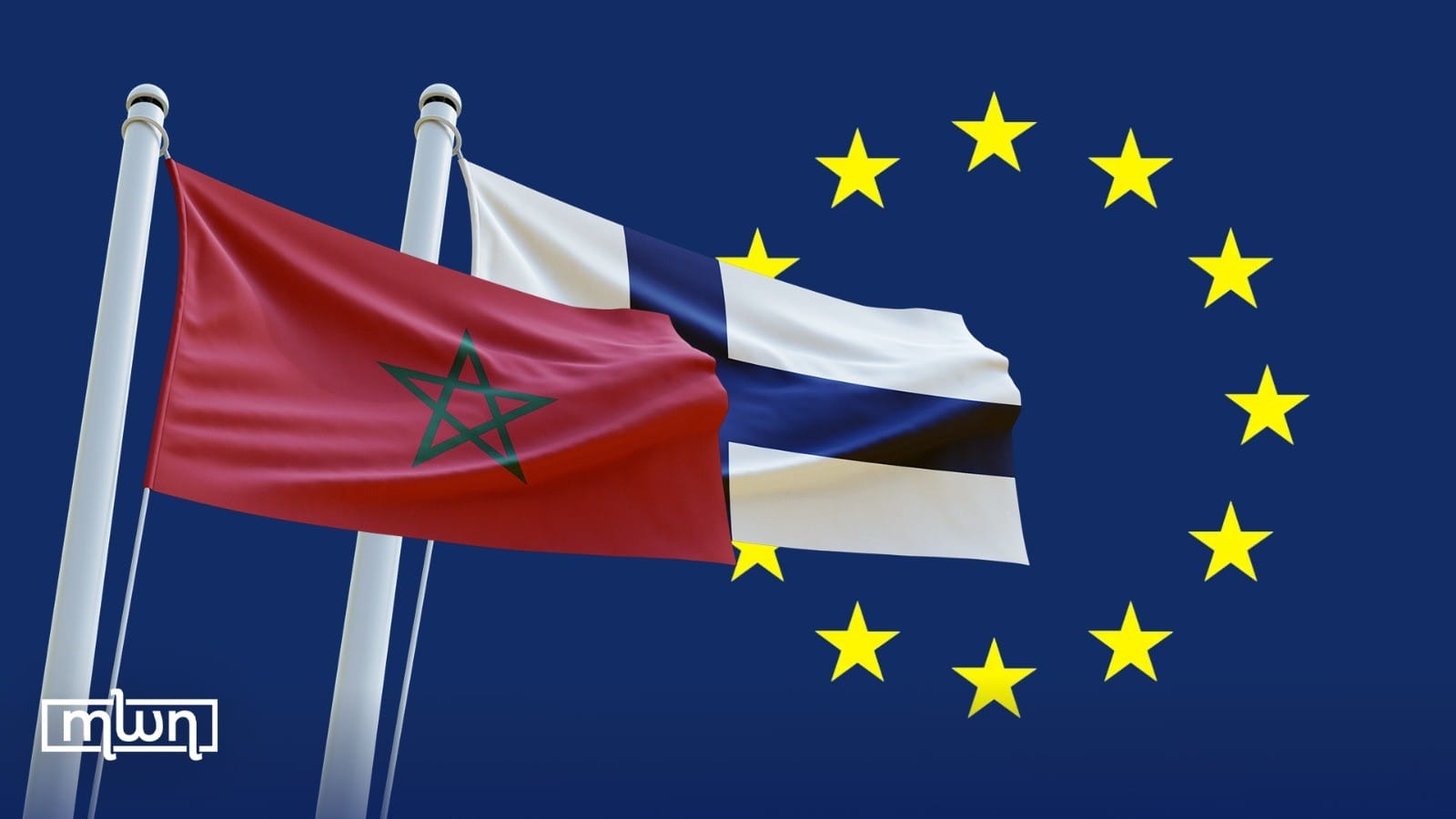
Rabat – Morocco continues to solidify its position on the Western Sahara dispute, with an increasing number of countries endorsing its Autonomy Plan.
The momentum marks an ongoing notable trend in the international community’s interest in closing the long-standing dispute.
This shift reflects how a growing number of countries have been leaning towards Morocco’s initiative as its appeal lies in its pragmatic approach, balancing the aspirations of Sahrawis with Morocco’s territorial integrity.
The Moroccan approach garnered widespread international support and the latest endorsement came from Finland, which affirmed on Tuesday that the autonomy plan represents a “good basis for a solution” to the dispute.
Finland made its decision in a joint statement following a meeting between Finnish Foreign Minister Elina Valtonen and her Moroccan counterpart Nasser Bourita.
During the meeting, both officials also discussed their determination to deepen ties in many sectors.
“Pleasure to host FM Bourita in Helsinki. Great opportunity for discussions on topical foreign policy issues and deepening of [Morocco-Finland] ties on many sectors,” the Finish high diplomat said today.
Finland’s new position reflects a significant departure from its previous stance, which primarily supported the UN-led political process and the organization’s efforts in the search for a political solution to end the dispute.
Breakthrough in Nordic countries
The shift, which will be evaluated and with a significant impact over time, also marks Finland as the first Nordic country to officially back the Moroccan initiative, marking a breakthrough in the Nordic countries.
The shift not only boosts Morocco’s growing momentum but also reflects a broader international trend and enhances Morocco’s diplomatic standing in the region and across the global political landscape.
It also further strengthened the pro-Morocco momentum within the European Union, with Finland becoming the 17th EU member state to support autonomy under Morocco’s sovereignty.
A closer look at EU countries’ support
A closer look at the EU’s deepening embrace of Morocco’s Western Sahara stance reveals that the growing list of nations that support Morocco’s Autonomy Plan includes several influential countries that not only back the Moroccan position but also consider it the most viable initiative aiming to genuinely end the dispute.
The latest on the list is France which announced last week its recognition of Morocco’s sovereignty over its southern provinces in Western Sahara.
A statement from the royal cabinet announced the celebrated news last Tuesday, quoting President Emmanuel Macron as saying: “The present and future of Western Sahara lies within the framework of Morocco’s sovereignty.”
The new French position also marked a notable shift from viewing the autonomy initiative as a merely serious and credible basis to considering it a definitive framework for ending the dispute.
This short period marking two significant endorsements also reflects a growing European consensus in favor of Morocco’s territorial integrity.
Morocco’s Ministry of Foreign Affairs has attributed the recent positive shifts in international support for the Moroccan autonomy plan to the proactive efforts of King Mohammed VI.
Foreign Affairs Minister Nasser Bourita stressed in October last year that this momentum reflects the broader and growing international interest in finding a lasting and politically feasible solution to the lingering territorial dispute over the Sahara.
Bourita’s remarks came as the Czech Republic became the 14th country to support Morocco’s Autonomy Plan.
On October 26 of last year, the Central European country announced that it considers the autonomy plan as a “good basis” for a mutually agreed-upon solution between the parties to the dispute.
In January this year, Bulgaria became the 15th country to join this growing chorus of countries that have endorsed Morocco’s autonomy plan as the best hope for peace, stability, and prosperity in the disputed Sahara region.
Read Also: Western Sahara Diplomacy Is Already One of King Mohammed VI’s Lasting Legacies
On June 11 of this year, Slovenia became the 16th country to support the Moroccan initiative, describing it as a “good basis” for achieving a definitive and consensual solution to the dispute.
Several other countries have echoed similar positions in recent months and years, including Spain which officially announced in March 2022 its endorsement of the autonomy plan as the most serious and credible path towards a realistic and viable political solution.
A few months before the Spanish move, Germany had taken the plunge in Decmber 2021, hailing the Moroccan proposal as the best way forward in the prolonged Western Sahara saga. Other European countries that have adopted the same position include the Netherlands, Belgium, Luxembourg, Cyprus, and Austria, among others.
Why Morocco’s autonomy is serious and credible
Morocco only began to consider the prospects of a politically negotiated settlement after decades of UN diplomatic efforts ended in the frustrating conclusion that it was impossible to organize a referendum on self-determination in the Sahara.
As part of this newfound belief in a compromise-driven settlement, efforts to find a lasting solution to the lingering dispute, the North African kingdom submitted its autonomy to the UN in 2007 after extensive national and local consultations.
The autonomy plan offers the local population in Morocco’s southern provinces significant self-government rights. These include the election of independent legislative, executive, and judicial bodies, all while maintaining Moroccan sovereignty.
With only security and foreign relations remaining under the purview of the central Moroccan government’s jurisdiction, the initiative ensures that the electoral local authorities have financial autonomy to foster regional development.
Read Also: Why France’s Recognition of Morocco’s Sovereignty Is a Game-Changer
In the resolutions it has adopted since 2007, including Resolution 2703 of October 2023, the Security Council has consistently endorsed the Moroccan autonomy initiative as the most serious and credible route to a lasting resolution of the Sahara dispute.
While insisting on the need for Morocco to maintain sovereignty over the region, the plan gives priority to meeting the aspirations of the local populations by providing a framework that allows for substantial self-government.
For most observers of Western Sahara diplomacy, this inclusive approach, based on the notion of prioritizing a politically practical and mutually acceptable solution, is the main reason for the growing popularity and momentum of the Moroccan plan over the past two decades.