
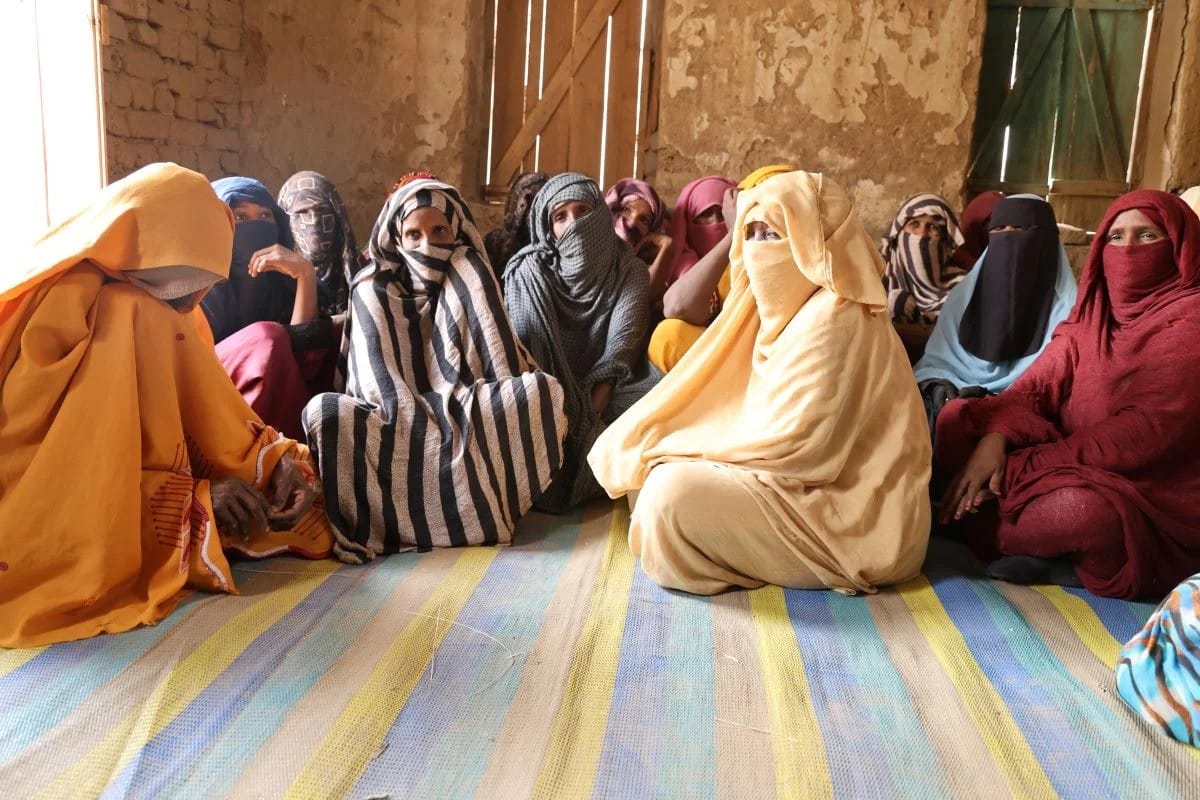
Rabat – A new UN Women report released on Friday paints a distressing picture of the horrendous and disproportionate impacts of the ongoing conflict in Sudan on women and girls, particularly on the 5.8 million who are internally displaced.
Since the outbreak of war, Sudan has experienced the largest internal displacement crisis globally, surpassing even the Syrian civil war.
Dubbed a Gender Alert, the report indicates that the number of individuals requiring gender-based violence (GBV) services has doubled to 6.7 million as of December 2023, with current estimates likely exceeding this figure.
While both men and boys are victims of GBV, women and girls bear the brunt of these violations, particularly in conflict-affected areas like Khartoum, Darfur, and Kordofan.
The report notes a troubling rise in cases of conflict-related sexual violence and exploitation, with many incidents going unreported due to inadequate support systems and fears of stigma.
The humanitarian situation is dire. Sudan is experiencing unprecedented levels of acute food insecurity, with 64 % of female-headed households affected, compared to 48 % of male-headed households across ten states.
Women and girls are often the last to eat in these households. Healthcare access remains critically low, with 1.63 million women of reproductive age lacking adequate services, including over 160,000 who are pregnant. An estimated 54,000 childbirths are anticipated in the next three months alone.
Water, sanitation, and hygiene access are also severely compromised, with at least 80 % of internally displaced women unable to secure clean water due to safety, affordability, and distance issues.
Read also: Draconian Taliban Edicts Aim to Erase Women from Public Life in Afghanistan
The ongoing education crisis further exacerbates the plight of girls, with more than 2.5 million currently out of school, increasing their risk of harmful practices such as child marriage and female genital mutilation.
“Women and girls in Sudan are facing unimaginable challenges, yet their strength and resilience continue to inspire us,” stated Hodan Addou, acting Regional Director for UN Women’s East and Southern Africa office.
“We cannot let Sudan become a forgotten crisis. The international community must unite to support Sudanese women, ensuring they have the necessary resources and protection to survive and rebuild their lives,” she added.
UN Women calls for urgent action to ensure the physical safety of women and girls and to secure access to food, safe water, and reproductive health services. The organization is actively supporting community initiatives in partnership with women-led organizations to build resilience and improve access to essential humanitarian services.
The report emphasizes the need for increased funding for local women-led organizations, which received a mere 1.63 % of the Sudan Humanitarian Fund in 2023.
According to a BBC report, sexual violence has become a defining characteristic of the protracted conflict, which started as a power struggle between the army and the Rapid Support Forces (RSF) but has since drawn in local armed groups and fighters from neighboring countries.
One woman, who spoke to the BBC under the name of Miriam, accused the RSF of raping her. Having fled Dar es Salaam for her brother’s shelter, she now works in a tea stall. Early in the conflict, she recounted a harrowing incident when two armed men broke into her home and attempted to assault her daughters, aged 17 and 10.
“I told the girls to stay behind me and I said to the RSF: ‘If you want to rape anyone it has to be me,’” she told BBC.
“They hit me and ordered me to take off my clothes. Before I took them off, I told my girls to leave. They took the other children and jumped over the fence. Then one of the men laid on me.”