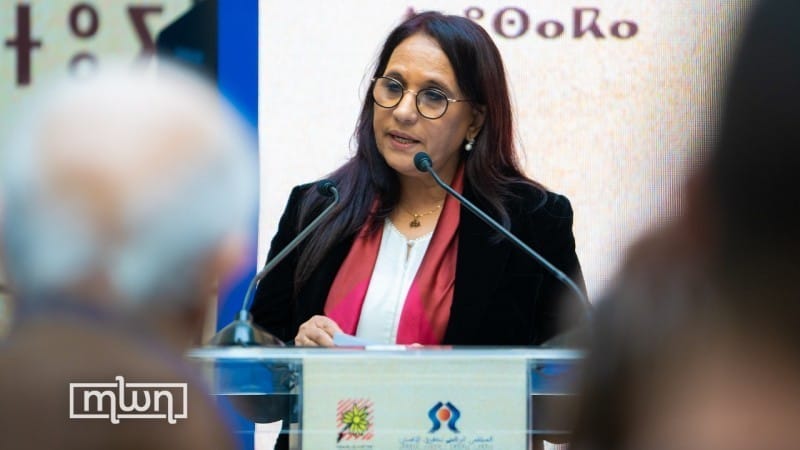
Rabat — Amina Bouayach, Chairperson of Morocco’s National Human Rights Council of Morocco, addressed on Wednesday an audience at the Palais des Nations during the side event titled “Bridging Justice, Reform and Memory in Transitional Justice Processes.”
The event marked the 20th anniversary of Morocco’s commitment to addressing its past and advancing transitional justice.
Bouayach opened her remarks by thanking attendees, including representatives from various sectors, for attending the significant commemoration.
She described the event as an opportunity to reflect on the “justice and reconciliation” journey to which Morocco has committed over the past two decades.
“Twenty years ago, Morocco made the choice to fully reconcile with its past,” she stated, highlighting the country’s decision to investigate historical abuses and acknowledge the suffering experienced by victims.
Bouayach argued that the nation’s efforts included not only investigating past abuses but also providing reparations, preserving collective memory, and ensuring reforms to uphold human rights.
“Transitional justice is not a one-size-fits-all process,” she explained, underlining the importance of context and specific dynamics in shaping outcomes.
Bouayach indicated that Morocco’s experience has facilitated broader reforms, contributing to peace and stability while promoting democratization and gender equality.
Notably, she reported that since implementing transitional justice measures, Morocco has not recorded systematic cases of torture or enforced disappearances.
The country has seen an increase in peaceful protests, with over 20,000 occurring annually without serious incidents, reflecting a shift in the management of fundamental freedoms.
Bouayach also stressed the significance of preserving collective memory in the transitional justice process. By documenting the experiences of victims and establishing memory sites, she suggested, Morocco seeks to honor those affected by past abuses.
“We will never forget,” she asserted, emphatically applauding the country’s commitment to acknowledging the complexity of its history. In her address, Bouayach connected transitional justice to the constitutional reforms initiated by His Majesty King Mohammed VI in 2011.
Read also: UN Human Rights Council to Examine Morocco’s Human Rights Record
She highlighted how these reforms incorporated recommendations on transitional justice, establishing a foundation for human rights within Morocco’s governance framework.
The kingdom’s inclusive and participatory approach, which engaged civil society and key stakeholders, has been integral to its transitional justice efforts. This model has informed significant reforms in various areas, including constitutional revisions, regional governance, and family law modernization.
Concluding her address, Bouayach reaffirmed that Morocco’s journey in transitional justice serves as a bridge connecting the past with the future. Ongoing efforts in this area reflect the evolving landscape of human rights in society.
“Reform is a journey, not a destination,” she stated, highlighting the continuous nature of these efforts and the need for sustained commitment to justice and equity in Morocco’s future.
Co-hosted by the African Center for Democracy and Human Rights Studies and supported by Morocco’s Permanent Mission, the event aimed to share insights from the Moroccan experience.