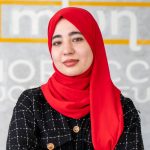

Rabat — Mustapha Baitas, government spokesperson and Minister Delegate for Relations with Parliament, announced today that more than 431,000 widows have received direct social support. This assistance is aiding 158,000 children across both urban and rural areas in Morocco.
During the weekly press briefing following the Government Council, the government spokesperson addressed a comment comparing the current social support system and the previous one.
In response, Baitas emphasized that the current direct aid system provides significantly more support to widows than the previous system. He explained that, unlike the old system, which only provided aid to widows with dependent children, the new system includes all widows, regardless of whether they have children.
“Under the previous system, widows received allowances ranging from 350 to 1,050 dirhams for three school-aged children. With the new system taking effect in 2024, all widows, regardless of whether they have children, will receive between 500 and 1,158 dirhams,” stated the minister.
He continued, “By 2025, this amount could increase to up to 1,233 dirhams depending on the number of dependent children. In 2026, it could rise to as much as 1,306 dirhams.”
Baitas reported that a total of 431,000 widows are receiving support, with 260,000 living in rural areas and 171,000 in urban areas. Among them, 346,000 widows do not have children, including 124,000 in urban areas and 222,000 in rural areas.
Widows with one child numbered 20,000 in urban areas and 17,000 in rural areas. There are 16,000 widows with two children in urban areas and 14,000 in rural areas. For those with three or more children, the figures are 11,000 in urban areas and 7,000 in rural areas.
The minister highlighted that direct social support represents a new public policy introduced by King Mohammed VI. He emphasized that the government is actively advancing this royal initiative by enacting various legal measures, especially those related to social protection and health coverage.
The minister also noted that the government has made significant strides to support families in meeting daily challenges and to uphold the principles of a social welfare state. This includes increasing financial aid for school-age children to address and reduce school dropout rates.