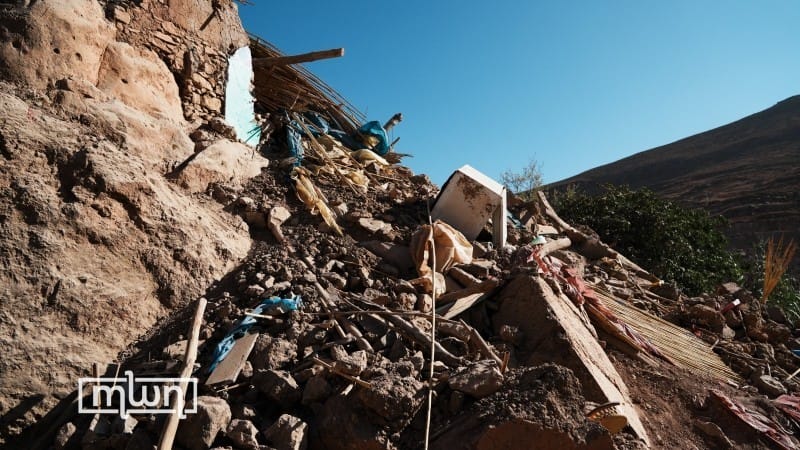
Rabat – The Justice and Development Party (PJD) has sharply criticized Aziz Akhannouch’s government’s delay in implementing the rebuilding for areas devastated by the Al Haouz earthquake last year.
The statement follows a meeting led by PJD Secretary General Abdelilah Benkirane on Sunday, which coincided with the one-year commemoration of the earthquake.
The devastating quake that hit Al Haouz region on September 8 last year killed at least 3,000 people while 5,000 others were injured.
The earthquake also caused the collapse of many houses, leaving families homeless and taking tents as refuge.
In its statement, PJD said the government failed to fulfill the rehabilitation program despite the “availability of sufficient financial resources, a significant portion of which was collected through the solidarity campaign that showcased the high level of Moroccan national and charitable response to the royal directives.”
For PJD, this situation shows the government’s “inability to effectively and swiftly implement the program” due to its “inexplicable delay in fully activating the Agency for the Development of the High Atlas.”
PJD also accused the government of “attempts to suppress citizens and activists who highlight the program’s shortcomings and protest delays in its execution.”
Akhannouch last week said the committee in charge of the reconstruction work also pledged that its government has established all necessary conditions to facilitate the reconstruction and rehabilitation of damaged homes.
The committee also reported the issuance of 55,142 reconstruction permits and progress on reconstruction and rehabilitation projects for 49,632 damaged homes, according to Akhannouch.
In addition to the situation with Al Haouz, PJD also criticized the government’s handling of Morocco’s medical student protests.
The statement renewed the party’s appeal, calling on the government to “prompt and officially announce a serious, clear, and sincere resolution to the ongoing nine-month crisis affecting medical and pharmacy students.”
Medical students have been protesting the government’s recent reforms, particularly its decision to reduce the study duration from seven years to six years.
Last week, medical students announced a sit-in against the government proposal, suggesting that students required to take first-semester make-up exams in September could attend additional sessions for the second semester.
Medical students viewed it as merely a maneuver, arguing that their fundamental demands are being overlooked.