 Join on WhatsApp
 Join on Telegram
The Indian film “The Goat Life” can be interpreted as a propaganda message that uses a wide range of narrative and cinematic strategies to influence the audience’s understanding of labor immigration, especially within the Middle East. In the film, a romanticized, utopian homeland is portrayed alongside a dystopian host land, where the Middle East is reduced to a hostile desert populated by inhumane people.
By means of hyperbole, generalization, deliberate narrative decisions, and ideologically biased visual depictions, the film seeks to control the viewers’ emotions and strengthen a particular anti-immigration discourse against working in the Middle East, especially within the kafala system.
Utopia vs. Dystopia
The film sharply juxtaposes the protagonist’s homeland, portrayed as an idealized nation, with the brutal truths of the desert in the Middle East, which symbolizes a dystopian society. The homeland is portrayed as a verdant and lively garden—a haven of aesthetic expression, vitality, love, and joy. The Middle East, in contrast, is portrayed as a desolate desert, representing hopelessness, aridity, thirst, and subjugation.
This duality functions to romanticize the protagonist’s beginnings while vilifying the host country, portraying immigration as a voyage from paradise to eternal damnation, reminiscent of the archetypal tale of Adam sent from heaven to earth for a transient labor journey.
The film explores the notion of delusion associated with immigration. The protagonist’s decision to leave his idyllic homeland is portrayed as a misguided hope for a better life, only to be met with the brutal reality of the desert. This journey reflects the disillusionment that many immigrants face when the promises of opportunity and prosperity in a foreign land turn out to be hollow. The film suggests that the dream of immigration is often a delusion, a false hope that leads to suffering rather than fulfillment.
The depiction of marriages in the film further reinforces the utopian image of the homeland. Marriages are shown as joyful, vibrant celebrations, rich in tradition and love. This contrasts sharply with the protagonist’s life in the desert, where even the mention of a wedding is marred by the absence of any familial warmth or ceremonial festivity. In juxtaposing these vibrant depictions of marriage in the protagonist’s homeland with the bleak, isolated existence in the desert, the film further amplifies the sense of loss and disillusionment associated with his journey.
–Delusion and Memory
The protagonist’s repeated retreats into his memories can be interpreted as an escapist attitude, a way to shut out the harsh reality of his current circumstances.
However, these memories also serve as a reminder of what he has lost, exposing the fallacy of his earlier dreams of a better life.
In this sense, the film implies that while memories of the homeland bring consolation, they also heighten the anguish of disillusionment. That is, the protagonist understands that the paradise he left behind cannot be recovered in the harsh environment of the desert.
Selective Representation
Throughout the film, there seems to be a selective representation of events and characters. For instance, the institutions that enforce the kafala system are shown only when they serve to reinforce the power dynamics by the end of the film, while their absence during instances of abuse suggests a deliberate attempt to highlight injustice without providing a balanced view. Where are the societal institutions located? This selective portrayal may indicate a deliberate attempt to guide the audience’s emotions and opinions in a specific direction.
The film lacks a fair and impartial portrayal of life in the Middle East. The portrayal of the region is mostly characterized as a desolate and inhospitable desert, with minimal scrutiny of its abundant cultural, social, and economic diversity. The purposeful effort to vilify the place is evident in the lack of favorable or detailed depictions of the local inhabitants or their way of life. This serves to reinforce negative stereotypes without providing a more nuanced or accurate view.
The film primarily focuses on the persecution of the protagonist, Najeeb, while portraying the Middle Eastern characters as harsh and unyielding, devoid of any capacity for sympathy. The blatant portrayal of the “masters” as merciless tyrants intensifies a narrative that demonizes the host nation. The lack of nuance in depicting the motivations and social lives of the people, as well as their interactions within families, towns, tribes, and marketplaces, suggests a purposeful intention to deprive the region and its inhabitants of vivid social life.
Although the film depicts the protagonist’s anguish and occasional reminiscences of his homeland, it fails to thoroughly delve into his inner psychological or emotional odyssey. There is little understanding of how his experiences mold his identity, his perception of his circumstances, or his final choices. This absence of character development undermines the impact of the story, making the protagonist’s account more akin to a vehicle for propaganda than a fully actualized human experience.
Exaggerated Narratives and Hyperbole
The film claims that the protagonist’s story represents the grief of “thousands who have lost their lives in the desert.” This sweeping statement by the end of the film is a clear example of hyperbole, designed to evoke a strong emotional response from the audience.
By exaggerating the scale of the tragedy, the film may be attempting to manipulate viewers’ perceptions of the situation, framing it as a widespread and almost universal experience for immigrants in the Middle East.
The film appears to focus heavily on the victimization of the protagonist Najeeb, portraying the Middle Eastern characters as harsh and unyielding, with little to no humanity or compassion.
This one-dimensional portrayal of the “masters” as merciless oppressors contributes to a narrative that demonizes the host land. The lack of nuance in depicting the characters’ motivations and social lives — in families, villages, tribes, markets, suggests an intent to vilify the region and its people.
Absence of Institutional and Social Context
One of the most glaring omissions is the lack of any meaningful depiction of institutions, social structures, or community life in the Middle East. The film depicts the protagonist as being trapped in a lawless environment where institutions only appear to reinforce the oppressive kafala system, but never to protect or support the individuals involved.
This selective portrayal ignores the presence of legal systems, social services, and community networks that do exist in the region, further skewing the narrative towards a negative view of immigration.
No Insight into the Opponents’ Humanity
The film does not delve into the lives, motivations, or emotions of the antagonistic figures, such as the Arab masters. They are portrayed as one-dimensional, harsh, and merciless, with no effort to explore their perspectives or personal lives, family ties and tribes.
Such lack of depth reinforces the film’s propagandistic nature, as it presents these characters as stereotypical villains, rather than as complex human beings with their respective, complex intimate stories. The absence of any scenes showing their family lives, cultural practices, or interactions with their own communities reduces them to mere narrative devices symbolizing oppression.
Oversimplification of Complex Issues
The film oversimplifies the intricacies of immigration by exclusively emphasizing the negative elements, such as exploitation and suffering, while neglecting the wider socio-economic and political dynamics that motivate migration. It fails to delve into the reasons behind individuals’ decision to migrate, the advantages they may pursue, or the possible prospects they may encounter.
Why are successful stories of migration in the Middle East silenced in the film? This exclusion fosters a narrative that prioritizes instilling fear and discouraging immigration rather than understanding the multifaceted aspects of the kafala system.
While the film briefly touches on religious matters, it does so in a way that lacks depth and fails to capture the richness of religious and cultural life in both the protagonist’s homeland and the host country.
The protagonist’s faith and the faith of the characters around him are not explored in any meaningful way, reducing religion to a mere background element rather than a potentially powerful force in shaping the characters’ identities and actions. This superficial treatment of religion misses an opportunity to provide a more layered and authentic portrayal of the cultural dynamics at play in characters’ engagement with each other.
The opponents’ insult, whip, give directives, and sleep. They don’t pray or engage in any religious rites. As Muslims, it prompts the question: why is the portrayal of their religious activities missing in the film?
Bluntly put, this film seems to reduce the complexities of Middle Eastern cultures and civilizations to a simplistic and stereotypical image of a harsh, unforgiving desert. It dismisses the rich and diverse cultural, historical, and social fabric of the region, instead focusing on an exaggerated depiction of the desert as a symbol of cruelty and desolation. Such a reductionist portrayal can only serve to reinforce negative stereotypes about the Middle East, furthering a biased narrative about the region and its peoples.
The role of the helper {adjuvant}: an Immigrant Role
The portrayal of the “helper” is highly distinctive and constrained, predominantly linked to fellow immigrants rather than the indigenous community. This portrayal is noteworthy and enhances the film’s overarching storyline, especially in its depiction of the interactions between immigrants and their surroundings.
The film focuses on the idea that the only true helpers of the protagonist are other immigrants, particularly those who share similar backgrounds or experiences.
For instance, when the protagonist finds himself abandoned in the city, it is his fellow Indians who come to his aid, nursing him, dressing him, and even providing him with the opportunity to speak with his wife. This reinforces the notion that immigrants must rely on one another for support, as they cannot expect help from the local population, particularly the Arabs of the Desert.
Absence of Local Helpers
Significantly absent from the film is any portrayal of locals assuming the role of helper. In one particularly telling scene, notwithstanding an Arab driver’s promise of aid by transporting the protagonist back to the city, this assistance is insufficient as he abandons the protagonist in the urban setting without any additional help.
This implies that the local community may be reluctant or unable to fully participate in the role of a helper. Such social conduct may be interpreted as a purposeful narrative decision aimed at emphasizing the isolation and vulnerability of immigrants in this particular social context.
Symbolic Isolation of Immigrants
By associating the role of the helper only with other immigrants, the film symbolically isolates the migrant community from the broader society. This portrayal suggests that immigrants are left to fend for themselves, forming their own networks of support because they are unable to rely on the host society. And this condition of extreme isolation could be interpreted as a commentary on the lack of integration and support structures available to immigrants, reinforcing a sense of alienation.
The helpers in the film, all of whom are immigrants, are depicted as individuals who have also endured suffering. For example, the African helper, who is a Muslim, understands the harsh realities of the desert and shares this burden with the protagonist.
This connection through shared hardship further reinforces the idea that only those who have suffered similarly can truly understand and help each other. It also emphasizes the grim reality that help within this environment is scarce and often comes from those who are themselves vulnerable.
Visual Representation: Long shots
The use of long shots in the film plays a crucial role in conveying its themes and emotional impact. These wide, expansive shots emphasize the vastness of the desert, dominating the frame and dwarfing the characters within it. The characters appear small and insignificant against the backdrop of the immense, empty landscape, reinforcing their vulnerability and powerlessness.
Such a choice of framing or cinematographic gaze highlights the desert’s hostility, portraying it as a powerful and overwhelming force of nature. The protagonists, framed within this vast emptiness, are depicted as weak and marginalized, enhancing the sense of their victimization. Through these long shots, the film underlines the struggle of the characters against the unforgiving environment, making the desert itself a central, antagonistic presence in the narrative.
Visual Representation by Offer
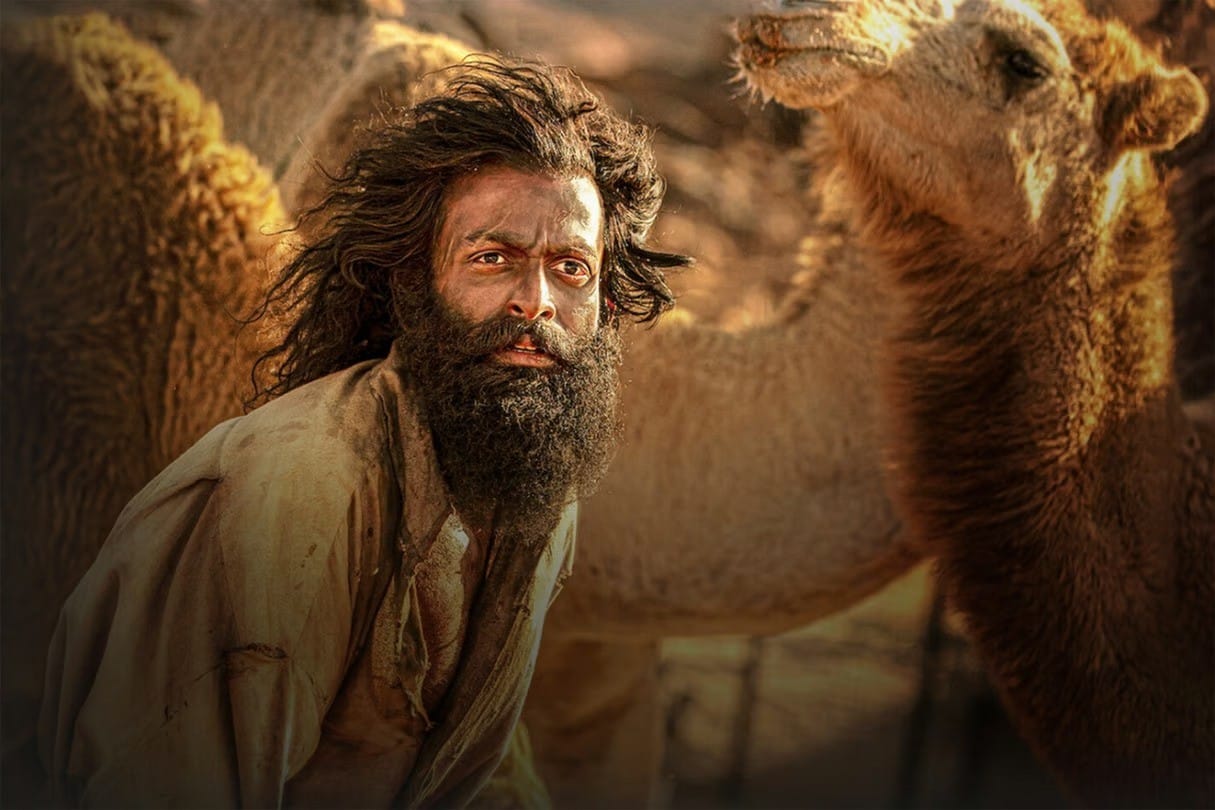
The film utilizes the “offer” shooting technique, which consists in presenting images in a manner that creates a sense of distance between the characters and the audience. This technique involves the characters avoiding direct eye contact with the camera and instead focusing on each other, thus generating a sense of separation. The manifestation of this strategy is especially apparent in the portrayal of adversaries, notably the Arab characters. These characters are frequently depicted without making direct eye contact with the camera, therefore maintaining a deliberate and detached attitude that hinders the viewer from establishing a direct rapport with them.
Their severe countenances and unwavering focus are consistently aimed at their targets, rather than eliciting any interaction from the audience. The absence of direct visual contact in this context serves to stress their position as adversaries and further creates a perception of detachment between them and the observer.
Shots from below with medium close-ups
The film frequently captures the Arab characters from low angles, therefore accentuating their inherent strength and commanding aura.
These pictures are paired with medium close-ups that emphasize their facial emotions, thereby accentuating their rage, fury, and the acrimony apparent in their features.
Moreover, the use of clashing hues enhances the intensity and hostility expressed in their visual presentation.
Shots from above and demands
The main characters, especially the Indian victims, are frequently shot from above, which creates a perception of vulnerability and intensifies their experiences of being victimized.
Significantly, they are portrayed in “images of demand,” in which the subject forms a direct connection with the observer. Najeeb, the film’s primary Indian victim, persistently directs his eyes towards the spectator, subtly requesting assistance. This direct eye contact establishes a potent bond, evoking a feeling of compassion and exasperation in the observers.
These perceive his anguish and his plea for aid, however, lack the ability to interfere, therefore eliciting a powerful emotional reaction and even resentment, as they are faced with his urgent request for rescue.
The use of Flashbacks
The use of flashbacks in the film serves to emphasize the stark contrast between the protagonist’s past life and his current predicament. These flashbacks often highlight memories of a happier time, filled with love, family, and the beauty of the homeland.
For instance, scenes of the protagonist swimming with his wife in clear waters, surrounded by lush vegetation, reinforce the utopian image of his homeland. These moments are idyllic and serene, underscoring what has been lost in the pursuit of a better life abroad.
- Propaganda and Symbolic Control
The presence of Coke, a globally recognized symbol of Western culture and capitalism, within the harsh desert environment highlights the intrusion of Western consumerism into even the most remote and inhospitable places.
The Coke bottle’s appearance in the film suggests that Western products and ideals have permeated all corners of the world, regardless of local culture or social conditions. This could imply a critique of how global capitalism imposes itself on different societies, often in ways that are incongruous or out of place.
The juxtaposition between the opulent, consumer-oriented portrayal of Coca-Cola and the dire conditions faced by the main character and his companions is striking. Despite the common association of Coca-Cola with comfort, pleasure, and modernity, its presence in a context where individuals are grappling with fundamental survival generates a striking contradiction.
This juxtaposition can be employed to underscore the irrationality and paradox of the scenario—wherein emblems of contemporary convenience coexist in a realm where fundamental human necessities remain unfulfilled.
When the protagonist finds the Coke bottle near the oasis and later the African uses it as a makeshift flute to play a tune, the bottle transcends its role as a mere product. It becomes a symbol of resourcefulness and the human capacity to adapt in dire circumstances. However, this adaptation also underscores the scarcity and desperation of the environment—where even a discarded bottle becomes a valuable tool.
The recurring presence of the Coke brand could also be seen as a form of symbolic control, where even in moments of crisis or escape, the protagonist cannot escape the influence of global brands and Western culture. This may imply that the characters are not just physically trapped in a harsh environment but are also mentally and culturally ensnared by the pervasive influence of Western consumerism.
Irony and Despair
The irony of finding a Coke bottle—a symbol of refreshment and enjoyment— in a setting where the characters are experiencing extreme thirst and hardship, adds another layer of despair to the narrative.
The bottle represents a false hope, a reminder of what they lack, rather than providing any real relief. This irony might reinforce the film’s broader themes of disillusionment and the harsh realities of life for immigrants in an unwelcoming land.
Blurring the Lines Between Artistic Narrative and Marketing Propaganda
A viewer’s perceptions and behaviors can be influenced by repeated, subtle exposure to a brand without their conscious awareness. In the film, the recurring presence of Coke may not be explicitly promoted as a consumable product, but it remains in the background, quietly molding how viewers perceive the brand—potentially as a consistent presence in all settings, even challenging ones.
The use of subliminal advertising in the film blurs the lines between the narrative content and marketing. It raises questions about the intent behind these placements—whether they serve a purely narrative purpose or if they’re intended to promote the brand. This ambiguity can make the film’s message more complex, as it intertwines storytelling with commercial interests.
Conclusion
The film seems to have propagandistic intentions, blending narrative with ideological communication in order to discourage viewers from considering the Middle East as a feasible or compassionate destination for immigration.
The film’s use of narrative and cinematic techniques highlights the immigrants’ vulnerability and victimhood, and successfully modulates the viewer’s emotions and viewpoints. It successfully presents a perception of physical segregation and animosity, therefore reinforcing the role of Arabs as opponents. The Indian characters, namely Najeeb, evokes a deep feeling of empathy from spectators, thereby involving them in the protagonists’ situation and releasing feelings of helplessness and frustration.
Indeed, the the narrative and visual strategies described above suggest that the shooting is adeptly crafted to heighten the emotional impact on the audience, directing them towards an exaggerated frame that does not address the labor contract in a balanced manner but rather clearly establishes the connection between a kidnapped victim and his oppressor, using visual methods to increase empathy for the victim while fostering a sense of alienation or hostility against Arab opponents.
Ultimately, the film’s use of these techniques indicates a deliberate attempt to emotionally captivate the audience, thereby amplifying its propagandistic message against immigration to a desert portrayed as hostile, both through its harsh natural elements and its inhabitants.
Read also: Controversial Film ‘The Goat Life’ Sparks Debate Over Saudi Labor System