
 Join on WhatsApp
 Join on Telegram
Doha – Morocco is drawing attention as a promising cloud and data center market in North Africa, according to recent industry reports and investment announcements.
The country’s data center journey began around 2000, initially catering to local demand from the telecom sector.
“Starting as a market focussed on servicing local network and telecommunications demands, Morocco took its initial steps into servicing colocation demand in the early 2010s, homing in on the retail colocation market,” W.Media, a specialized website in tracking data center developments worldwide, has quoted a Knight Frank’s report as finding.
The report regards Morocco as one of the five key data center markets in Africa and a connectivity gateway between Africa and Europe.
Recent investments are strengthening Morocco’s IT infrastructure. In Q3 2023, African Infrastructure Investment Managers (AIIM) announced a $90 million investment in a new joint venture with Morocco’s N+ONE Data Centres facilities.
According to W.Media, this joint platform aims to bridge the digital infrastructure gap in Africa by providing quality digital infrastructure and promoting the expansion of local and international companies within the Africa market.
Multinational technology company Oracle also recently announced plans to open two new data centers in Morocco.
“As one of the largest economies in Africa … Morocco offers unique growth opportunities for businesses that are aiming to accelerate their expansion by deploying the latest digital technologies,” said Richard Smith, executive vice president for technology in Europe, the Middle East and Africa at Oracle.
Government initiatives are further promoting data center growth in Morocco. The government has established Industrial Acceleration Zones offering tax optimization and financial incentives for operators.
Read also: Huawei Unveils Advanced AI-Ready Data Infrastructure at GITEX Africa 2024
W.Media quoted Knight Frank’s report as stressing: “The creation of the Digital Development Agency, as well as the introduction of schemes such as the National Digital 2020 strategy have helped in drawing funding and encouraged the expansion of the country’s data centre infrastructure.”
Morocco relies heavily on imported fossil fuels, which the government has recognized as an energy stability risk. Its National Energy and Energy Efficiency Plan, launched in 2008, has reduced carbon emissions and improved electricity access in remote areas. The country aims to reach 52% renewable energy by 2030, according to W.Media.
With a rapidly growing 90.7% internet penetration rate, the highest in Africa, Morocco’s digital transformation is accelerating across industries.
According to W.Media, Arizton Intelligence believes that the Morocco data center market size will reach $51 million by 2028, growing at an 11.18% CAGR from 2023-2028.
Mohammed VI Polytechnic University (UM6P) inaugurated in 2021 a new Tier III and Tier IV certified data center, integrating Africa’s most powerful supercomputer named the “African Supercomputing Center.”
With a capacity of 3.15 petaflops, performing three million billion operations per second, it provides Morocco and the African continent with breakthrough capabilities in scientific research and innovation.
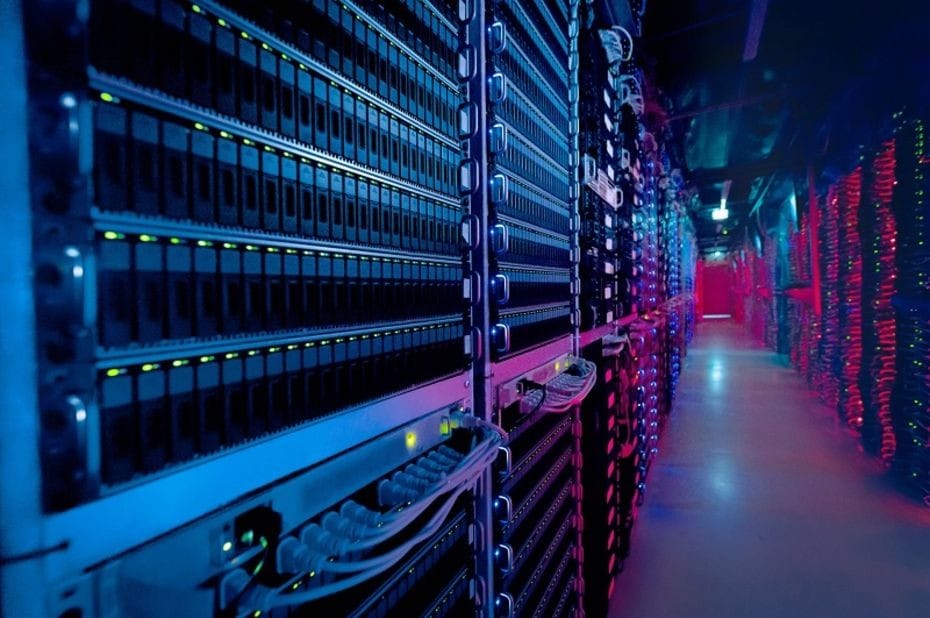
Data centers are facilities that house computing and networking equipment used to collect, store, process, and distribute large amounts of data. They are essential infrastructure for the digital economy, enabling the delivery of cloud computing services, big data analytics, artificial intelligence applications, and more.