


 Join on WhatsApp
  Join on Telegram
 Rabat – Morocco and China have signed a memorandum of understanding, establishing a three-year cooperation program focused on water resources.
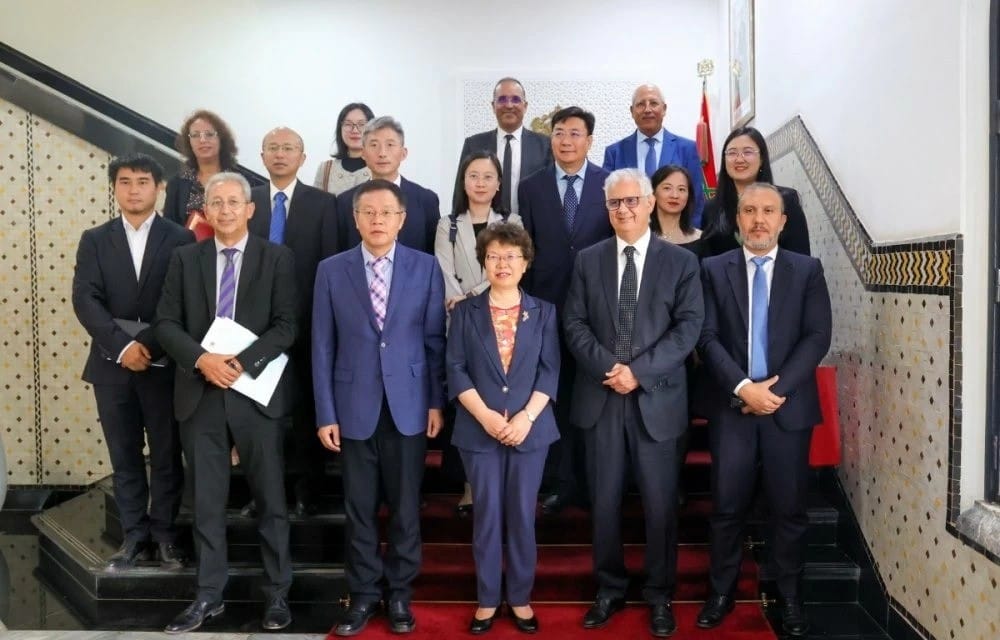
The agreement, signed on Wednesday in Rabat by Morocco’s Minister of Equipment and Water, Nizar Baraka, and China’s Vice-Minister of Water Resources, Zhu Chengqing, sets the stage for strategic bilateral collaboration from 2025 to 2027.
The initiative aims to foster an exchange of expertise, enhance human and institutional capacities, and coordinate joint efforts on water-related projects.
With growing concerns over water scarcity, climate change, and extreme weather events, both nations are seeking to leverage this partnership to address their shared water management challenges.
Comprehensive collaboration on water management
The memorandum outlines a broad framework for collaboration in water infrastructure development, including the construction, operation, and maintenance of water distribution systems.
It also includes provisions for managing extreme weather phenomena, such as floods and droughts, which have become increasingly frequent in Morocco.
Both countries are expected to work together on improving water supply systems, particularly in rural areas, where access to clean drinking water remains a challenge.
The partnership extends beyond basic infrastructure, covering conservation efforts to protect water resources, including the promotion of efficient irrigation techniques to reduce water waste.
As part of this initiative, both nations will explore innovative solutions to ensure sustainable water use in agriculture, one of Morocco’s most water-intensive sectors.
Joint committees and technical exchanges
In addition, Morocco and China have committed to holding three annual meetings of the China-Morocco Joint Committee on Water Resources starting in 2025. These meetings will provide an opportunity for both sides to review their experiences in water resource planning, research, and monitoring.
The committee will also facilitate knowledge sharing on topics such as hydraulic engineering and water transport infrastructure, with technical meetings and on-site visits planned in Morocco.
In addition to the committee meetings, a seminar will be held to summarize the outcomes of experience exchanges and identify further areas of cooperation.
The seminar will focus on the development of practical solutions for water conservation and efficient management of water resources.
Strengthening bilateral relations
The signing of this memorandum is part of broader efforts by both Morocco and China to deepen their bilateral ties.
Cooperation between the two countries has expanded across various sectors in recent years, including infrastructure, energy, and environmental management.
This new agreement on water resources builds on that foundation, with both nations recognizing the need to collaborate on critical issues such as water security and environmental sustainability.
The presence of high-ranking officials at the signing ceremony, including the Chinese ambassador to Rabat, Li Changlin, and Tarik Hamane, Director General of Morocco’s National Office for Electricity and Potable Water (ONEE), underscores the importance both sides place on this cooperation.
It also reflects the growing strategic partnership between the two countries, particularly in areas related to infrastructure and sustainable development.
Addressing water challenges
With water scarcity becoming an increasingly urgent issue worldwide, Morocco’s partnership with China is expected to yield practical solutions to some of the most pressing water management challenges.
By focusing on both conventional and non-conventional water resources, the program aims to enhance the resilience of water systems in both countries, ensuring a sustainable supply of water for future generations.
The cooperation also comes at a crucial time for Morocco, as the country continues to grapple with the effects of climate change, including severe droughts and irregular rainfall.
Through this partnership, Morocco seeks to strengthen its water management capabilities, drawing on China’s experience in dealing with similar challenges.


