 Join on WhatsApp
 Join on Telegram
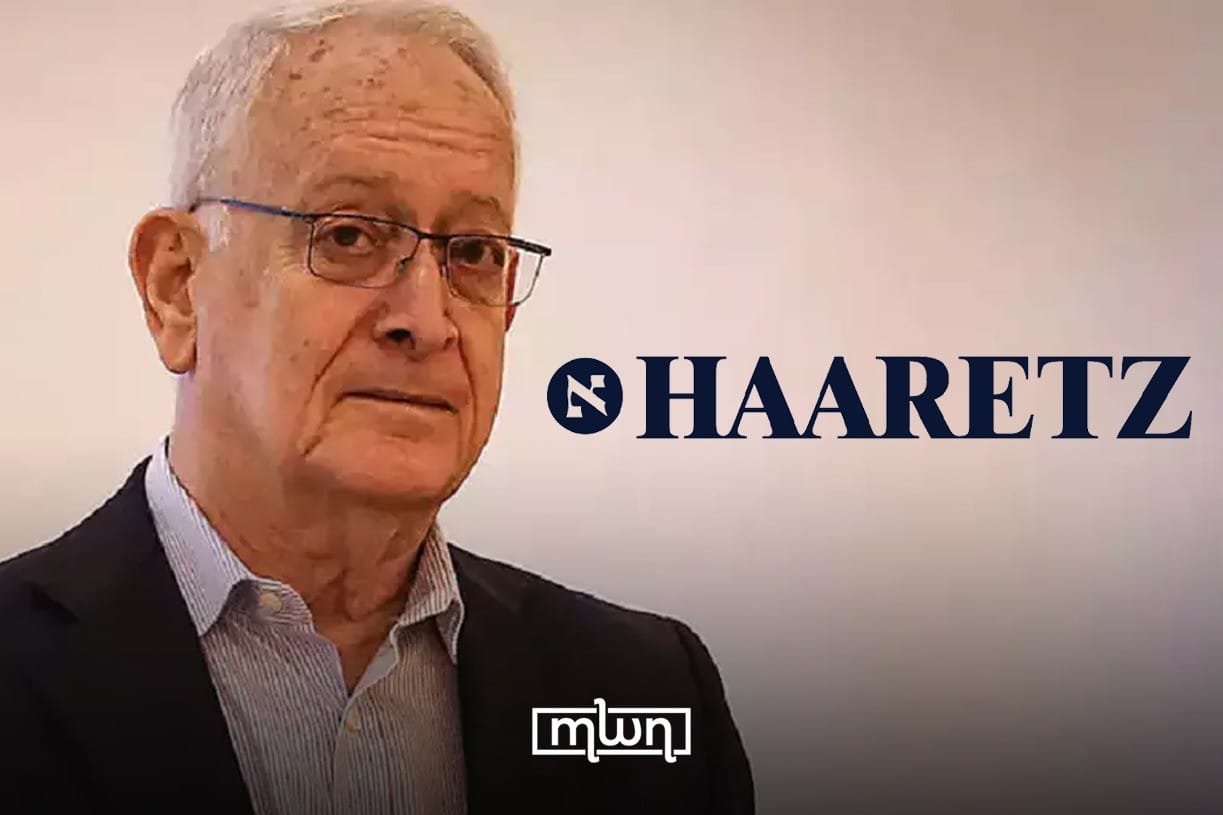
Doha – The Israeli government has imposed unprecedented sanctions on the Haaretz newspaper after its publisher, Amos Schocken, described Palestinian militants as “freedom fighters” and accused Israel of implementing a “cruel apartheid regime” against Palestinians.
This marked a significant escalation in tensions between the government and one of Israel’s prominent media outlets.
Speaking at a Haaretz conference in London titled “Israel After October 7: Ally or Alone?”, Schocken delivered a series of powerful criticisms of Israeli policies.
He stated that Israel “dismisses the costs [to] both sides for defending the settlements while fighting the Palestinian freedom fighters that Israel calls ‘terrorists.’”
The publisher accused Netanyahu’s government of “imposing a cruel apartheid regime” on Palestinians and conducting what he termed a “second Nakba” in Gaza and the occupied territories, referring to the 1948 Palestinian exodus.
He strongly condemned Israel’s settlement policies, saying the government “continued not only building settlements but also supporting ethnic cleansing of Palestinians from parts of the occupied territories.”
In his comprehensive critique, Schocken particularly emphasized the issue of illegal settlements, stating that “Netanyahu’s government wants to continue and intensify illegal settlement in the territories that were designated for a Palestinian state.”
He argued that Israel systematically ignores UN resolutions declaring settlements illegal and continues to expand them despite international condemnation.
Schocken called for decisive international intervention, advocating for specific sanctions against Israeli leadership and settlers.
“A Palestinian state must be established, and the only way to achieve this, in my opinion, is by imposing sanctions on Israel’s Prime Minister and leaders who oppose it, and against settlers who are present in occupied territories in violation of international law,” he declared.
He specifically named far-right ministers Itamar Ben-Gvir and Bezalel Smotrich as targets for potential sanctions.
Government backlash
The statements triggered immediate and severe punitive measures from multiple Israeli government institutions, marking an unprecedented break between state authorities and a major news organization.
Interior Minister Moshe Arbel took the lead by ordering an immediate cessation of all cooperation with the newspaper on Wednesday evening.
The ministry’s director-general issued a formal letter stating they “cannot and will not remain silent in the face of harm to IDF soldiers and the state’s efforts to protect its citizens.”
The Interior Ministry’s official statement described Schocken’s comments as “deeply offensive and revealing a fundamental departure from core values.”
Communications Minister Shlomo Karhi proposed even more comprehensive sanctions, calling for the termination of all government dealings with Haaretz.
His proposal included stopping government press office advertisements in the newspaper and prohibiting any governmental agency from communicating with Haaretz in any form.
“Haaretz is generously funded by Israeli citizens through advertisements and subscriptions purchased by the government,” Karhi noted, arguing that “halting the purchase of services from Haaretz by government bodies will ease the significant distress Israeli citizens feel.”
Karhi further emphasized the government’s position as a customer rather than a regulator, stating: “Israel’s status as a buyer of advertisements and subscriptions from Haaretz is that of a party to a contract. This is not an administrative action, but rather a contractual decision subject to free will. By adopting its current line, Haaretz surely considered that this extreme position could alienate some of its clientele.”
Local authorities joined the boycott, with the mayor of Nesher near Haifa announcing the termination of all relations with the newspaper.
Earlier calls for international action
In September, just a month before his London speech, Schocken had already called for international intervention against the Netanyahu government, comparing the situation to apartheid-era South Africa.
“In the face of this catastrophic government, there is no choice but to demand that other countries mobilize as they did to end apartheid in South Africa,” he said at a security conference in Tel Aviv.
During that conference, which was organized in collaboration with the New Israel Fund and the Berl Katznelson Foundation’s Political Security Unit, Schocken questioned: “Why isn’t this happening when Israel has a government that opposes the establishment of a Palestinian state, and continues to intensify illegal settlement in Palestinian territories, and doesn’t mind imposing a brutal apartheid regime on the Palestinian population?”
He emphasized the necessity of establishing a Palestinian state based on the 1967 borders, arguing that such a solution would “grant Palestinians the right to self-determination” and lead to “economic cooperation that would bring growth and prosperity to both nations.”
He specifically referenced Palestinian President Mahmoud Abbas’s agreement to accept the Green Line as the border for a future Palestinian state.
Haaretz, known for its left-leaning editorial stance, has consistently maintained a critical position toward Israeli government policies regarding Palestinians, often standing as a lone voice of dissent within Israeli mainstream media.
The current confrontation marks one of the most serious challenges the newspaper has faced from government authorities.
Read also: IOF Storms Al Jazeera Office in Occupied West Bank