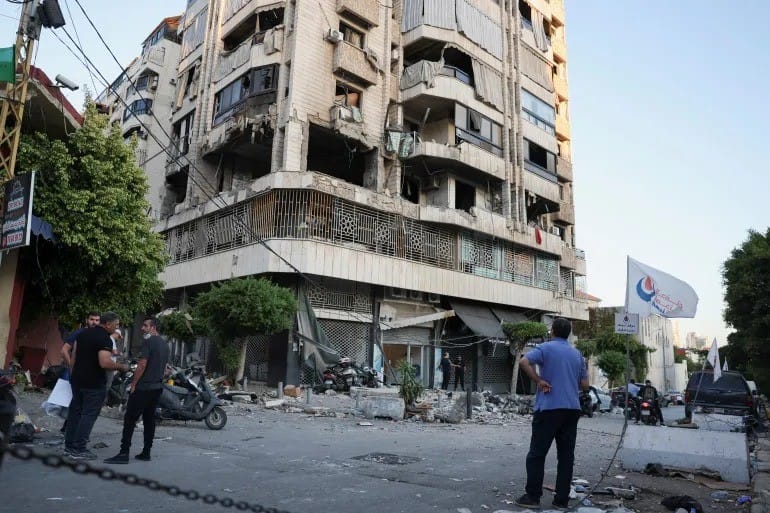
Rabat – At least nine people have been killed and 14 wounded following Israeli airstrikes targeting central Beirut and its southern suburbs overnight, as the attacks between Israel and Hezbollah. The latest attacks included missiles that struck the Dahiyeh area, a Hezbollah stronghold.
The Lebanese army reported that one soldier was killed and another wounded during an Israeli attack while they were conducting a rescue and evacuation mission with the Lebanese Red Cross in the Marjayoun district. This attack represents a significant escalation, as it is the closest strike to downtown Beirut since the bombing campaign began last week.
Residents described a sulfur-like smell in the aftermath of the strikes, prompting accusations from Lebanon’s state-run National News Agency that Israel used phosphorus bombs. Human rights organizations have previously accused Israel of employing white phosphorus incendiary shells during its attacks on southern Lebanon.
Most recently, Israeli aircraft targeted the southern suburbs of Beirut in a series of new air raids, with three confirmed strikes reported by Lebanon’s National News Agency. This follows a night of intense bombardment in the region.
Meanwhile, Hezbollah stated that it launched a “salvo of rockets” aimed at Israeli positions in the Sasa settlement and directed Falak missiles at the Ramim military barracks. In addition, the group claimed responsibility for attacks on Israeli soldiers at various sites, including the Raheb military installation and Maroun al-Ras.
Hezbollah said its fighters denoted an explosive device against a group of Israeli soldiers, causing deaths and injuries.
The situation has drawn concern from international observers, including the UN’s humanitarian coordinator for Lebanon, who highlighted the urgent needs of civilians affected by the ongoing violence. Imran Riza noted that approximately one million people have been displaced, with humanitarian needs becoming increasingly critical.
“It’s absolutely catastrophic. We’re talking about one million people displaced and the level of needs in the last 10 days is dramatic,” Riza stated. The past two weeks alone have seen about 1,000 fatalities in Lebanon, with a marked increase in deaths among health workers due to Israeli attacks.