
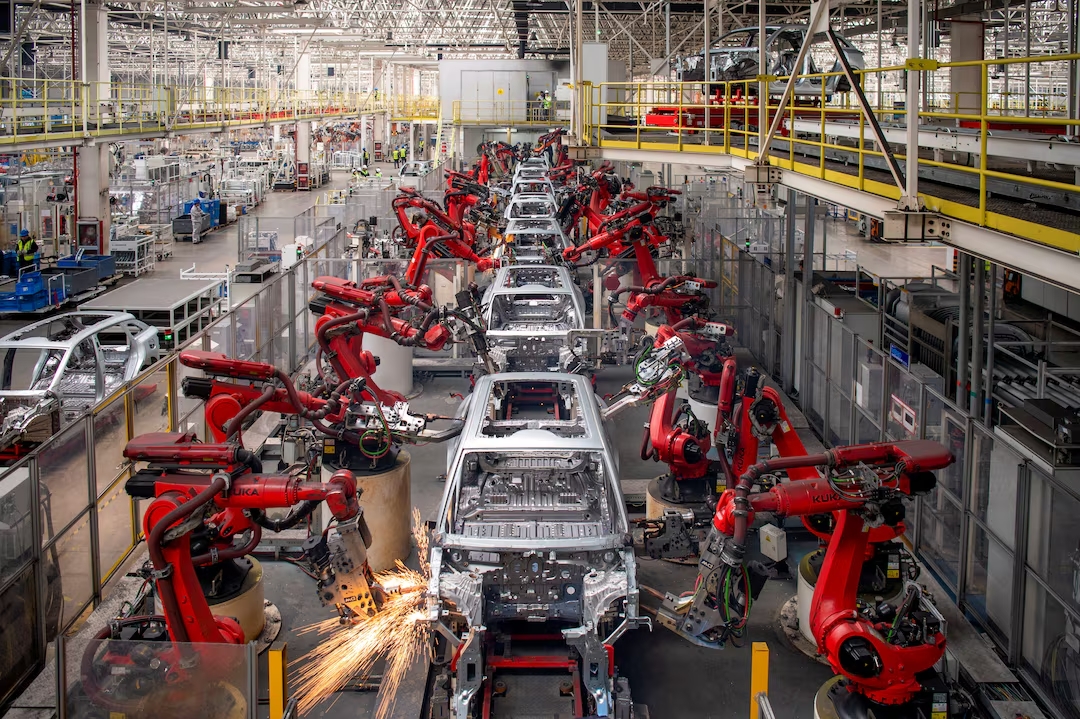
Marrakech – Mihai Bordeanu, the head of Dacia in Romania, pointed to Morocco’s Renault plants as a standard his own factory cannot meet, telling Romanian publication Economedia at the 2026 Paris Motor Show that energy at the Moroccan sites costs “under half” the Romanian price.
The comparison came as Bordeanu outlined the pressure on the Mioveni plant, which builds the Duster and Bigster. Renault Group CEO François Provost has called on Mioveni to cut production costs by at least 20%, with a target of 30%.
Bordeanu called the goal reachable, but only in a favorable economic environment and with backing from Romanian authorities. By his account, the plan is not fully built, and the target year is 2030, to be worked out with suppliers and the Romanian state.
Asked to compare Mioveni with Renault’s Moroccan operations, Bordeanu described a gap rooted in state support. The Moroccan plant, he argued, “benefited from huge, enormous, immeasurable support” from the country’s leadership, adding that “we cannot compare.”
He credited infrastructure built at speed – a highway running from the factory gate to the ship, loading systems – and energy priced at under half of Romania’s. “These things happened in record time in Morocco,” he noted. Morocco is not the European Union, he acknowledged, but added that its facilities received support echoed in other countries where Renault has plants.
For Romania, Bordeanu called for accelerated highway construction, modernized railways, and improvements at the Port of Constanța. He also wants energy and gas costs addressed across the supplier ecosystem, since those costs feed into part prices. A third request is more flexible labor rules, including a Kurzarbeit-style mechanism usable outside crises, as in Spain.
The stakes for Mioveni are direct. The plant reached roughly 349,000 vehicles in a year, near its theoretical capacity of 350,000. Asked whether missing the cost targets could cost Mioveni the next Duster and Bigster generations, Bordeanu replied that “all options are on the table,” and that no decision would be taken until the plan is set with suppliers, administration, and government.
He framed the work as long term: “We’re not building it for today, for tomorrow, we’re building it also for the future.” He also warned that Dacia cannot rely on Romanians’ attachment to the brand against Chinese rivals, and must answer with competitive products – part of why Dacia unveiled two new models in a single day at Paris.
Renault’s Moroccan plants give that benchmark weight. In 2025, the Tangier and Casablanca sites produced about 394,000 vehicles, down 5% from a record 2024 but up 3% on 2023. More than 327,000 units, or 82% of output, went to 63 export markets.
Morocco ranks as the group’s second country by production volume, and close to one in six cars sold worldwide is built there. The Sandero, made only in Morocco, was again Europe’s best-selling car to private buyers.
The cost gap Bordeanu described also appears in outside data. Oliver Wyman’s 2025 labor cost per vehicle analysis placed Morocco lowest among the countries studied, at $106, against $273 for Romania.
The report found that China is no longer the cheapest producer, as Morocco and Romania have moved into the lowest slots, with Morocco serving as the low-cost production base for French manufacturers. Moroccan automotive output rose 29% between 2019 and 2024, compared with 11% for Romania.