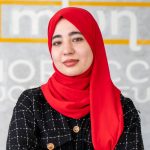

Rabat – Born and raised in Paris to Moroccan parents, Nadia Benzakour is a remarkable actress, author, and screenwriter whose international career transcends cultures, languages, and genres.
With a dynamic presence on both the big screen and the stage, Nadia’s artistry goes beyond acting, drawing from her deep passions for music and storytelling. Her career has spanned Hollywood, French cinema, and international productions, allowing her to showcase her versatile talents across a variety of mediums.
The origins
A graduate of prestigious acting institutions such as the Richard Lawson Studio in Los Angeles, the Mary T. Boyer Studio in New York City, and the Jacques Lecoq School in Paris, Nadia’s comprehensive training in both traditional and contemporary theater has significantly shaped her artistic identity.
She shared insights into her unique journey in a recent, exclusive interview with Morocco World News. “I studied acting and also law at the beginning of my studies, before I fell in love with acting,” she began. “And I studied in Paris at Les Enfants Terribles, which is a professional school, and also with a great, great director in France of theater. And after I went to New York, where I learned all the acting techniques in front of cameras with Mary Boyer and Richard Lawson in Los Angeles.”
Nadia also spoke about the deep influence of dance on her upbringing and career. “I grew up with dance. I went to a famous school in Paris, La Salle Pleyel, with Janice Stanlova. Before working with Janice, I studied ballet and modern dance.”
She emphasized how dancehall played a vital role in her development: “Dancehall was a very, big, important time for me, in how I grew up, how I was raised. I went to see ballet, and I went to see musicals in Paris and outside of France. That physicality just came back very strongly, and I told myself this is a major, major thing in storytelling. It can just enhance the storytelling in a way that is very efficient sometimes.”
Nadia’s diverse career has included standout roles in high-profile films and TV series. She gained widespread recognition for her performance in “Zodi et Tehu,” “Frères du désert” (Princes of the Desert), alongside Alexandra Lamy and Youssef Hajdi. She also portrayed the historical figure Poppea in “Seneca,” directed by Robert Schwentke, sharing the screen with legends like John Malkovich and Mary Louise Parker.
French cinema vs. American cinema
When comparing American and French cinema, Nadia reflected on the differences in production styles, noting that American cinema tends to be more rigid and large-scale. “I would say the productions that I worked on were very, you know, structured in the US. But I won’t say that the French ones are not. It’s just the fact that we say that they’re more… a little bit more rigid,” she explained.
She shared an example of script changes during her role in Tyrant, explaining: “If you want to change a line in the script, for example, it depends on the director, of course, but these are big machines, and everything has been, you know, verified and analyzed. For example, in Tyrant, I had to play in this TV show, and I remember the main actor wanted to change a line because he wasn’t feeling it. And I remember that they had to wait for the studio’s validation to say if it was fine.”
In contrast, she pointed out that French cinema gives more creative freedom. “In French cinema, it’s more… it’s not indie, but you have more indie power in these productions.”
An impressive portfolio
Her body of work also includes appearances in acclaimed productions such as “Sofia,” which made waves at the Cannes Film Festival, and the popular TV series “The Tyrant,” “Deep State,” and “Killing Jesus.” Nadia’s ability to embody a wide range of characters across various genres and formats has further established her as a versatile artist.
She has already captivated Moroccan audiences with “Arrivée par avion,” a musical comedy she wrote and stars in. Recent performances of this play in Casablanca, Rabat, and Tangier drew over 1,000 attendees. The production explores the complexities of identity and immigration, offering a unique perspective on how these themes are perceived across different cultures.
Nadia explained, “The play is about identity, but in different perspectives. Not just only from a cultural perspective. It’s also as a woman, as a professional, we’re always put in a box, and we cannot just go. And we are more complex than that. And people just imagine that because you’re from somewhere, you will behave in a definitive, I mean, a specific way. And I think that we need to listen to the stories of the people more than just putting them in a box.”
On December 4, Nadia will return to Casablanca for another performance of “Arrivée par avion” at the Complexe Culturel d’Anfa. This return to the stage marks a full-circle moment for the actress, as she blends her strong Moroccan roots with her extensive international experience to tell a universally resonant story.
Read also:
The 1-hour 15-minute musical comedy features a fusion of Arabic, Latino, and city sounds, with music composed by Venezuelan artists Leonardo Liendo and Giovanni Berroteran, and performed by Youssef el Kourchi, who hails from the United States.
When asked about the genres she hopes to explore in the future, Nadia expressed a strong interest in science fiction and werewolf-themed universes. “It’s really interesting, I would say I love science fiction. I also love fantastic fantasies. And I think it’s these genres that I would like to experiment with,” she said, noting that she has already written, together with her husband Soufiane Khalidi, drafts “a nice… and very thrilling” story about “the revenge of wolves, women wolves and cat wolves.”
With her unique blend of acting, writing, and singing, Nadia Benzakour continues to leave an indelible mark on the entertainment world, using her multifaceted talents to bridge cultures and challenge the boundaries of storytelling.