 Join on WhatsApp
 Join on Telegram
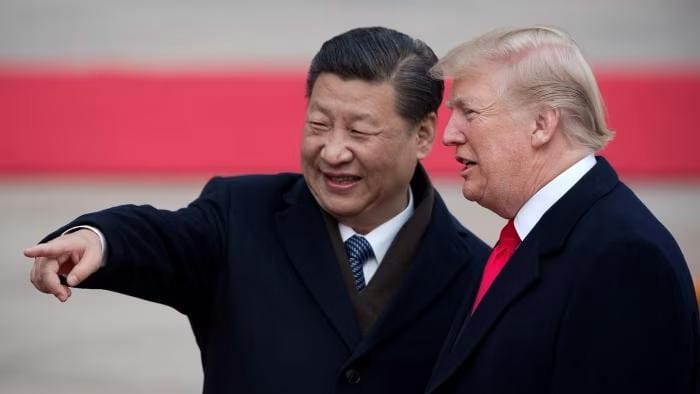
Rabat – As former President Donald Trump won the US presidential election, China has expressed its desire for “peaceful coexistence” and “win-win cooperation” with the United States.
The renewed Trump administration has reignited concerns over trade tensions and diplomatic shifts between the two superpowers.
“We will continue to approach and handle China-US relations based on the principles of mutual respect, peaceful coexistence, and win-win cooperation,” said Foreign Ministry spokesperson Mao Ning in a regular briefing.
She emphasized that China’s policy toward the US remains consistent, signaling Beijing’s cautious optimism amid the changing political landscape.
Mao refrained from commenting directly on Trump’s projected re-election but maintained that “the presidential election is an internal affair” of the United States, and China respects “the choice of the American people.”
She added that China would address any necessary diplomatic protocols once official results are confirmed, leaving open the possibility of a customary congratulatory message from President Xi Jinping.
Trump’s expected return to office could dramatically alter US-China relations, particularly in areas of trade and technology.
During his campaign, Trump proposed steep tariffs on Chinese imports, potentially exceeding 60%, and suggested ending China’s most-favored-nation trading status.
Read also: World Leaders Congratulate Trump Following Victory in US Election
These pledges have raised concerns in Beijing, where leaders are wary of a possible escalation of the trade war that marked Trump’s previous term.
With a projected Republican majority in the Senate, analysts anticipate that Trump could pursue policies aimed at decoupling US and Chinese economies.
This approach could intensify economic challenges for China, which already faces internal pressures from a slowing economy and rising debt levels.
To mitigate such risks, China is likely to accelerate efforts to reduce its dependency on US technology, strengthening economic ties with countries such as Russia while bolstering relationships with Europe, Africa, and parts of Asia.
Brian Wong, a political analyst at the University of Hong Kong, noted that China may seek diplomatic support from non-Western nations and prepare specific bargaining points to address US concerns in potential negotiations.
China has already made strategic moves to reinforce partnerships, including recent diplomatic engagements with India and Japan.
Analysts suggest that Beijing is positioning itself to expand its influence globally, especially in regions where the US might retreat from multilateral agreements and commitments.