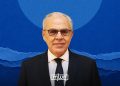
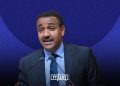
Doha – In a move that has sparked widespread mockery and condemnation, Algerian President Abdelmadjid Tebboune personally received separatist Polisario Front leader Brahim Ghali at Algiers’ Houari Boumediene Airport on October 31.
The red carpet welcome for the head of the breakaway group, considered by Morocco to be illegitimate, came as Algeria marks the 70th anniversary of the start of its war for independence, a struggle in which Morocco provided critical support.
The reception of Ghali, who arrived on an Algerian presidential plane, took place a day ahead of a military parade commemorating the November 1, 1954 outbreak of Algeria’s revolution against French rule.
Tebboune was joined by the presidents of Mauritania and Tunisia as well as the head of Libya’s Presidential Council in receiving Polisario’s leader as an official guest for the celebrations.
‘A drowning man’s clutch to a drowning man’
Many ridiculed the scene of Tebboune greeting Ghali, who appeared confused by protocols as he awkwardly walked the red carpet, at times rushing ahead of his host.
“This is the strangest reception in the history of international relations,” quipped one social media user, while others suggested Tebboune was trying to imitate Morocco’s King Mohammed VI’s welcome of French President Emmanuel Macron this week, but lacked the “prestige of a president, much less the ranks of kings.”
The spectacle was orchestrated, analysts say, to send a hostile message to Morocco about its sovereignty over Western Sahara amid a historic state visit by Macron that highlighted the two countries’ strategic partnership.
It also coincided with a UN Security Council meeting renewing the mandate of the MINURSO peacekeeping mission in the disputed territory.
“These steps confirm Algeria’s ‘continued efforts’ to back the Polisario, reflecting the regime’s ‘hostile positions’ toward its neighbor,” one researcher noted, suggesting Algiers’ support for the separatists is like “a drowning man’s clutch to a drowning man” as it loses Russian backing in the UN.
Tebboune’s goal was to “poke at Rabat” by gathering Maghreb heads of state alongside the Polisario chief. “He made sure to take a ‘symbolic photo’ with the three presidents in Ghali’s presence to ‘sting Morocco,’” they argued.
In a Facebook post, Algerian political analyst Oualid Kebir pointed out that the “presidential plane” laid on for Ghali to reach Algiers airport was in fact a 10-minute flight from the capital’s military airbase where he resides.
“Believe it or not, Benbettouche, who had a presidential plane diverted to reach Algiers International Airport and be received by Tebboune, was not in Tindouf but in Algiers,” he wrote, using a mocking nickname for the Polisario head. “The ‘president of the Tindouf republic’ who declared war spends most of his time in his residence in the Algerian capital.”
Algeria’s ‘two Republics’
Kebir contrasted Tebboune returning “empty-handed” from a foreign tour on October 30, the same day French President Macron wrapped up a state visit to Morocco. “The first reaction from the military regime: Tebboune receives Benbatouche so they can cry close to each other. An exchange of wailing and crying. The shock was severe,” he jibed.
“Algeria has two republics, two presidents – one living in Algiers and the other in Tindouf,” Kebir quipped, highlighting the absurdity of the Polisario’s claim to sovereignty in the Sahara.
The Algerian moves also drew sharp criticism on social media. “If the Algerian regime is unable to gather the Maghreb in a unitary framework, the least it can do is not drag the region into its hopeless adventures,” tweeted one observer.
Others contrasted Tebboune’s struggling diplomacy with Morocco’s successful state visit to France, which opened new economic opportunities, especially in renewable energy.
Ghali’s presence also highlighted contradictions and generated mockery of Tebboune’s recent trips to Egypt and Oman, countries with close Israel ties, despite Algeria’s opposition to Morocco’s normalization deal.
Many noted Tebboune’s “wandering” speech in Cairo, where Egyptian President Abdel Fattah el-Sisi warned against interference in other states’ affairs, a veiled rebuke of Algeria’s Polisario support.
Domestically, Algeria faces mounting economic woes, with annual inflation hitting 7.6% in 2024, the highest in the Maghreb, alongside soaring prices and falling purchasing power.
The country appears mired in a political, economic and social crisis as its government fails to achieve tangible gains or bolster its image at home and abroad.
Morocco’s historical support for Algerian revolution
The fraught scene contrasted sharply with the revolution anniversary’s historical significance and Morocco’s vital role in Algeria’s independence struggle.
Under King Mohammed V, Morocco provided unwavering support to the Algerian revolution against France, welcoming Algerian revolutionaries, facilitating arms shipments, and offering safe rear bases for the independence fighters.
In a September 1956 speech in the border town of Oujda, King Mohammed V addressed the Algerian people’s suffering under French colonialism and emphasized the need for a peaceful, just solution to the Algerian question within the framework of Maghreb unity.
The monarch’s public backing of the independence cause dealt a strong blow to France which had expected Rabat to side with its view of Algeria as an integral part of its territory.
Morocco’s government, press, labor unions and civil society stood in solidarity with their neighbors’ plight.
Rabat strongly condemned the French hijacking of a plane carrying leaders of the National Liberation Front (FLN) while they were guests of the king in October 1956, who considered it even more egregious than his forced exile by the French.
Student unions brought together Moroccan, Algerian and Tunisian activists to support the revolution.
King Mohammed V welcomed FLN representatives in 1957, assuring that “no matter the circumstances, he stood with Algeria, its people and its revolution – the stance of a fighter, not just a supporter.”
In a speech that year, he urged “the world’s free people” to back Algeria’s independence, as Moroccan workers launched a strike in solidarity.
The king translated his backing into action, funding arms shipments and offering safe passage to fighters and equipment.
“I do not refuse your request. Let the brother contact me through his known means, and I will complete the required amount as my personal contribution to the jihad,” he said of an FLN arms ship.
At his directive, Moroccan forces opened the borders to Algerian militants, allowing them to establish training camps and rear bases.
At the height of French efforts to crush the revolution, King Mohammed V placed 500 Moroccan volunteers from Marrakech at the FLN’s disposal in a major boost to the armed struggle.
Weapons and supplies flowed through Morocco’s cities and borders, concealed in trucks and pottery shipments.
Injured fighters received treatment in the kingdom’s clinics. Rabat also shut French consulates accused of harassing Algerians.
“Algeria is Morocco, our solidarity is eternal, and the Sahara is a question that only concerns Algeria and Morocco – it does not concern French colonialism from near or afar,” Ferhat Abbas, president of Algeria’s provisional government, said after meeting the king in 1960.
The vital aid continued until Algeria finally won independence in 1962 after 132 years of French occupation.
Read also: Algeria: Diplomatic Stubbornness Amidst Twisting Geopolitical Time