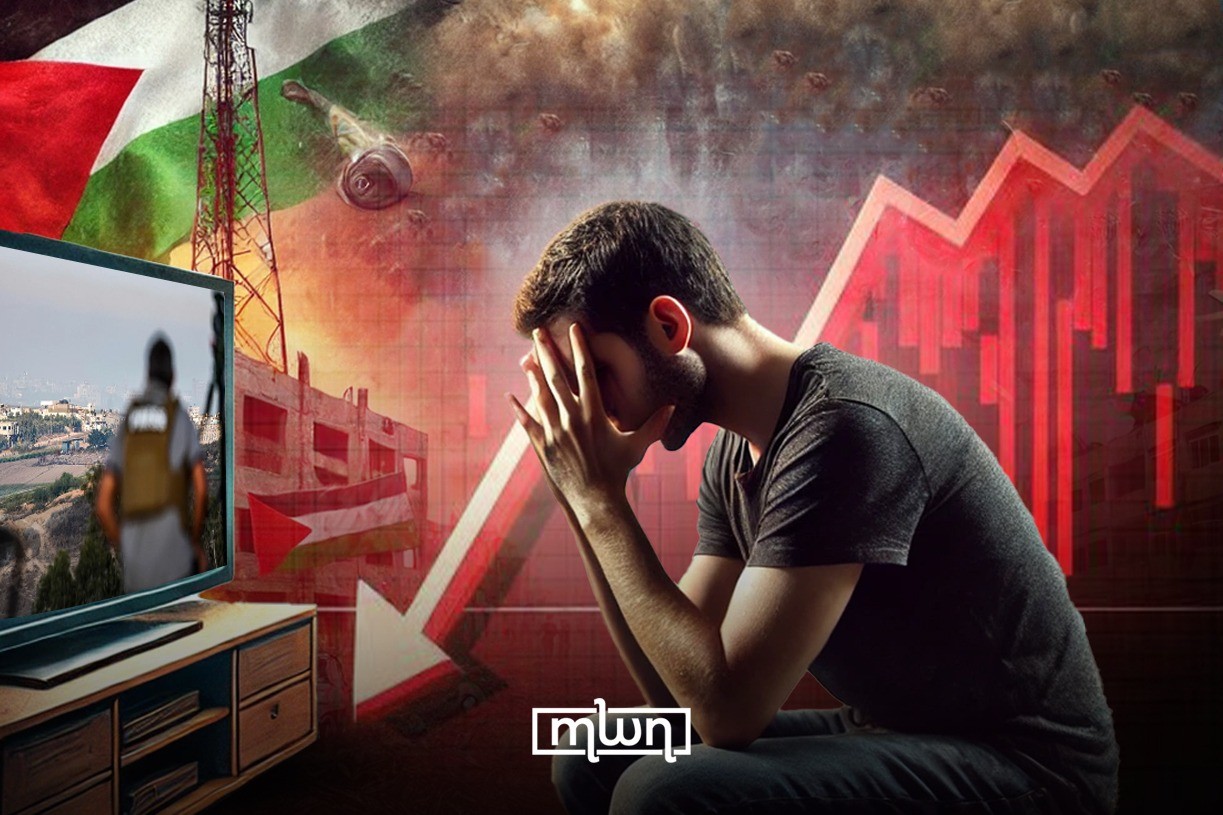
Doha – The devastating toll of the Israeli genocide in Gaza continues to mount. According to the Palestinian Ministry of Health, at least 45,399 Palestinians have been killed, including 17,492 children. More than 107,940 have been injured, and 11,160 remain missing.
These numbers, which once would have dominated headlines and sparked immediate global outrage, now often pass as just another daily update in the ongoing conflict.
The United Nations Office for the Coordination of Humanitarian Affairs paints a picture of unprecedented destruction: more than half of Gaza’s homes damaged or destroyed, 80% of commercial facilities in ruins, and 88% of school buildings impacted.
Only 17 of 36 hospitals remain partially functional, while 68% of road networks and cropland lie in ruins.
The Israeli military has issued more than 65 evacuation orders since October 7, forcing approximately 80% of Gaza’s 2.3 million residents to flee their homes.
This mass displacement occurs within one of the world’s most densely populated areas, creating a humanitarian crisis of staggering proportions.
Yet despite the scale of suffering, public engagement with these developments has shown a marked decline. Where people once spent hours following news coverage and responding to humanitarian appeals, many now scroll past headlines about Gaza with diminishing emotional response.
The psychology of desensitization
The apparent dulling of public response to Gaza’s humanitarian crisis exemplifies what researchers have long identified as “compassion fatigue” – a documented phenomenon where prolonged exposure to others’ suffering leads to a diminished emotional response.
This psychological mechanism, first formally identified in healthcare settings, has profound implications for how global society processes and responds to ongoing catastrophes.
Clinical studies on compassion fatigue reveal its complex neurological underpinnings. When individuals encounter repeated traumatic information, the brain’s emotional processing centers show measurable changes in activity. Research indicates that these alterations can occur even in people geographically removed from the events they’re following.
The process begins almost immediately. According to 2019 study findings, signs of emotional detachment can manifest within days of intensive exposure to distressing news. These changes affect both conscious and unconscious responses to information, altering how individuals process and react to subsequent news.
According to psychologist Charles Figley’s foundational research, compassion fatigue manifests as “a state of exhaustion and dysfunction, biologically, physiologically and emotionally, as a result of prolonged exposure to compassion stress.”
The psychological impact extends beyond emotional responses, with research documenting physical manifestations including altered sleep patterns, increased stress hormones, and various stress-related health issues.
This psychological numbing is not necessarily a sign of moral failure but rather a natural defensive mechanism. As philosopher Susan Sontag argued, someone who remains perpetually shocked by human depravity “has not reached moral or psychological adulthood.”
The challenge lies in finding the balance between maintaining necessary emotional boundaries and avoiding complete detachment from human suffering.
The desensitization process follows a predictable pattern. As Susan Moeller explains in her seminal work “Compassion Fatigue: How the Media Sell Disease, Famine, War and Death,” when war and famine become constant features of our news feed, they risk becoming mundane.
Each successive tragedy must compete for attention, leading to what she describes as media outlets “careening from one trauma to another, in a breathless tour of poverty, disease and death.”
The impact of this desensitization becomes particularly evident in how people process statistics of human loss. While staggering, the numbers from Gaza risk becoming abstract figures that fail to trigger the emotional response such devastating human loss should warrant.
This phenomenon aligns with what psychologists call “psychic numbing,” where large numbers paradoxically lead to less emotional engagement rather than more.
Experimental research, such as Albert Bandura’s studies on desensitization, suggests that repeated exposure to violence can fundamentally alter how we process and respond to human suffering.
This has profound implications for how society maintains sustained engagement with ongoing humanitarian crises.
Media saturation and issue fatigue
The contemporary media landscape presents unique challenges in maintaining public engagement with prolonged crises.
Data indicates that even for issues maintaining consistent severity, media coverage typically declines by 60-80% within the first quarter following peak attention.
For instance, New York Times coverage of terrorism during the first quarter of 2002 was 60% less than the rate of coverage in the fourth quarter of 2001, with coverage dropping by 80% by the fourth quarter of 2002.
The constant stream of updates about Gaza competes with numerous other global issues in what researchers have termed the “issue-attention cycle,” a concept developed by Anthony Downs that helps explain why public attention to even severe crises tends to wane over time.
This process accelerates in the modern media environment, with 24-hour news cycles and constant social media updates exposing audiences to unprecedented levels of traumatic content.
According to recent studies on issue fatigue, the phenomenon manifests in two distinct types: “fatigued-suspicious” and “fatigued-suffering-from-all.”
In the context of Gaza coverage, both patterns are observable, with some individuals becoming cynical about mainstream coverage while others simply withdraw from news consumption altogether.
Modern communication technology has fundamentally altered how information reaches and affects audiences. Studies show that multiple-channel exposure – encountering the same news across various platforms – can accelerate issue fatigue.
The ubiquity of social media has intensified this dynamic, with the constant availability of updates and graphic imagery creating what researchers term “information oversaturation.”
As identified in recent research, this oversaturation leads to what scholars call “news fatigue,” where individuals feel overwhelmed by the volume of distressing information. This often results in active avoidance of news content, even regarding critical humanitarian issues.
Digital metrics provide concrete evidence of these patterns, showing predictable declines in click-through rates, sharing behavior, and time spent reading articles about ongoing crises, even when the underlying situation remains critical.
Traditional media’s approach to crisis coverage can exacerbate this problem. As Moeller notes, media outlets often resort to increasingly dramatic and violent imagery to maintain audience engagement, creating a cycle that ultimately accelerates desensitization rather than sustaining meaningful attention to the crisis.
Content analysis reveals that as public interest wanes, news organizations typically reduce coverage depth and frequency, creating a self-reinforcing cycle of diminishing attention.
This pattern aligns with what media scholars term “agenda-setting theory,” where news organizations effectively dictate which issues deserve public attention at any given moment.
Thus, while Gaza’s humanitarian crisis dominated headlines months ago, media attention has increasingly shifted to other events like plane crashes or regional conflicts, despite the ongoing severity of Gaza’s situation.
The “mean world syndrome,” a concept highlighted by researchers studying news consumption patterns, suggests that constant exposure to negative news can create an exaggerated sense of global danger, leading paradoxically to emotional shutdown rather than increased empathy and engagement.
This effect is compounded by how media presents casualty figures and destruction statistics, which can contribute to emotional disengagement. When numbers become too large to comprehend, as in the case of Gaza’s devastation statistics, they create what researchers call “statistical numbing.”
The humanitarian cost of collective desensitization
The implications of widespread desensitization to Gaza’s crisis extend far beyond individual psychological responses. When society becomes numbed to human suffering, it can have tangible effects on humanitarian aid, policy responses, and international intervention efforts.
Research on compassion fatigue in healthcare settings provides a framework for understanding the broader societal implications. Just as healthcare workers experiencing compassion fatigue may provide reduced quality of care, society’s collective fatigue can lead to decreased support for humanitarian initiatives and reduced pressure for political solutions.
The destruction statistics from Gaza risk becoming mere numbers rather than catalysts for action when viewed through the lens of compassion fatigue.
Studies on mass-mediated compassion fatigue suggest that the nature of contemporary media coverage may actually contribute to reduced public response. The emphasis on problems without solutions, as identified in research, can lead to a sense of helplessness and subsequent disengagement.
The displacement of Gaza’s residents represents a humanitarian crisis of staggering proportions, yet the public’s ability to maintain emotional engagement with this reality faces psychological barriers documented in multiple studies on desensitization.
Research indicates that interpersonal communication can mediate compassion fatigue. This means that maintaining personal connections to the human stories behind the statistics might be crucial for sustaining meaningful engagement with the crisis.