
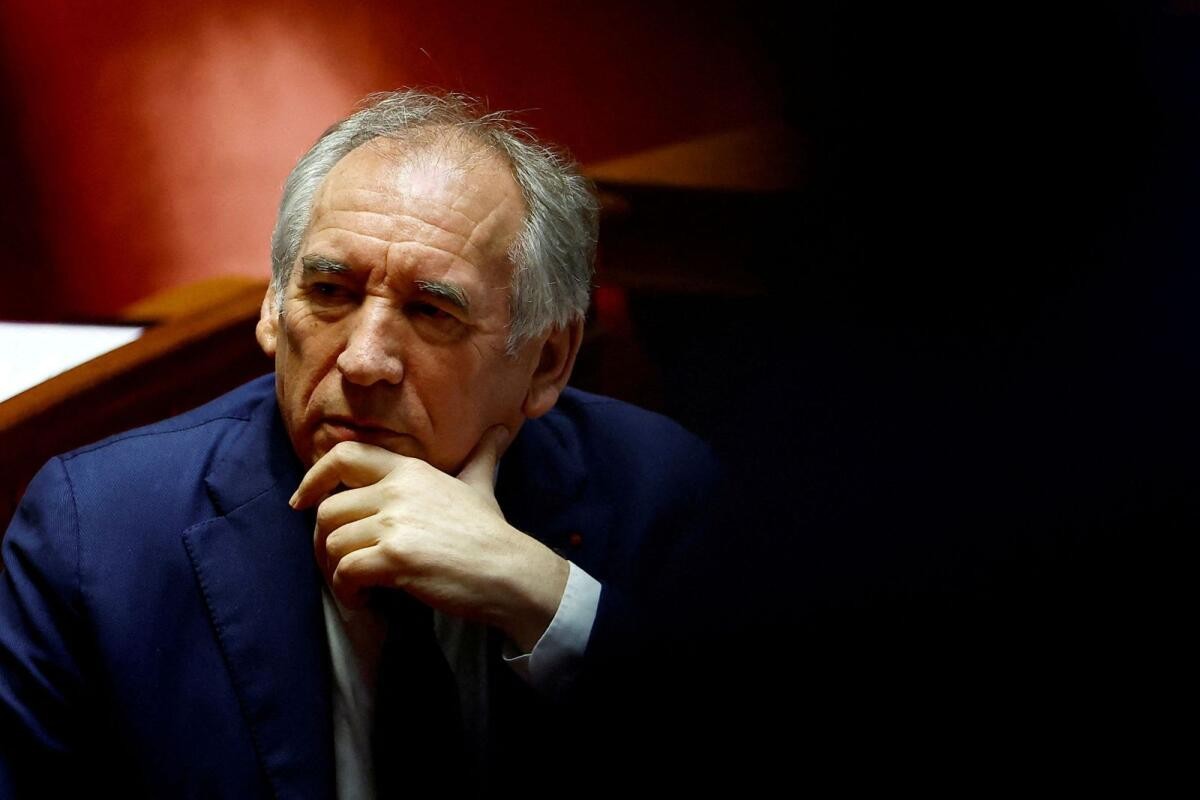
Doha – France unveiled its fourth government of 2024 on Monday, with newly appointed Prime Minister François Bayrou assembling a 34-member cabinet that faces immediate pressure to pass a crucial 2025 budget amid ongoing political paralysis and mounting economic concerns.
The announcement, made by President Emmanuel Macron’s chief of staff Alexis Kohler, comes after Bayrou’s predecessor Michel Barnier was ousted less than three months into his tenure when he attempted to pass the social security budget without a parliamentary vote.
The new cabinet maintains several key ministers in their positions while bringing back familiar faces. Eric Lombard, 66, the head of France’s state investment arm Caisse des Depots and former BNP Paribas banker, takes on the critical role of finance minister.
He will work alongside Amélie de Montchalin as budget minister to address France’s growing deficit, which currently stands at 6.2% of GDP – double the level permitted under EU rules.
In a notable move, former Prime Minister Elisabeth Borne, who stepped down in January, returns as education minister.
Other significant appointments include Gerald Darmanin moving to justice minister, Bruno Retailleau remaining as interior minister, and Jean-Noel Barrot continuing as foreign minister.
Manuel Valls, who served as prime minister under former president François Hollande, joins as overseas territories minister.
The political landscape remains deeply fractured since Macron’s decision to call snap elections earlier this year backfired, resulting in a parliament split between three rival blocs.
Socialist Party leader Olivier Faure sharply criticized the new government, calling it “a provocation” with “the extreme right in power under the watchful eye of the extreme right.”
Bayrou, who was appointed on December 13, faces immediate challenges. An opinion poll published on December 19 showed 64% of respondents were dissatisfied with his appointment.
His attempts to form a broader coalition have received lukewarm support, with both the Socialists and Communists declining to join his cabinet.
The new government’s stability will face its first major test on January 14, when Bayrou delivers his inaugural policy speech to the National Assembly. The hard-left France Unbowed party has already announced plans to file a no-confidence vote.
Financial markets have responded to the political uncertainty, with Moody’s downgrading France’s credit rating shortly after Bayrou’s appointment, citing “political fragmentation” and projecting continued deficit growth in the coming year.
The prime minister must secure approval for a new budget by mid-February, a task that will require navigating between pressure from financial markets and the European Commission to reduce spending, while avoiding the parliamentary opposition that led to his predecessor’s downfall.
The National Assembly remains in recess until January 13, giving Bayrou’s team a brief respite before facing the challenge of surviving potential no-confidence motions.
President Macron hopes the government can maintain stability until at least July, when France will have the opportunity to hold new parliamentary elections.
Read also: A Restored Notre Dame. A Restored Macron Presidency?