
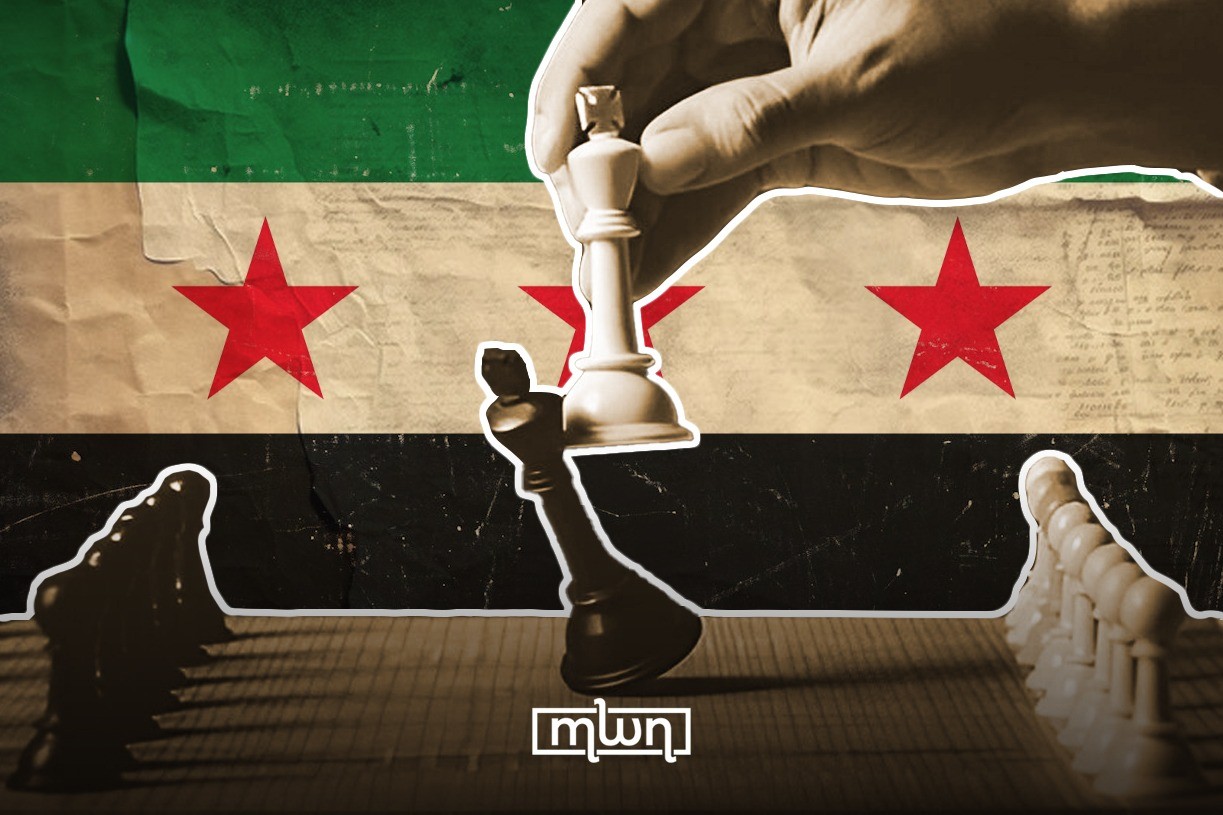
Reading Syria’s political and strategic future is very
complex, no matter how many articles, statements, and studies have been shared
over the last two weeks. Between the relatively factual, objective, and more
composed reading and the emotional, passionate, and hasty reading, commentators
offer a platter that adds to the confusion a dose of missed facts pertaining to
geopolitical realities that are taking precedence over the taken-for-granted
assessments.
I am not going to make a general synthesis of what has been
written or said, so far at the international level. It would be a colossal
undertaking that would not meet the purpose of this paper. Indeed, what would
be the purpose of this article? The aim is to comment on observations I
received from some friends, including seasoned diplomats, following the
publication of my last paper “A
New Middle
Eastern Order, a Claim for Stability or a Path towards a New Geopolitical
Chaos, MWN December 09, 2024.”
With witty yet critical remarks, my friends asserted that
Israel stands to gain the most from the downfall of the Assad
regime. According to them, the other actors involved have only reaped hot
air. I stammered an explanation that could be summed up in the following idea
with which I had ended my previous article: “(…), Middle Eastern actors who
believe themselves to be indispensable in the future security and strategic
equations will lose nothing by waiting for the day when they become
disillusioned, like those who preceded them and bite the dust in the end.”
This conclusion meant all regional state and non-state
actors. However, it turns out that some people still make a selective reading
stemming from their ideological beliefs that conditions their first reaction to
the avalanche of information and analysis. They are, of course, entitled to
have their say on such specific matters, provided that they take a step back
with respect to the spinning wheel of information and the reality on the
ground. This might help produce a prospective reading of the situation.
This is exactly what I intend to do in order to get the
ideas contained in the above-mentioned article smoothly digested. To do so, I
will insist on paradigms such as the ideological dimension, the cognitive
shutdown, the herd mentality reaction, the victim mentality, the denial of
reality that jumps out at the eye, the mimitism in terms of geopolitical
analysis, the identity self-flagellation, the overestimation of the strength of
the adversaries and the static reading of the reality on the ground.
‘’You are using too many paradigms and old-fashioned
expressions,’’ one would be tempted to argue. No worry; my reading would be
inclusive and federative of the concepts that borrow from each other so that I
would to come out with something capable of defending my perception of the
evolution of the Middle Eastern geopolitical chessboard.
So the first question my friends asked was whether Israel
would be the only big beneficiary or winner of this big geopolitical mess. My
reading is NO. The second set of questions was that the political and strategic
chessboard in the Middle East and North Africa would be shaped in the future in
the spirit of the Sykes-Picot Agreement (1916), the Gulf War I (1980-1988), the
Gulf War II (1991), the American-international intervention in Iraq (2003), the
attacks of September 11, 2001, the repercussions of the Arab Spring (2011), the
post-Covid period, and the jerky normalizations between Israel and its Arab
neighbors (2020). My reading is that there is room to tuck into this
multicolored fabric, provided it wouldn’t lead us to feed on the ingredients of
the conspiracy theory.
Drops of oil on the water
The third set of questions assumes that the architects of
the counter-revolution that emerged from the Arab Spring are very disappointed
at the readjustment of the counter-revolution initiated in 2013. Besides, the
victims of the counter-revolution are back after having tempered their ardor
ignited by the Arab Spring. Here again we are faced with too many expressions
that add to the prior set of confusion drops of oil on the water.
Let’s proceed step by step according to the series of
hypotheses put forward above. The ideological dimension is interesting. I
borrow from a colleague-diplomat, who spoke on condition of anonymity, a series
of explanations that deserve to be highlighted.
The fall of Syria is a direct consequence of the collapse of
the Arab regional order that prevailed between the two world wars and the
erosion of pan-Arabism, whose vectors were the Nasserist and Baathist ideologies.
By the same token, the neutralization of Egypt’s role in the management of
inter-Arab conflicts, the destruction of the potential strength of what has
been called the “axis of resistance,” and the failure of a project
that has been unable to adapt to changes on the global geopolitical chessboard
were among other factors that explain why the Syrian regime collapsed.
My colleague ends his comment by raising questions about the
process of Arab normalization with Israel and the possibility of establishing a
new Arab order in which the League of Arab States would be replaced by a new
structure. The latter would pave the way for Israel to join and be finally
accepted in its geopolitical neighborhood. Here again, Israel is brought into
the debate.
Another colleague, a diplomat by profession, takes up part
of this reading and focuses on the importance of the internal dimension. He
thinks that the Arab peoples have not yet said their last word. He projects
that countries in the sub-region would be the next candidates for uprisings
that would eventually push their leaders to run away. And, like the other
colleague, he wonders about Israel’s role in provoking chaos, and by using its
art of opportunism, ends up taking advantage of it.
Then there is the reading of a friend, a university
professor, a former international civil servant, who asks an even more
difficult question. According to him, we are moving towards the establishment
of a new form of protectorate, if not a hegemonic ascendancy, over the Middle
East that would once again benefit Israel—and perhaps, to a lesser extent, some
Arab actors who are on the rise.
My two colleagues, who are brilliant diplomats, confirm
somehow my reading on the importance of what I would call the existence of a
cognitive shutdown (and not a disorder), from which I also suffer at times. It
consists of performing a behavior that combines denial of a reality and a haste
to find in taken-for-granted previous knowledge a tangible explanation that
would crush the arguments that would assess a new reality based on a dual
characteristic of movement and residual stagnation.
Sorting out the right thing is blocked by what some thought
would be an undeniable primary truth. This doesn’t mean I underestimate my
colleagues’ reading. Rather, this is a call to raise the level of the debate
and dig deeper.
The objective is not to succumb to the herd’s mentality
reaction. A herd that is at the mercy of social networks, the race for scoops
and fast-food information. Indeed the clash of surprise caused panic among most
Arab experts who used to enjoy their intellectual comfort. These experts used
to trust their ritual division of the Arab periphery as being a controversial
space of right-wing and left-wing regimes, conservative regimes and progressive
regimes, hard-liners Islamists and moderate secularists, etc.
What are my arguments? First of all, the regime change in
Syria was the result of a deal that would have been made on several levels. On
the one hand, it was sponsored willingly or not by the three countries directly
involved in the Syrian crisis: Russia, Iran, and Turkey. On the other hand, the
deal had the consent of other major players, in this case the United States.
Bashar al-Assad has been asked to unleash the floor because his time has come
to an end.
Moreover, the regime change in Syria and the nature of the
actors who helped it happen suggest that the actors who failed to fully
implement the 2011 Arab Spring scenario have been fished out, once again. They
have been awarded for having learned their lesson. We are talking here about
Turkey and Qatar.
On the question of the overestimation of the power and the
Machiavellianism of the adversaries, two narratives stemming from conspiracy
theories are rehearsed on a round clock. On the one hand, the narrative that
takes up the idea that a program has already been made for a century for the
fragmentation of the Arab nation and the weakening of Islam. This strategic
programming would be based on the maintenance of a permanent disorder in the
Arab periphery in order to subjugate it in the end. This would mean that there
is a blatant complicity between the West and Israel to control the Arab world
and subjugate the Islamic Umma.
On the other hand, the narrative that argues the West wants
to make amends and be forgiven for the extermination of the Jews throughout the
history of Europe, especially on the issue of the Holocaust. Israel, for its
part, wants to take justice into its own hands by fighting what it conceives of
as a spread of anti-Semitism.
Both narratives are popular with public opinion on both
sides. Therefore, the situation in Syria is perceived as a logical follow-up of
the project of splitting the Middle East and North Africa to implement the
project of implementing the old prophecy of Greater Israel. The jerky
normalization between Israel and the Arab countries would be part of the other
transitional project pertaining to the federation of the three monolithic
religions inspired by the Abrahamic heritage, where Israel would take the lead.
However, the proponents of the existence of a Machiavellian
project, the opponents of the Arabs and Muslims, are being hatching (or just
scratching the surface) on the thesis that incriminates the latter (leaders and
peoples) for having given credit to this project through their epistolary
divisions and lasting animosity. These divisions draw on the dichotomous
interpretation of the history of the region, particularly in its cultural,
civilizational, and religious dimension.
As a result, ideological and political differences increase
over time. The proliferation of social projects in the light of the Renaissance
at the beginning of the last century, the long parenthesis of the cleavages
recorded in the aftermath of the Second World War, and the processes of
negotiated national independence have favored the fragmentation that everyone
complains about nowadays.
Why do some Arab ideologues refuse to admit that the
weakness of the social projects they have defended loud and clear lies in the
fact that they have locked themselves into dogmatism, which made them believe
that they were right and that others were wrong?
This single thought is the unfortunate legacy of practices
that had condemned free thought by certain Umayyad and Abbasid caliphs, not to
mention the great impasse-ostracism imposed by certain Ottoman sultans. The
same thought turns a blind eye to the negotiations between the British Empire
and the Ottoman Empire two decades before the latter’s dissolution (T.E.
Lawrence, Seven Pillars of Wisdom, 1926). Some of these ideologues take up the
same arguments, either to revive a hypothetical Islamic golden age or to invent
actors who are supposed to make a clean sweep of all the past heritage and
start from scratch.
No hegemonic geopolitical hegemon would be sustainable
What about the static reading of the political map of the
Middle East and North Africa? Let’s start with one central question: Would the
idea of building a state on a pure (or a purified) religious basis be sound and
viable? What about the rights of religious minorities, the secular majority, or
other component of social and cultural fabrics?
Recorded history teaches that all such projects that have
ignored the human dimension of the interpretation of religions have failed. The
establishment of a caliphate integrating all Muslims has known different joys.
It has been established by independent researchers that religion has brought
about a shock of identities whenever it has been only an exclusive instrument
of power.
The same is true when it comes to the idea of creating a
Greater Israel on a religious basis. This observation brings me back to the
original question: would Israel be the only major beneficiary of the fall of
Bashar al-Assad?
Subsidiary questions are also legitimate: on the one hand,
is Israel the undisputed strategic intermittent in the region? Would it be a
new pivotal state with an even more important mission consisting of exercising
a hegemonic ascendancy over the other countries, including those that embarked
on the normalization track?
Would Western political and diplomatic planners, especially
in the United States, be driven to help reinvent the conditions of a hegemony
similar to the one that prevailed during the time of the Shah of Iran?
The answer is NO. My argument? History has shown that the
convergence of interests creates the conditions for alliances. As long as the
interests of the West and those of Israel (strategy, ideology, repentance,
redemption) are on the same wavelength in the Middle East, the role of this
country will remain a priority, but if it were to go beyond it, this (sacred)
alliance would fall like an autumn leaf.
It is in this context that the idea of Israel’s inclusion in
a reformed League of Arab States is defended by some political scientists. It
takes up in a new form the proposal of Muammar Gaddafi labeled “Isratine”
(Israel-Falastine) in 2000. Sooner or later the unconditional Western support
for Israel in Europe and the United States would eventually be felt as
unproductive sacrifice as well as a financial burden. No doubt, an inventory of
the situation would be invited into the conference room in the near future to
sort out the issue.
How about the future of the Palestinian cause? The
Palestinians’ various concessions since the 1993 Oslo Accords? The sacrifices
of multiple intifadas? The fallout from the Gaza war that is still unfolding
with its procession of victims? Would all this have been for nothing? And
Israel’s continued annexation of territories, including the Golan Heights and the
expansion of settlements in the West Bank? Do all these events go with the
wind?
It is precisely this sort of bulimic appetite Israel has
been showing that starts frightening some decision-making centers in the West,
including among Israel’s most loyal supporters. Being a strategic intermittent
within limits is no big deal, but moving towards being a free electron on the
way to dealing a fatal blow to Western interests, the United States, Russia,
and the United Kingdom, to name but a few, wouldn’t tolerate it in the long
run.
The interests of these of Israel’s loyal supporters and
those of other neighboring countries that predate the creation of the State of
Israel would be in jeopardy. So, no procrastination. The religious beliefs of
certain decision-makers in Israel and in other Western countries wouldn’t
engage the big interests, regardless of their religious depth or lack of faith.
At the end of the day, these interests preach a transnational approach to
managing international conflicts and maximizing gains.
A new form of religiosity: inventing a new capitalism or
sinking forever
The interests mentioned above are actually driven by a new
form of religiosity: how can capitalism and ultraliberalism be saved so that
the world wouldn’t fall into total chaos? The COVID pandemic has been a serious
wake-up call, with conspiracy theory involved or not, with human error or the
slippage of artificial intelligence brought into the game or not.
So what can be done to clean up the mess? The solution to
the conflict between the Palestinians and the Israelis on the basis of the
two-state principle is unavoidable. Israel cannot indefinitely play on the rope
of the permanent threat to its security in order to close the door to this
solution. The most serious threats have been neutralized by the total
dislocation of Hamas forces and the partial destruction of Hezbollah’s
capabilities. Furthermore, the Palestinian Authority and the countries of the
region have adopted a conciliatory and not an aggressive approach to address
the peace process, even if the march towards reaching a solution has been
tortuous since the summit of the League of Arab States in Beirut in 2002.
By what means, one might ask? I guess one of the first steps
to take would be to work on the initial understanding reached at Camp David and
Sharm Al Sheikh in 2000, provided that it would be more creative this time. Is
this possible? It is, even though we must recognize that the
Palestinian-Israeli conflict remains subject to the ascendancy of internal
politics in Israel and in certain countries of the sub-region.
But this shouldn’t refrain the main parties to the conflict
from preparing the ground to prevent against future upheavals. These upheavals
require that the management of international conflicts be collegial. In the
Middle East in particular, this management no longer accommodates the total
asymmetrical ascendancy, even that of a state actor that has the wind in its
sails these days. Other actors in the region are in a phase of moving at a high
speed in a space that is no longer an arena where turkeys of the farce,
puppets, or so-called indifferent accomplices run the show.
The Middle Eastern geopolitical chessboard cannot be viable
(and relatively stable) without working out a reconstruction based on the
balance between state actors. This means stopping secessionist tendencies to
gain momentum or promoting the fragmentation of sovereign states for ethnic,
racial, and tribal considerations.
This chessboard would be better shaped by opening up more so
that minorities can be integrated through the adoption of a genuine democracy
to repel the gravediggers on duty and the inveterate scavengers who feed on the
humanitarian tragedies from which the Middle East has suffered for almost two
centuries. Otherwise, there would be a risk that the crowds in some fragile
countries would be forced to take the law into their own hands and, as a
result, be exploited to revive false springs and autumns repeatedly.
No, Israel wouldn’t be the only beneficiary of Assad’s
dynasty collapse. Turkey, Iran, and Russia are too. Many observers and
strategists share this opinion, which I have already emphasized in my
above-mentioned article. I will only add one more point on the register of
pretexts to find out how my arguments would look.
Turkey promotes itself as the standard-bearer of Islamic
movements, surfing between enlightened radicalism and moderation. She no longer
has the right to make the same mistakes she did in 2011-2016. She will use this
opportunity to balance its relations with Arab countries, Israel, and Iran. She
would establish a buffer zone with the latter, Iraq, and (with the implicit
consent of the new authorities she manages from a distance) Syria to contain
the Kurds. The project of an independent Iraqi Kurdistan, which was supported
by Israel and the United States in 2017 to snowball in the region, would be on
hold for the time being.
Iran, for its part, is said to have negotiated its gradual
withdrawal from Syria in exchange for maintaining its influence in Iraq and
Yemen. Similarly, she would have already prepared the ground to advance its
nuclear program (some thought that she would be on the verge of succeeding in
its bet of acquiring nuclear technology other than civilian ones) and thus see
the economic sanctions to which it is subject lifted. Iran would never give up
its project to reach the Mediterranean, a dream that goes back to its
historical golden age in the region.
Some share even of the views that Iranian strategists are
convinced that their transnational political and diplomatic project, carried
out by the Islamic Revolution since 1979, has not achieved the expected results
in the space of time that would have been allotted to it. This project would
sooner or later be abandoned because of its high cost. This would take place
once the negotiations on the political transition at the top of the state have
been definitively concluded.
Furthermore, there is a third category of gas-producing
countries, including Qatar, which would finally see the gas pipeline project
for the supply of Europe carried out as part of the gas pipeline project
(Iran-Iraq-Syria) put back on the table. This project concerns the
Iranian-Qatari South Pars gas field, from which Qatar benefits greatly because
of the sanctions imposed on Iran as a result of the nuclear issue. The
geopolitics of hydrocarbons would ultimately be the sinew of all the
transformations recorded over the past decade. Syria would have been nothing
more than a last-minute element in the strategic patchwork.
Russia would have understood that it could limit the damage
by accepting a certain Western ascendancy on its western borders while boldly
defending its vital strategic space. This would also involve limiting Chinese
influence, which covets this vital space as part of the Silk Road initiative.
Similarly, Russia would be convinced that the BRICS project would not go far.
This is another pair of sleeves that deserves deeper thinking.
Nothing is won in advance. This is an open secret, as they
say. The man, the citizen, and the customer par excellence of the political and
social press will soon be nothing more than an anonymous NUMBER at the mercy of
artificial intelligence. So, because of what’s happening now, Aldous Huxley
(1932 and 1958) and Edward Bernays (1928) will once again be revisited to find
a tangible explanation for this unprecedented mess.
Huxley and Bernays
would be requested to give answers in the same way as were asked epic scholars
and thinkers such as Abd Al-Rahman Ibn Khaldun (1377), Auguste Comte (1822 and
1830-1842), Baruch Spinoza (1660), George Orwell (1949), Taqi ad-Din Ahmad ibn
Taymiyyah (1263-1328), Sadek J. al-Azm (1969), Mohamed A. Lahbabi (1954 and
1961), Ibn Rochd-Averroes (1179), Noam Chomsky (1988), etc.
What about the Axis of Resistance and the Front of Refusal
in this brainstorming patchwork? The only major battle that both parties came
close to winning was that of recruiting widely within the Arab countries in
order not only to destabilize them but also to change their regimes. Unless I
am mistaken, I do not recall seeing petitioners from the countries of this Axis
and Front make their pleas at the United Nations and in some renowned forums to
defend the Palestinians.
Besides, many people ignore the fact that during the 1990s,
Syria, under Hafez al-Assad’s rule, secretly negotiated with Israel for the
conclusion of a peace agreement similar, to some extent, to those concluded by
the latter with Egypt (1979) and Jordan (1994). Held, thanks to American
mediation, these negotiations are said to have made progress. But significant
differences remained not only on the issue of the handover of the Golan Heights
but also on the timing of normalization between the two countries. The process
was interrupted because of the intervention of certain interests, including
those of the other countries of the Axis of Resistance and the Front of
Refusal.
Geopolitics is a matter of packages and a set of deals done.
There is no miracle solution to epistolary crises. There are arrangements that
depend on the commitment of the parties. And neither side would emerge
victorious through the total surrender of the other parties, which would mean
an unacceptable humiliation for those whom my diplomat colleague called
“the Arab peoples who have not said their last word.”
So which winner, the big beneficiary, are we talking about?