


 Join on WhatsApp
 Join on Telegram
Rabat – Morocco, the Democratic Republic of Congo (DRC), and Zambia are joining forces to create a regional value chain for electric mobility in Lusaka, Zambia, with the aim of transforming Africa’s automotive industry.
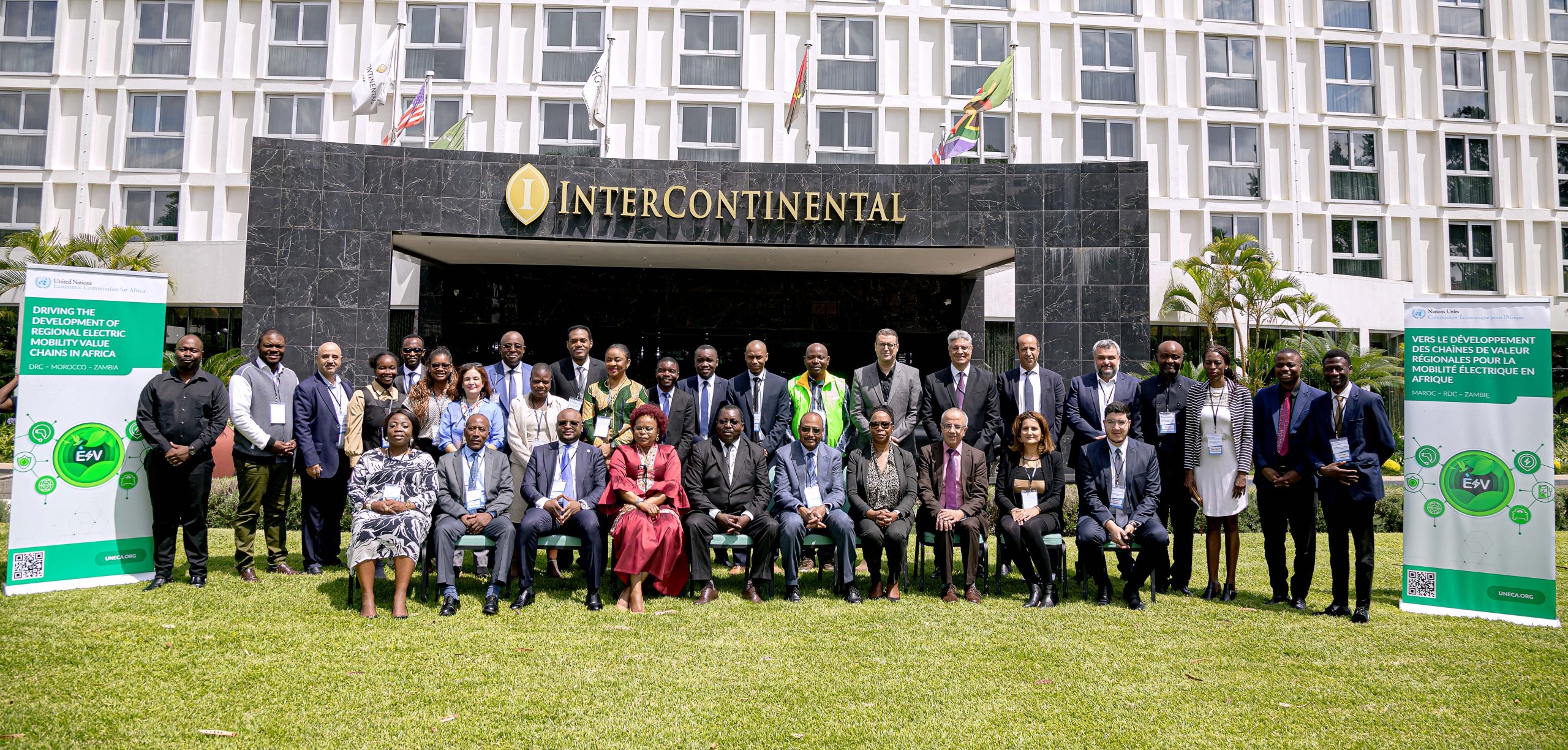
Led by the UN’s Economic Commission for Africa (ECA) Office for North Africa, the initiative launched its second phase on December 9 in the presence of representatives from the three countries.
The project aligns with Africa’s goals to embrace sustainable development, reduce reliance on fossil fuels, and address challenges like outdated vehicles and inadequate public transport infrastructure, said a press release from ECA. Electric mobility promises to lower emissions while creating jobs and fostering economic growth.
Crusivia Hichikumba, Zambia’s Permanent Secretary for Investment and Industrialization, spoke of the importance of this partnership, saying that “the complementarities between our countries’ resources and experiences are sufficient for the development of robust battery and precursor production value chains. This can play a key role in the transition of our economies to a post-fossil fuel era.”
Read also: Moroccan-British Atlas Group To Launch First African-Designed Electric Vehicle
The DRC, home to vast reserves of cobalt and copper, plays a central role in this effort. According to Marie Pascale Diatuka Malanda of the Congolese Agency for Ecological Transition and Sustainable Development, reflecting on opportunities for synergies, technology transfer, and sharing good practices is essential for green, low-carbon industrialization.
Morocco, a “leader” in Africa’s automotive sector, as the statement described it, has leveraged its expertise to become a hub for vehicle production, including electric models.
“By joining forces, we can become a world leader in the field of electric mobility,” said Idriss Addahbi, a high-ranking official at Morocco’s Ministry of Industry and Trade. He noted the importance of developing a regional value chain as it would help create jobs, reduce independence on fossil fuels, and contribute to climate action.
A growing market with global potential
Africa’s automotive industry was valued at $30.44 billion in 2021 and is expected to grow to $42.06 billion by 2027. Annual demand for cars—both passenger and utility vehicles—is rising, driven by rapid urbanization.
Meanwhile, the global electric vehicle (EV) market could reach $46 trillion by 2050. With 30% of the world’s reserves of cobalt, lithium, and copper, Africa is uniquely positioned to capture a share of this booming sector, ECA said.
The statement added that this transition supports the UN’s 2030 Agenda for Sustainable Development and the African Union’s Agenda 2063, which would promote green jobs and economic resilience.
However, ECA noted challenges like limited infrastructure, lack of EV charging stations, and regulatory differences that remain barriers to seamless value chain development.
The African Continental Free Trade Area (AfCFTA) is central to this initiative, it added, as it offers a platform for policy harmonization and regional integration.
The Lusaka workshop is taking place between December 9 and 11 focused on developing a detailed roadmap and partnership framework for electric mobility. Public and private sector representatives and technical experts worked together to establish action plans for battery production, vehicle assembly, and EV infrastructure development.


