
 Join on WhatsApp
 Join on Telegram
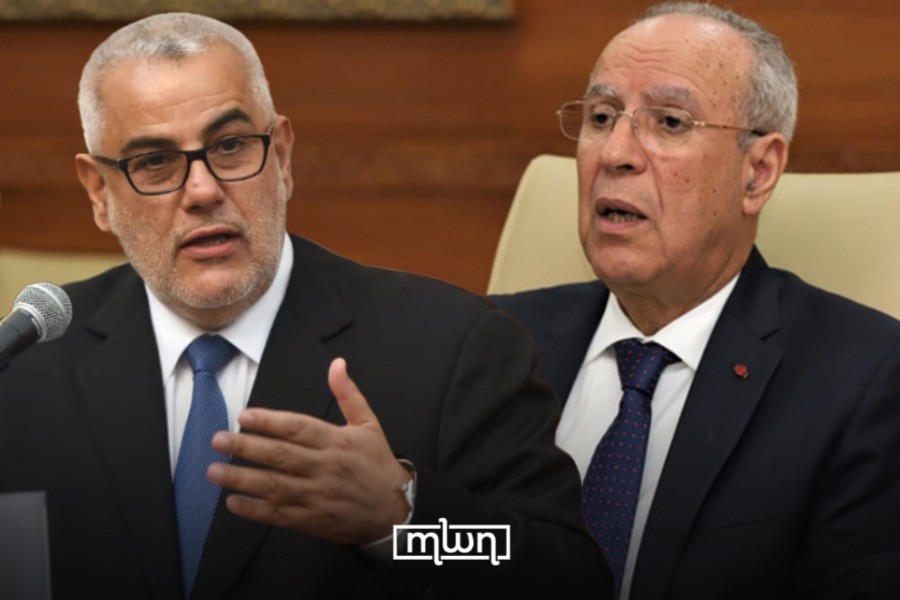
Doha – Minister of Islamic Affairs Ahmed Toufiq has issued a detailed response to former Head of Government Abdelilah Benkirane, defending his recent statements about secularism in Morocco. He pointed out the secular origins of modern political structures, including those utilized by Benkirane’s own Justice and Development Party (PJD).
In a letter addressed to Benkirane dated December 3, Toufiq detailed that modern political parties, including the PJD, are inherently based on secular Western systems.
“You are the leader of a modern political party, and the modern political party concept is borrowed from a secular Western system,” Toufiq wrote, adding that “you were elected based on equal voter rights regardless of voters’ beliefs and backgrounds, and this system is borrowed from a secular Western system.”
The minister’s response comes after Benkirane publicly criticized Toufiq’s earlier statements about secularism in Morocco.
During a meeting in Taroudant last Sunday, Benkirane had insisted that “Morocco is an Islamic state, not a secular one,” arguing that “Moroccans are Muslim and committed to their religion and Islamic state.”
The controversy began during a parliamentary session on November 25, when Minister Toufiq recounted a conversation with the French Interior Minister during President Emmanuel Macron’s recent visit to Morocco.
In that session, Toufiq had described explaining to his French counterpart that Morocco practices its own form of secularism, distinct from France’s 1905 laws, while maintaining religious freedom.
In his detailed response, Toufiq elaborated on Benkirane’s tenure as Head of Government: “When you were Head of Government, you worked on legal texts serving rational interests that were submitted to parliamentary vote, which is borrowed from a secular Western system. Had you wanted to consult religious scholars, you would have lost considerable time due to their differences of opinion.”
The minister further explained that as Head of Government, Benkirane “had to accept individual freedoms as stipulated in the constitution and protected by public order rules, which is borrowed from a Western secular context.”
He added that “everything related to citizenship, which was among your considerations, Mr. President, is a reference borrowed from a secular historical context, even though we can find some details in our religious heritage.”
The minister distinguished between different forms of secularism, noting that “discussion of secularism may not be mastered by every ‘leader,’ as it’s a complex concept in political philosophy, with ongoing debate even in its original environment.”
Toufiq specifically distinguished between French “laïcité,” which emerged from a tense historical relationship between church and society, and other forms of secularism where states consider people’s religious needs.
He specifically referenced Germany as an example, revealing that in 2008, he learned from the German ambassador that their state collected €8.5 billion in religious taxes in 2006.
Toufiq added that Morocco’s unique position is maintained through the institution of Commander of the Faithful, which protects both religious and societal values.
“All of this occurs within this kingdom in peace and harmony because the Commander of the Faithful protects the fundamentals and certainties of religion. Without this, we would live in a secularism where the only reference is the majority,” he wrote.
Regarding his original parliamentary statements that sparked the controversy, Toufiq clarified that his discussion with the French official was more nuanced than reported: “The person I conversed with on this topic is a discerning official who knows Morocco and is religious himself, but lives in a system that doesn’t see religion as a fundamental human need that the state must protect.”
The minister concluded by stating Morocco’s potential to develop a unique model that could resolve many intellectual challenges facing the Muslim world, particularly regarding the relationship between religion and politics.
He said that this solution depends on “monotheism rather than letting selfishness, which is hidden polytheism, run free,” adding that “God, who has conducted and conducts people’s conditions, has guided us to open our insights to this human commonality in the traditions of righteousness and corruption.”
Read also: Islamic Affairs Minister Under Backlash for Saying Not All Bank Loans Are Haram