 Join on WhatsApp
 Join on Telegram
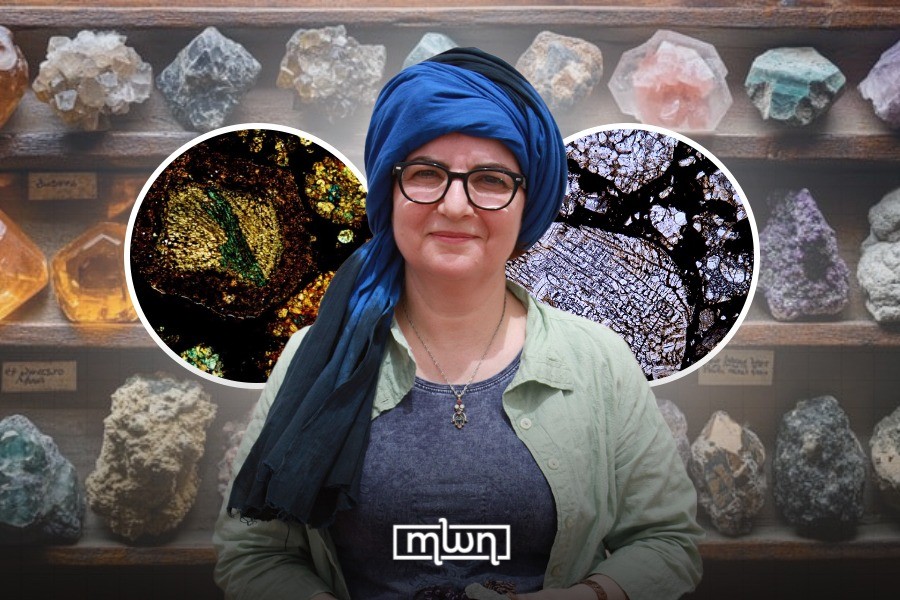
Doha – How does a country protect its meteoric heritage from being lost to foreign collectors and markets? For Morocco, the answer came through the pioneering work of Hasnaa Chennaoui, the country’s first female meteoritics and planetary scientist, who transformed the nation’s approach to these celestial treasures.
In a recent article published in Nature journal, Chennaoui shared her journey from stargazing student to leading scientist.
“When I was a student, I would spend my evenings between palm forests and lemon gardens, looking at the Casablanca sky, enjoying the silence,” she recalled, describing the very location where the renowned astronomer Ibn Rushd once gathered his students centuries ago.
As the first woman in Morocco to hold a PhD in meteorite science, Chennaoui studied at Pierre and Marie Curie University in France, where her fascination with meteorites began in 2000.
She currently serves as a professor of geology at the Hassan II University of Casablanca, Faculty of Science Ain Chock.
Morocco’s vast desert landscape and its community of skilled meteorite hunters have made the country a significant source of meteorites globally. However, this rich resource faced a critical challenge.
“Because there was no specific regulation to restrict the exportation of meteorites and other geoheritage samples, such as fossils and minerals, most were exported and sold abroad,” Chennaoui explained.
Taking action, she collaborated with the Moroccan Geological Survey to establish guidelines for meteorite collection and sales, ensuring reference samples remain within Morocco’s Directorate of Geology.
Her efforts culminated in a landmark achievement in February 2021 with the approval of a decree regulating the collection, sale, and export of meteorites.
Chennaoui has also addressed another crucial issue in meteor research – its naming conventions. “I didn’t like these designations that erase the origin of the rocks,” she said, referring to the practice of naming Moroccan meteorites with generic Northwest Africa numbers.
Her team now ensures all meteorite falls in Morocco are properly documented and submitted to the Nomenclature Committee of the Meteoritical Society, preserving their Moroccan identity.
Since 2000, Chennaoui has been instrumental in developing the field of meteoritics in Morocco. “Today, more than ten PhD students are working on topics such as meteorites, impact craters, and planetary surfaces, developing significant expertise in these areas,” she noted.
However, challenges remain: “The main challenge to the development of this field in Morocco is the lack of sophisticated analytical equipment, and the scarcity of academic and research positions in the country.”
Her contributions to the field have earned her numerous accolades, including her being elected to the Meteoritical Society in 2018 and receiving the prestigious Hypatia International Award in 2021.
Perhaps most notably, asteroid 299020 was named “Chennaoui” in recognition of her efforts to advance planetary sciences in Morocco and the MENA region.
In 2019, Chennaoui established the ATTARIK Foundation, creating a public museum exhibit titled “Meteorites, Messengers from the Sky: ORIGINS” in Casablanca.
The exhibit attracted over 18,000 visitors, showcasing Morocco’s meteorite heritage and bringing these celestial objects closer to the public.
Read also: World’s 1st Boomerang Meteorite Found in Morocco Leaves Scientists Dazzled