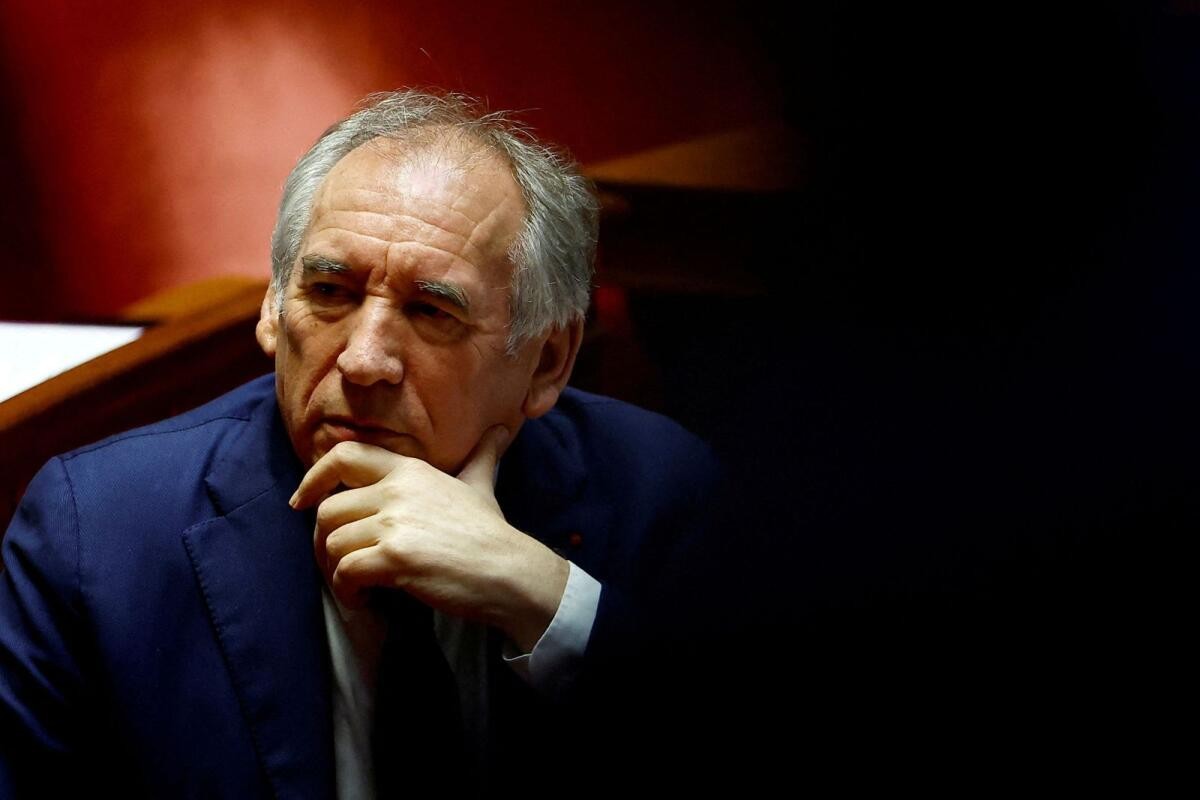
Doha – France’s political turbulence continues as Prime Minister François Bayrou’s newly formed government faces an immediate challenge from left-wing opposition parties, who filed a no-confidence motion following his policy speech on January 14.
The motion, led by La France Insoumise (LFI) party president Mathilde Panot and supported by 57 other deputies from communist and ecological parties, will be debated on Thursday at 3 p.m. and put to vote around 5:30 p.m., according to National Assembly President Yaël Braun-Pivet.
The challenge comes as France struggles with political instability, having seen four governments in 2024 alone.
Bayrou, who was appointed on December 13, 2024, leads a 34-member cabinet that includes several controversial appointments, including former Prime Minister Elisabeth Borne as Education Minister and Bruno Retailleau as Interior Minister.
The motion criticizes what opposition leaders call a “denial of democracy” in Bayrou’s appointment and his refusal to submit to a confidence vote.
“The composition of the government is itself a provocation justifying censure,” the motion states, particularly citing Borne’s previous use of Article 49.3 to push through legislation 23 times during her tenure as Prime Minister.
The political crisis has deepened existing divisions within the left-wing coalition known as the Nouveau Front Populaire (NFP).
While communist and ecological groups have joined LFI in supporting the motion, the Socialist Party (PS) has taken a more nuanced position.
PS leader Olivier Faure demands “a clear response” from Bayrou regarding pension reform before deciding their stance.
“I tell the socialists that on June 8, 2023, we made a common oath with the ecological group, with the communist group, with the socialist group, that we would do everything possible to repeal the retirement reform at 64 years and even to defend retirement at 60 years,” Panot stated on France Inter radio.
Read also: Historical Ally or Contentious Choice? RN Takes Presidency of France-Morocco Group
The political uncertainty has already impacted France’s economic standing, with Moody’s downgrading the country’s credit rating following Bayrou’s appointment.
The nation’s deficit currently stands at 6.2% of GDP, double the level permitted under EU rules.
The motion appears unlikely to succeed without support from the National Rally party, which has indicated it won’t vote in favor.
However, the political maneuvering has created significant tension within the NFP. LFI founder Jean-Luc Mélenchon has warned that those who don’t support the motion would effectively exclude themselves from the coalition.
Bayrou faces the immediate challenge of securing approval for a new budget by mid-February, a task that proved fatal for his predecessor Michel Barnier, who was ousted less than three months into his tenure.
The National Assembly resumed its session on January 13, giving the new government little time to establish stability before facing these crucial votes.
President Emmanuel Macron’s administration hopes to maintain governmental stability until at least July when France will have the opportunity to hold new parliamentary elections.
Recent opinion polls indicate public skepticism about the new government, with 64% of respondents expressing dissatisfaction with Bayrou’s appointment as of December 19, 2024.
Read also: Macron Reminisces About France-Morocco Strategic Partnership Spanning All Areas