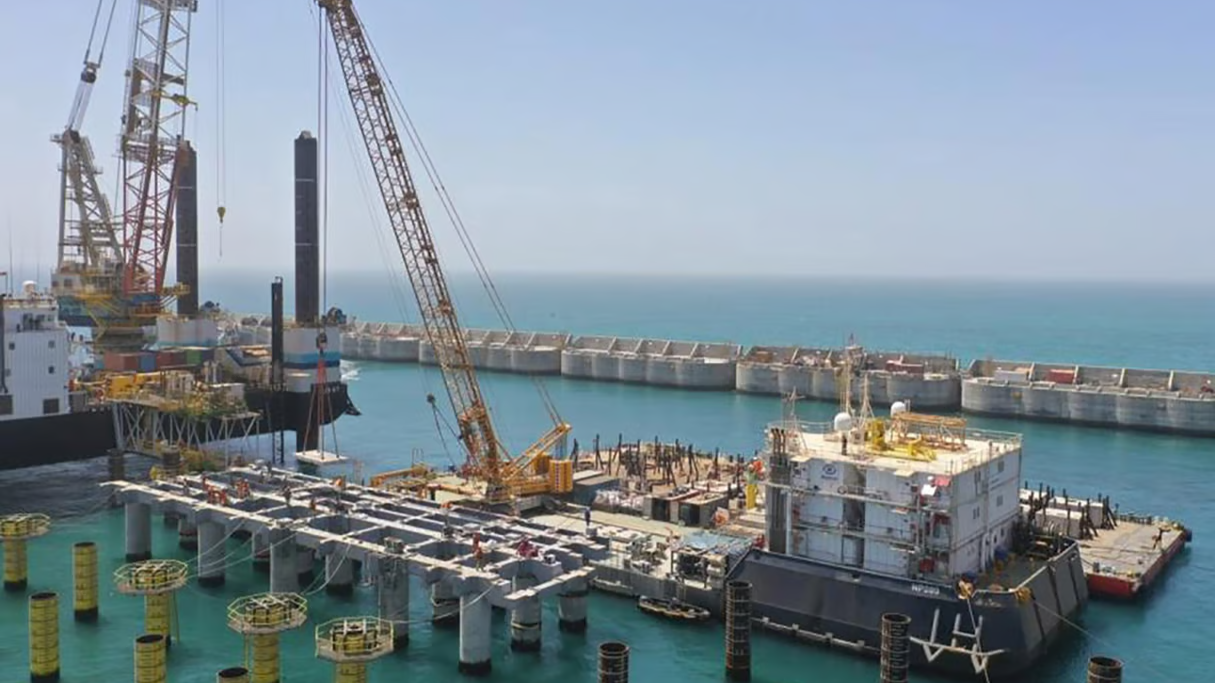
Rabat – Senegal and Mauritania have officially opened their first joint gas well in the Grand Tortue Ahmeyim (GTA) field, signaling a key step toward the commercial use of their shared offshore gas resources.
A joint statement from the governments of both countries, released on January 1, described the development as a turning point in regional energy cooperation.
Discovered in 2015 at a depth of 2,580 meters, the GTA project, located along the maritime border, involves British oil giant BP, American firm Kosmos Energy, Mauritania’s national hydrocarbons company (SMH), and Senegal’s Petrosen.
The field is expected to produce around 2.5 million tons of liquefied natural gas annually once operations begin.
The joint statement also noted the importance of this milestone, describing it as a reflection of the strong collaboration between the two countries.
The GTA field is undergoing final tests ahead of the planned start of production in 2025.
Senegal eyes economic growth from hydrocarbon production
Senegal set foot in the hydrocarbon sector in 2024 with oil extraction from the Sangomar field, located 100 kilometers south of Dakar. Developed by Australian company Woodside, the project required $5 billion in investments and eyes a daily production of 100,000 oil barrels.
Senegal’s oil and gas production will serve two main purposes: meeting domestic demand and targeting international export markets.
While the scale is no match to the energy output of giants like Russia, Saudi Arabia, or the US, its oil and gas revenues could inject billions into the national economy.
According to the International Monetary Fund (IMF), after growth slowed to 4.7% in 2022, Senegal’s economy rebounded to over 5.3% in 2023, driven in part by the nascent hydrocarbon sector.
The country’s economic prospects are bolstered by its expanding oil and gas production, which is expected to fuel growth for years to come. Projections suggest an acceleration to 10.6% in 2024 and 7.4% in 2025.
Non-hydrocarbon growth is estimated at around 6%, provided Senegal maintains prudent macroeconomic policies and continues structural reforms under IMF-supported programs.
In his New Year’s address, Senegal President Bassirou Diomaye Faye promised to ensure the transparent management of these resources for the benefit of the country.
He announced plans to audit oil and gas contracts in order to prioritize accountability and steer the country toward sustainable development.
The GTA project and Senegal’s expanding role in hydrocarbon production underline the two countries’ determination to secure their place in the regional, and potentially the global energy sector.
As this joint venture progresses, both Mauritania and Senegal appear poised to play influential roles in shaping West Africa’s energy future.
Read Also: Nigeria-Morocco Gas Pipeline: Morocco to Launch Tenders in 2025