
 Join on WhatsApp
 Join on Telegram
Rabat – A team of researchers in Morocco unearthed an ancient species of mosasaur, adding to the growing list of fascinating discoveries in the North African kingdom.
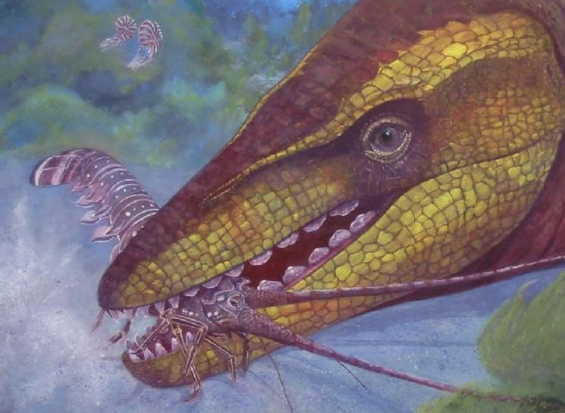
The species, named Carinodens, is distinguished by its extraordinary teeth, designed to crush prey with hard shells.
This newly identified mosasaur species lived about 67 million years ago, during the final stages of the Maastrichtian, just before the extinction event that wiped out the dinosaurs.
“This mosasaur represents a fascinating evolutionary shift,” said Nicholas Longrich, paleontologist at the University of Bath and lead author of the study.
“Unlike earlier species, Carinodens had high-crowned teeth with broad bases and triangular tips, which are radically different from the simpler conical teeth seen in its ancestors.”
The ancient reptile, which grew to a length of 2 to 3 meters, is notable for its distinct teeth: low, rectangular, and compressed, setting it apart from other creatures of its time.
The fossils of Carinodens were discovered in the phosphate mine of Sidi Chennane, located in the Khouribga province of Morocco’s Beni Mellal-Khenifra region.
The team, led by paleontologist Nicholas Longrich of the University of Bath, has found that Carinodens had small, curved, conical teeth, which were well-suited for hunting smaller prey such as fish and soft-bodied cephalopods.
However, this newly discovered species stands out among its mosasaur relatives. Longrich and his colleagues note in their article, published in Diversity, that Carinodens displayed high-crowned teeth with wide bases and triangular tips.
These features suggest a significant evolutionary development and point to a surge in diversity among mosasaurs in Morocco during the late Maastrichtian period.
A Hub of Marine Reptile Diversity
The discovery of Carinodens also notes the incredible variety of mosasaurs that once thrived in the region.
A revised list of the local fauna shows that at least 16 species of mosasaurs coexisted in Morocco during this period. This diversity is especially evident in their teeth, which served as a key tool for survival.
By the end of the Cretaceous, mosasaurs had evolved an array of specialized dental forms. Some had massive, conical teeth designed to grasp and tear their prey, while others featured blunt teeth for grinding bones or sharp, saw-like teeth for cutting.
Carinodens, however, stood apart with its low, bulbous teeth, ideal for crushing hard-shelled invertebrates.
The fossils of Carinodens reveal an animal with a relatively small size, long, slender jaws, and a unique tooth morphology not seen in other mosasaurs or vertebrates.
Researchers suggest that the diversity of mosasaurs in Morocco is exceptional which offers a glimpse into the thriving marine ecosystems just before the mass extinction event.
This discovery follows another significant find by the same team in 2021 when they uncovered Xenodens calminechari, a mosasaur with similarly unique teeth.
With these continued discoveries, Morocco has proven to be an exceptional site for understanding the rich evolutionary history of marine reptiles.
Read Also: Oldest Evidence of Medicinal Plant Use Found in Morocco’s Taforalt Cave