


 Join on WhatsApp
  Join on Telegram
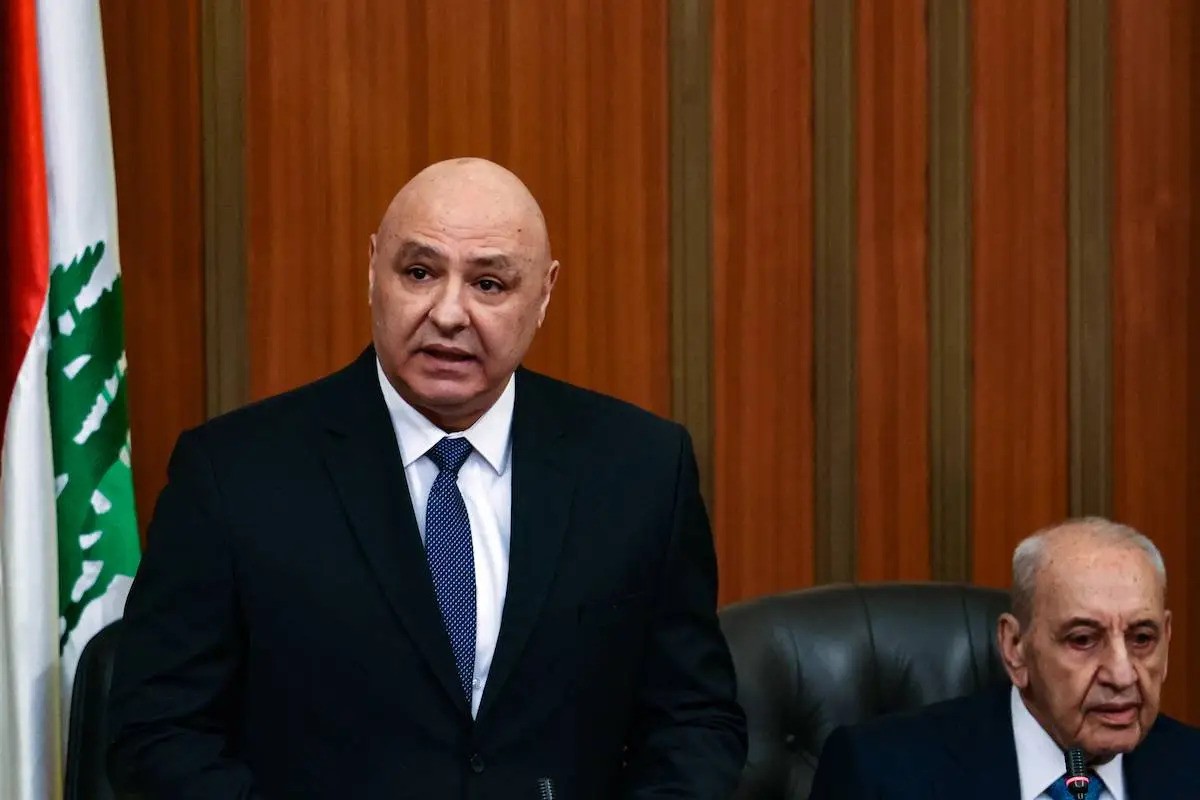
 Doha – Lebanon’s parliament elected army commander Joseph Aoun as the country’s new president on Thursday, ending a 26-month political vacuum that had left the crisis-hit nation without a head of state since October 2022.
Aoun, 60, secured the presidency in a second round of voting, garnering 99 votes out of the 128-seat parliament, after falling short of the required two-thirds majority in the first round. The election came after 12 failed attempts to choose a president over the past two years.
The breakthrough election reflected significant shifts in Lebanon’s political landscape and the broader Middle East, particularly following the recent war between Israel and Hezbollah, and the fall of Syrian President Bashar al-Assad in December.
The outcome demonstrated the diminished influence of the Iran-backed Hezbollah group, which had previously supported another candidate, Suleiman Frangieh.
Momentum for Aoun’s election built on Wednesday when Frangieh withdrew from the race and declared his support for the army commander.
French and Saudi envoys played a crucial role, shuttling between Beirut’s political leaders to secure backing for Aoun’s candidacy.
Read also: Bourita: Lebanon Ceasefire is a ‘Positive Development’ that Must be Respected
According to sources close to the Saudi royal court, French, Saudi, and US envoys conveyed to Parliament Speaker Nabih Berri that international financial assistance, including support from Saudi Arabia, was contingent on Aoun’s election.
The United States and Saudi Arabia view Aoun’s election favorably, as he has maintained a balanced relationship with various political factions while leading the US-backed Lebanese army since 2017.
The election faced some procedural challenges, as Lebanon’s constitution prohibits high-ranking public servants, including army commanders, from assuming the presidency during their term or within two years of stepping down.
However, Parliament Speaker Berri cited a precedent from 2008 when former President Michel Slieman was elected while serving as army chief.
Aoun’s immediate challenges include implementing the US-brokered ceasefire agreement between Hezbollah and Israel, which requires the Lebanese military to deploy in southern Lebanon as Israeli forces withdraw.
He must also address Lebanon’s severe economic crisis, which has devastated the country’s currency and banking system since 2019.
The new president’s role is crucial for forming a new government, as Lebanon’s sectarian power-sharing system requires the president to conduct consultations with lawmakers to nominate a Sunni Muslim prime minister.
The country has been operating under a caretaker government with limited powers during the presidential vacuum.
International support will be vital for Lebanon’s recovery, with the World Bank estimating $8.5 billion in damages from the recent conflict.
The country still needs to implement reforms required by the International Monetary Fund to secure a preliminary bailout package agreed upon in 2022.
In Lebanon’s confessional system, the presidency is reserved for a Maronite Christian, while the prime minister must be a Sunni Muslim and the parliament speaker a Shiite Muslim.


