
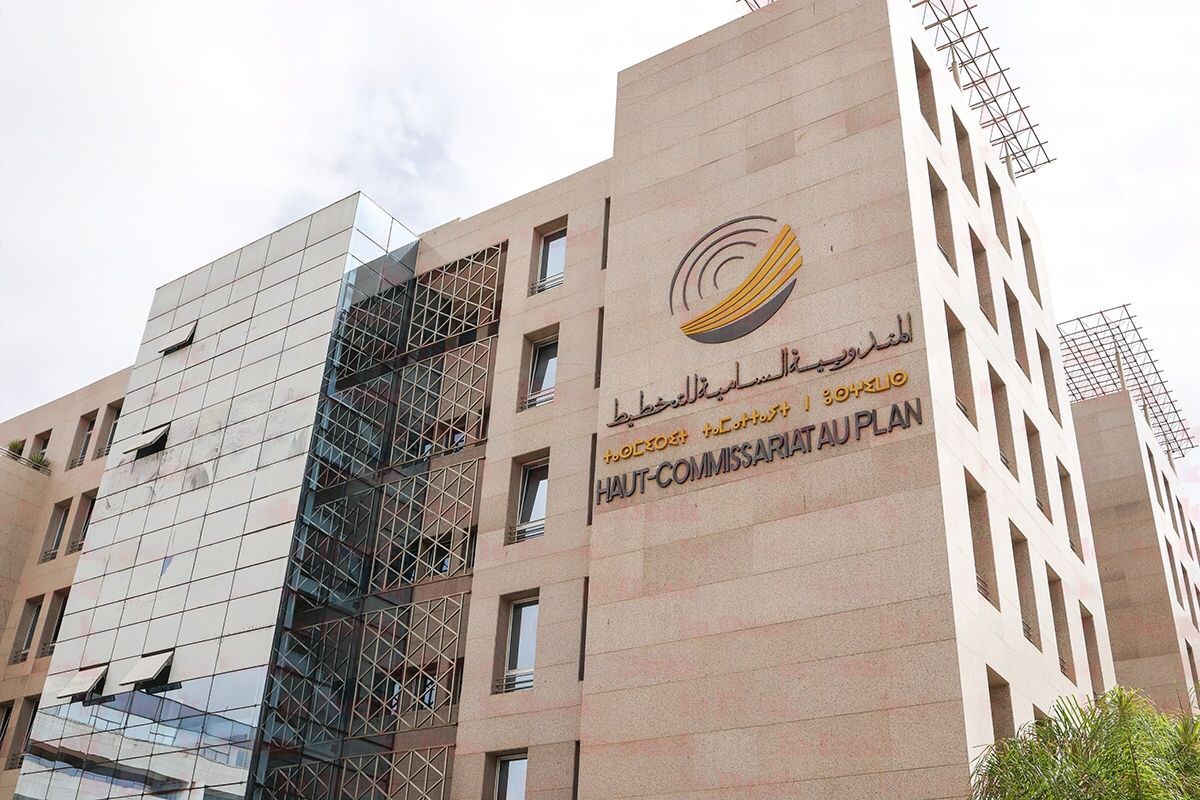
Agadir – Morocco’s economy recorded GDP growth of 4.9% in 2025, up from 4.4% in 2024, according to the “National Economic Situation in 2025” note released today by the High Commission for Planning (HCP).
The report states that “the national accounts for 2025 show an improvement in Morocco’s economic growth, with real GDP expanding by 4.9%, compared to 4.4% in 2024.”
It adds that “this economic performance was driven primarily by the dynamism of domestic demand and occurred in a context marked by controlled inflation and a growing financing need for the national economy.”
Agriculture leads primary sector recovery
HCP noted that growth was strongly supported by the primary sector, which expanded by 7.1% in 2025, following a contraction of 5.1% in 2024.
This result was mainly driven by agriculture, whose value increased by 8.2%, in comparison to a 5.7% decline the previous year.
However, the fishing sector recorded a significant drop, falling by 13% in 2025, after an 8.8% increase in 2024.
Mixed performance across secondary sector activities
The secondary sector showed a decline, with growth easing from 3.8% in 2024 to 3.3% in 2025. Extractive industries grew by 7.5%, down from 11.5%, while manufacturing slowed slightly to 1.9%.
Construction and public works remained a key driver, accelerating to 6.7%, compared with 6% in 2024. By contrast, electricity, gas, water, sanitation, and waste management services sharply eased to 0.6%, down from 5.4%.
The tertiary sector also lost momentum, slowing from 5.6% in 2024 to 4.3% in 2025, reflecting weaker performance across several activities.
Transport and storage dropped to 4.2%, compared with 8.5% a year earlier, while financial and insurance services slowed to 5.5%.
Information and communication activities declined by 0.5%, reversing growth recorded in 2024, and public administration growth fell to 3.4%.
Domestic demand supports growth
Domestic demand grew by 6.1% in 2025, down from 6.7% in 2024, contributing 6.6 percentage points to GDP growth.
Household consumption slowed significantly, rising by only 1.2%, while government spending increased by 5.1%, contributing 0.9 percentage points to growth.
Gross investment remained particularly dynamic, rising by 16.3% and contributing 5 percentage points to growth, compared with 4 points in 2024.
For foreign trade, it continued to weigh on growth, although its negative impact eased. Imports increased by 9%, contributing -4.5 percentage points, while exports rose by 6.6%, contributing 2.7 percentage points.
As a result, net foreign trade had a negative contribution of 1.7 percentage points, improving from -2.9 points in 2024.