 Join on WhatsApp
 Join on Telegram
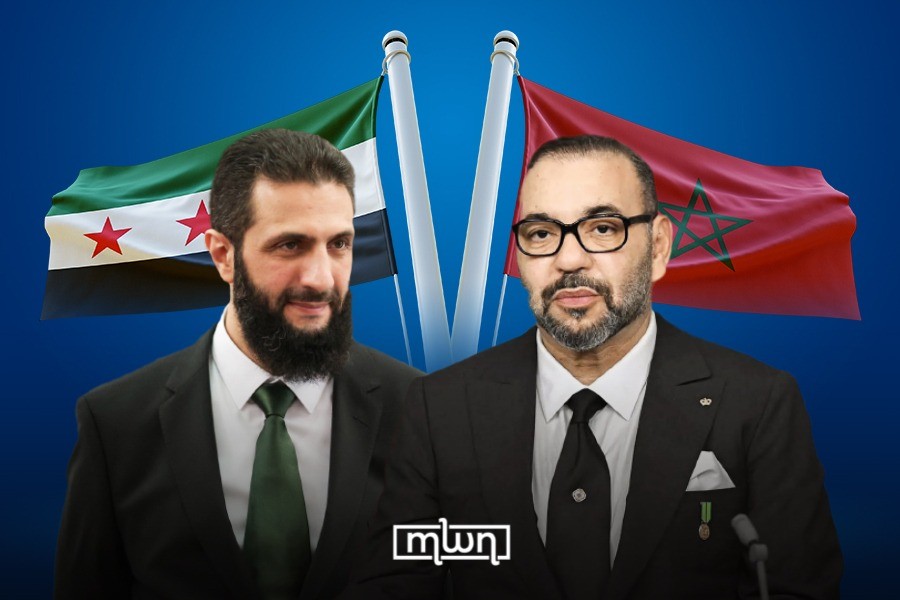
As countries continue to reconsider their Syria policies, there have been reports that Morocco is considering the reopening of its embassy in Damascus for the first time since 2012.
Morocco’s Foreign Minister Nasser Bourita said at a press conference on December 9 that Rabat was “closely following the developments in Syria.”
He recalled Morocco’s decision to close its Damascus embassy in 2012, citing fundamental disagreements with the Assad regime. This conference came a day after the fall of the Assad regime, and Bourita strongly indicated that Morocco is willing to mend its strained relations with Syria.
Within a week of Bourita’s comments, Obeida Arnout, a spokesperson for Syria’s transitional government, told Al Jazeera that the two countries had already started discussing the reopening of the Moroccan embassy.
While Rabat has yet to confirm Arnout’s statement, Morocco’s official comments since the fall of the Assad regime and the end of Syria’s 12-year civil war suggest the reopening of the Damascus embassy is highly likely.
As it happens, some have interpreted the warming of relations between the two countries as a sign of Rabat’s controversial willingness to work with the transitional government led by Hay’at Tahrir al-Sham(HTS), which many still designate as a terrorist group.
The return of hope
In any case, the announcement of the Moroccan embassy’s reopening and the ensuing reestablishment of relations between Damascus and Rabat especially reflects prevailing, newfound hope about Syria’s new leadership.
Bourita called for “preserving the territorial integrity, national sovereignty and unity of the Syrian people.” The top Moroccan diplomat further hinted at Rabat’s willingness to work with the new Syrian government, signaling an increasing belief in, and hope about, the political and economic prospects of post-Assad Syria.
Almost thirteen years ago, Morocco closed its embassy in Syria. At the time, many other countries, including the US and UK, were freezing diplomatic relations with the country over Bashar al-Assad’s conduct in the Syrian civil war.
It was also at a time when vocally pro-democracy Syrian rebels were gaining strength relative to the Assad government.
Even while closing the embassy in 2012, Morocco’s Foreign Ministry stressed the importance of “Syria’s unity, stability and regional safety to achieve the brotherly Syrian people’s aspirations for dignity, freedom and development.”
After closing its Syrian embassy in 2012, Morocco hosted a landmark conference of Arab nations called “Friends of the Syrian people.”
Representatives of more than 100 governments expressed support for anti-government rebels and called on Assad to step down.
However, the rebels who recently brought down Assad are different from the “democratic” rebels that once received widespread global support.
The new Syrian leaders’ troubled past
HTS is a former associate of Al Qaeda. However, HTS’s leadership has been widely reported to have decisively cut ties with the infamous terrorist group and even captured and detained members of more radical groups, such as ISIS.
Today, despite the hard-fought victory of the rebels, a number of nations are reluctant to normalize relations with Syria. The United States, the UN Security Council, and the European Union still designate HTS as a terrorist organization. However, former Secretary of State Anthony Blinken recently announced that the US government had made “direct contact” with the group.
Even more significantly, the US recently lifted a $10 million “Rewards for Justice” bounty on HTS leader Ahmed al-Sharaa, also known as Abu Mohammad al-Jolani.
“I told him [HTS leader Ahmed al-Sharaa] we would not be pursuing the Rewards for Justice reward offer that has been in effect for some years,” Barbara Leaf, the Biden administration’s assistant secretary of state for Near Eastern affairs, told reporters last month following her meeting with HTS officials in Damascus.
“I heard him on his priorities, which are very much rooted in getting Syria on the road to economic recovery,” she explained. Washington’s warming relationship with HTS and acceptance of the group as the governing force in Syria may also inform other countries’ willingness to be seen working with them.
A long history of tense bilateral relations
Morocco has historically had tense relations with the Assad regime in Syria. Under Hafez al-Assad, Syria supported Algeria in the Sand War and maintained support for the Polisario Front, the separatist group claiming independence in southern Morocco.
In fact, the recent fall of the Assad regime even led to the discovery of Iran’s use of Syrian territory to train members of the Polisario Front, the separatist group claiming independence in the Western Sahara region.
While the new Syrian Government has not expressed a stance on the Polisario Front, its long-standing hostility to the Iranian axis suggests it will either adopt a neutral or unfavorable view of the separatist movement.
2012 was not the first time Morocco and Syria severed relations. In 1986, following a meeting between King Hassan II and Israeli President Shimon Peres, Hafez al-Assad briefly closed the Syrian embassy in Rabat.
By being one of the first countries to announce the opening of its Damascus embassy, Morocco is trying to move towards better relations with the new government in Syria.
Critics of Morocco, one of America’s strongest allies in the MENA region, may see this move as an attempt to mirror America’s foreign policy.
For Bourita, however, the decision reflects Morocco’s recognition of the new reality in Syria and its commitment to peace and stability in the region through good relations with as many governments as possible.