
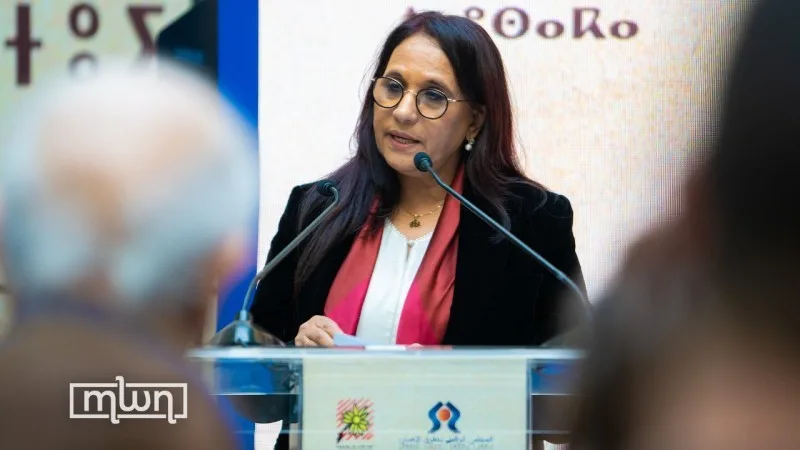
Rabat – Amina Bouayach, President of the Moroccan Human Rights Council (CNDH), discussed the ongoing judicial reforms in Morocco and the challenges related to the right to defense and the protection of rights during an international conference held in Fez on February 14 and 15.
The event was organized by the Fes Bar Association. It brought together legal professionals, experts, and activists to explore critical issues in the judicial system.
In her remarks at the event, Bouayach said that it’s important that human rights are translated into practical policies. She stressed that the right to defense and the guarantee to a fair trial should not only be enshrined in legal texts but also practiced daily in courts, interrogation rooms, and through the actions of lawyers.
The CNDH president outlined several key challenges that have come to light during court observations and within complaints received by the Council. These include ensuring the right to defense and equality before the law for all litigants, providing access to legal counsel, and respecting the principle of adversarial proceedings in all legal procedures.
She also mentioned the need for timely resolutions of cases, particularly for vulnerable groups, and for better integration of international human rights standards into national judicial practices.
In addition, Bouayach pointed out issues such as delays caused by procedural inefficiencies, particularly in the notification process, as well as uncertainties in legal interpretation due to gaps in legislation.
Amid these issues, she said it is important to enhance access to justice for marginalized groups, improving legal information, and addressing discrepancies in legal practices across regions.
The CNDH head she called for a stronger application of international human rights principles in national courts, noting that despite Morocco’s ratification of key international conventions, their implementation remains weak.
Lastly, Amina Bouayach noted that CNDH has actively participated in discussions on legislative reforms, including those related to the civil and criminal procedural codes, and will continue to offer recommendations to ensure the protection of rights and justice.
“The respect for human rights, distinguished guests, is also measured by the effectiveness of judicial procedures in ensuring justice for victims. It is not limited to preventing violations and punishing them, but about strengthening a culture of human rights,” she concluded.