
 Join on WhatsApp
 Join on Telegram
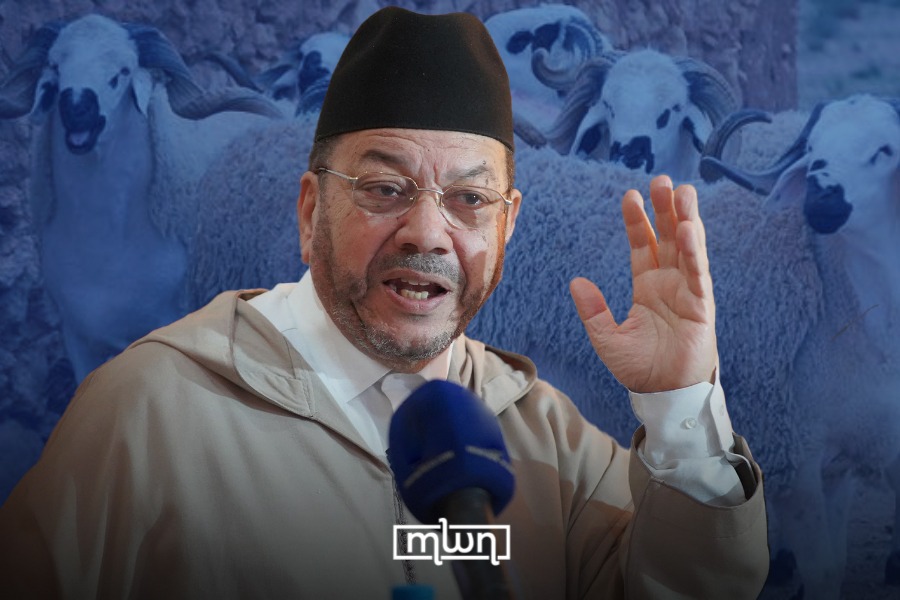
Rabat – Sheikh Mustapha Benhamza, a member of Morocco’s Supreme Council of Ulema, has called for a measured and informed discussion on proposals to regulate the Eid al-Adha sacrificial ritual.
This came following Morocco’s decision to cancel Eid Al Adha’s sacrifice this year due to economic hardships, relentless drought, and dwindling livestock.
Benhamza dismissed criticism from outsiders who opposed Morocco’s Eid cancellation, saying they lack understanding of the country’s realities. He urged that religious rulings must consider local conditions, not be shaped by those unaware of the context.
The Moroccan sheikh also warned against hasty interpretations that blur the lines between religious rulings and state policy, saying that fatwas require careful consideration of economic and social realities rather than rigid application of religious texts.
Local context matters in religious rulings
During a speech at Al-Islah Mosque on Saturday, March 1, Benhamza criticized the tendency to apply fatwas from different contexts without taking local circumstances into account.
He reminded his listeners that “a fatwa is not a universal decree but an interpretation shaped by time, place, and societal conditions.” He described it as illogical to import religious rulings from abroad without understanding the realities that shaped them.
Islamic scholars, he noted, have long recognized the need to balance religious principles with the well-being of society.
Early Muslim jurists assessed prevailing conditions before issuing rulings, ensuring that religious guidance remained relevant and practical. “A scholar does not simply recite legal texts but examines people’s lives and offers guidance accordingly. Otherwise, religious rulings create confusion rather than clarity,” he said.
State role in religious affairs
Moreover, Benhamza pointed to historical examples where state authorities adjusted religious practices to maintain order and protect public welfare.
He recalled times when Hajj had to be suspended due to epidemics. “That decision was not a violation of Islamic law but a necessary measure to protect lives,” he said.
Addressing concerns about the Eid sacrifice, he explained that while the practice holds deep religious significance, it is not a fundamental pillar of Islam.
“Moroccans have honored this tradition for centuries, but religious obligations must be understood within the realities of each era. The role of policy is to ensure stability while respecting religious values,” he added.
Economic hardships, religious duties
Sheikh Benhamza acknowledged that economic difficulties could prevent many families from affording a sacrificial animal. He argued that adapting religious practices to economic conditions does not weaken religious observance but ensures that faith remains accessible to all.
“Islamic governance requires a broad view of society’s needs. Applying religious texts in isolation from reality does not serve the public good,” he said.
He pointed out that Islamic history offers many examples of states managing resources in ways that supported social stability.
“Islamic law is not rigid; it provides room for adaptation when circumstances demand it,” he said.
The danger of unregulated fatwas
Benhamza also raised concerns about the spread of religious opinions on social media and television without proper scholarly grounding.
He warned against individuals who issue fatwas without understanding current social and economic conditions.
“A fatwa requires deep knowledge of both religious texts and real-world challenges. Misinformation in religious matters can cause confusion and division,” he said.
He urged that major religious decisions remain within the authority of established scholarly councils.
“When discussing religious matters, scholars must be both truthful and informed. Fatwas should not be issued casually, nor should they be shaped by personal opinions or political agendas,” he said.
Balancing religious principles and public welfare
On another note, Benhamza said that religious law and state policy serve different, but complementary roles. He also explained that Islamic governance always considered the public good when interpreting religious rulings.
“The goal of Islamic law is to uphold justice and prevent harm, not to apply texts without regard for consequences,” he said.
Regulating the Eid sacrifice, he argued, does not contradict Islamic principles if the decision is based on sound reasoning and public welfare. “If authorities determine that adjustments to the practice benefit society, this is not a rejection of faith but a necessary step to ensure fairness and stability,” he said.
A call for thoughtful religious understanding
Sheikh Benhamza encouraged Muslims to deepen their understanding of Islamic jurisprudence, warning that many religious debates arise from misconceptions. He called for greater trust in scholars who possess both religious knowledge and practical wisdom.
“Those who seek the correct religious guidance should turn to scholars who understand both religious law and real-life conditions, not to individuals who stir controversy for attention,” he said.
He concluded by urging that discussions on the Eid sacrifice remain rooted in scholarly discourse rather than media sensationalism or political posturing.
“Religious rulings must be based on knowledge and concern for public welfare. Otherwise, they become a source of division rather than a means of guidance,” he said.