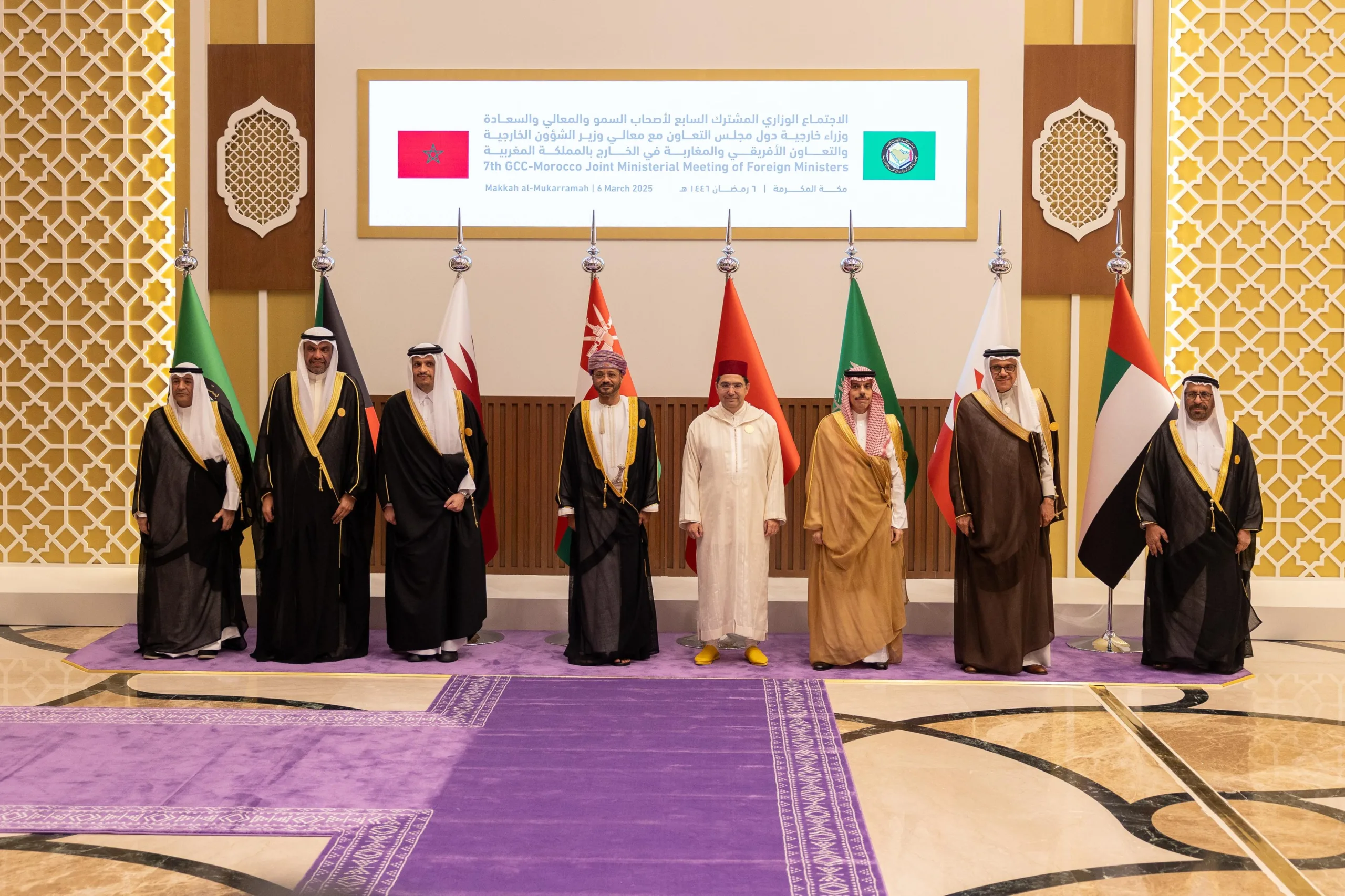
Rabat – Jassim Al Budaiwi, The Secretary General of the Gulf Cooperation Council (GCC), has renewed the council’s firm and unwavering support for Morocco’s territorial integrity and sovereignty over its southern provinces in Western Sahara.
Al Budaiwi made his remarks in a speech at the joint ministerial meeting between the GCC states and Morocco.
Minister of Foreign Affairs Nasser Bourita represented Morocco during the meeting, in which the council reiterated their position in favor of Morocco’s territorial integrity.
GCC also expressed support for the UN-led political process on Western Sahara, welcoming the UN Security Council Resolution 2756, adopted last year in October.
The resolution extended the mandate of UN peacekeeping operation MINURSO to one year until October 2025, and urged the Algerian regime to engage in the UN-led political process to seek a mutually accepted political solution as a main party to the dispute.
The resolution also emphasized the importance of the former roundtable discussions held at the initiative of former UN Personal Envoy for Western Sahara Horst Kohler and welcomed Morocco’s efforts, including its endorsed Autonomy Plan as a serious and credible political solution to end the dispute over Western Sahara.
Beyond GCC’s support for Morocco’s territorial integrity, the council also welcomed Morocco’s initiatives, including the Atlantic initiative, seeking to facilitate access for Sahel countries to the Atlantic Ocean.
Other initiatives the council commended include the Atlantic African States Process, as well as the Nigeria-Morocco gas pipeline project, with GCC also praising the reforms in different sectors and fields, including economy.
Morocco’s leadership in different sectors enabled the country to establish itself as a key partner for many countries in the international community, including in the Gulf region.
Morocco maintains strong ties with different Gulf countries, including Saudi Arabia, UAE, and Qatar.
Several countries from the council invest in the North African kingdom at different levels, including real estate, infrastructure, and healthcare.