History, like macroeconomics, can be cyclical. 2025 continues with a sense of apprehension over the state of global trade as President Donald Trump yields the threat of tariffs and concern lingers over uncertain global growth projections. Trump desires to protect American manufacturing while incentivizing more foreign investment inside the United States. Laudable goals, as world leaders around the world increasingly promote the “buy/build local” mantra. The first important piece of legislation passed by the very first Congress in 1789? The Tariff Act.
Now in 2025, nations like Morocco which are finding success in light and medium manufacturing sectors will find themselves navigating diplomatic and trade turbulence that feature a mix of politics, policy, and economics.
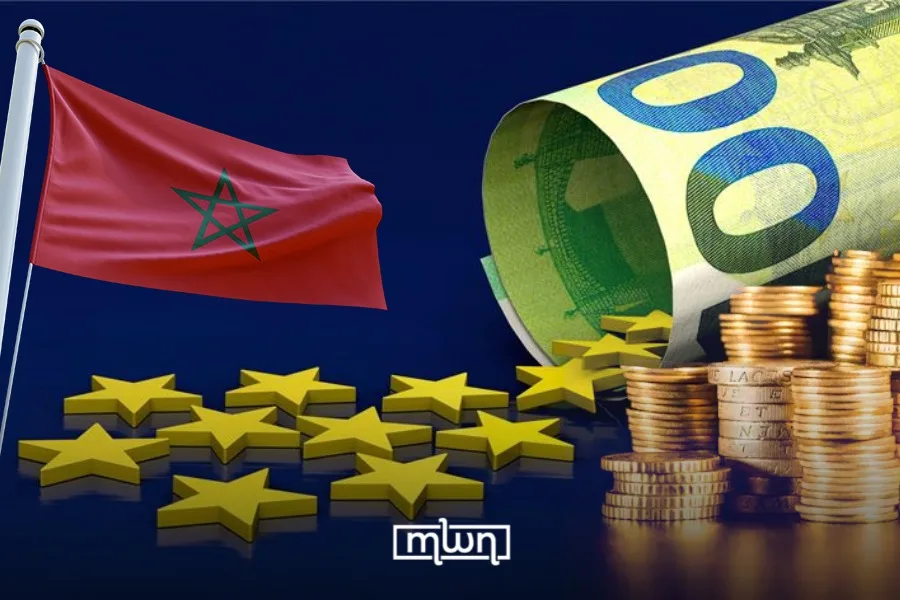
Morocco’s government responded to the European Commission’s recent decision to impose duties on imports of Moroccan-made aluminum vehicle rims (wheels) with a mix of confidence and measured concern. The European Commission statement from last week announcing the countervailing duties—5.6% for a producer benefiting only from Moroccan subsidies to 31.4% for a producer receiving both Moroccan and Chinese financial support via the latter’s Belt and Road Initiative— are standard practice in a WTO-led trading system that supports both up-and-coming regional trade powers like Morocco as well as trade juggernauts like the EU, USA and China.
The government spokesperson, Mustapha Baitas, said last week that the Moroccan government is studying all possibilities to take “any measures it deems appropriate to address these issues … It is necessary to find a solution to these problems.”
The deeper message from Rabat: Let’s not let little issues create big problems for a relationship that is worth over $50 billion in two-way goods trade. Case in point: Morocco’s state-owned rail operator ONCF announced last month that it will buy 168 trains from France, Spain and South Korea. This represents a $2.9 billion investment in the run-up to the FIFA World Cup in 2030, a month-long event that will become a centerpiece of EU-Morocco relations.
Just this week, the EU’s agriculture commissioner determined that excess (above the established tariff quota) Moroccan tomatoes entering the EU indeed remain within legal bounds as long as the required customs duties are paid on the excess.
Morocco’s engagement with the EU and other nations will continue across a spectrum of trade issues like these, from the aluminum rim issue to agricultural exports to meat imports. Ongoing dialogue as opposed to angry grandstanding—the new normal in trade relations across the EU-Mediterranean region.
The past decade has also seen impressive growth in Morocco’s manufacturing sector even as the COVID pandemic led to significant global supply changes and a re-evaluation of national economic development priorities by many nations.
Morocco’s automotive export value to the EU reached €15.1 billion ($16.4 billion) in 2023, a 30% increase from the previous year, according to Morocco’s Foreign Exchange Office (FCO). Morocco manufactured nearly 500,000 vehicles in 2024, even as vehicle production declined in France, Italy and Belgium. Investment agreements with China also brought electric vehicle (EV) battery production to Morocco alongside a South Korean partnership that will bring a lithium-phosphate-iron (LFP) cathode plant to Morocco. Partnerships with EU and US-based aeronautics firms have now made Morocco the leading manufacturer of aviation equipment and spare parts in Africa.
As a bridge between Europe and Africa, Morocco’s trade engagement can pivot east, too. The Korea International Cooperation Agency (KOICA) and the city of Rabat just signed an agreement that introduces a new sustainable public transportation system (eco-friendly electric buses) for the growing Moroccan capital. The project will be funded by KOICA and it complements electric vehicle battery manufacturing partnerships between the two nations.
As it continues to diversify its manufacturing sectors, minor trade challenges like that of the aluminum rim represent technical issues for Moroccan and EU policymakers.
Morocco may very well become a “collateral” beneficiary, too, of the great power rivalry that exists in renewable energy, as described by the Center for Strategic and International Studies last year. These benefits, though, are as much a result of local attributes (talent, location and culture) as they are of external factors.
Rough seas in global trade come and go. And Moroccans know well the Arab proverb—Winds do not blow as the ships wish.