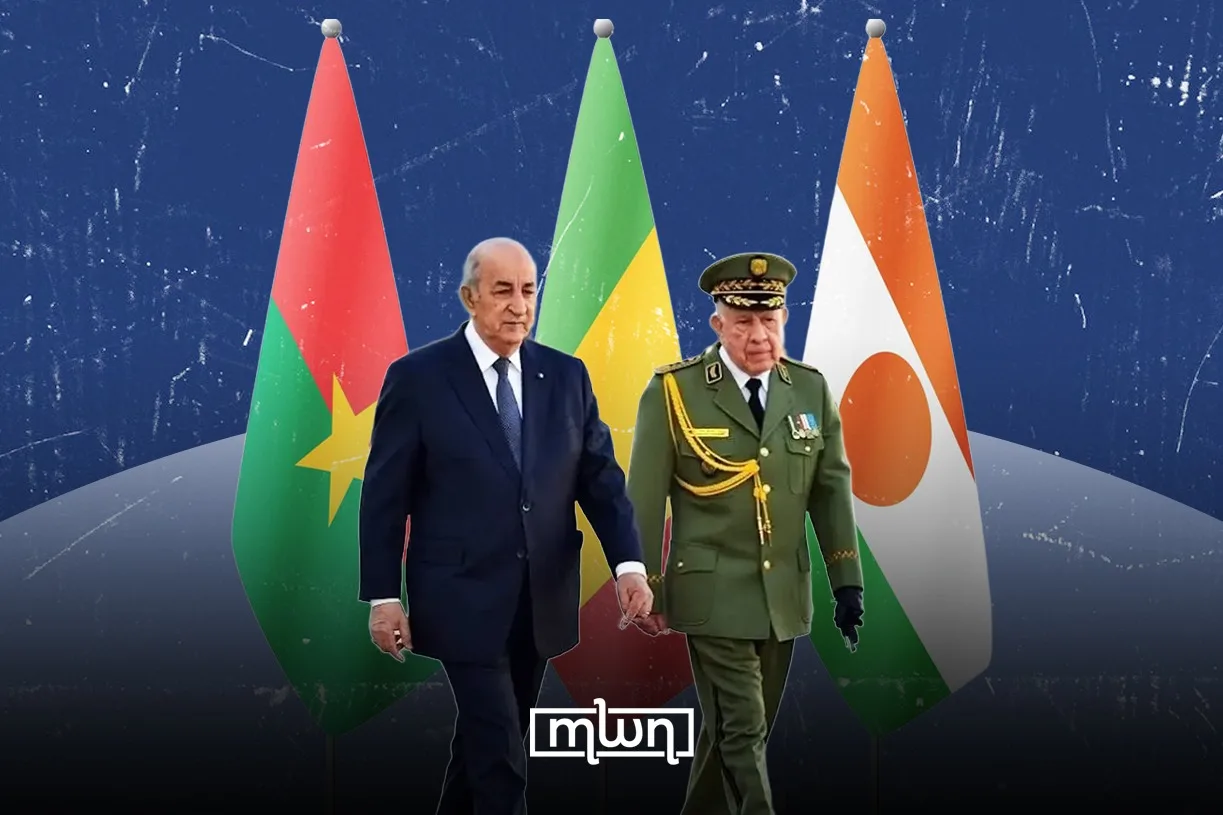
Rabat – Algeria continues to spark tensions among Sahel countries, especially Mali, which accused the North African country of shooting down a surveillance drone near their shared border.
On Sunday, Mali’s security minister accused Algeria of the act in an official announcement, adding that Burkina Faso, in addition to Bamako and Niger, will recall their ambassadors from Algiers for consultations over the drone situation.
The drone was reportedly shot down overnight between March 31 and April 1, and was “destroyed in a premeditated hostile action by the Algerian regime,” the minister said.
The three countries that said they believed the act was carried out with “absolute certainty” by Algeria denounced the “irresponsible act” by Algeria’s regime.
Algeria’s regime has acknowledged that it had, in fact, shot down the drone on April 1, claiming that the armed vehicle had violated the country’s airspace.
Mali’s response
Countering Algeria’s claims, Mali stressed that the drone had never left the Malian borders, calling the act a violation of international law and proof of state-sponsored terrorism.
Malian Prime Minister Abdoulaye Maiga published a statement on the Malian Foreign Ministry’s social media, denying the claims that the drone violated Algeria’s airspace.
“This action proves, if proof were needed, that the Algerian regime sponsors international terrorism,” the Malian head asserted.
Mali announced that it is withdrawing from the regional joint chiefs of staff committee, a regional military group that includes fellow Alliance of Sahel States (AES) member Niger.
It also emphasized that it will file a complaint with international bodies about the situation.
The statement reflects yet another escalation of tensions between Algeria and Sahel countries, which have long complained about the Algerian regime’s interference in their domestic affairs.
A troubled history of meddling
Mali issued similar complaints against Algeria just this past January.
The country’s military government spokesperson accused Algeria’s regime of committing a rising number of unfriendly and hostile acts interfering in Mali’s internal affairs.
In particular, Malian diplomats referred to the Algerian regime’s continued meddling with local armed groups, after Bamako had declared the 215 Algiers Accord null.
The original 2015 agreement aimed to restore peace between the Malian government and armed groups in Northern Mali, after years of irregular warfare near Algeria’s porous southern border.
However, in a key turn of events, Mali’s military rulers announced the end of the 2015 peace deal.
Adding to the rising tensions, ini August of 2024, Mali made a strong statement, rejecting recent statements by Algeria’s permanent representative to the UN.
The Malian government called Algeria’s regime a “provocation,” accusing Algeria of providing a safe haven to separatist groups that launch attacks across the border.
“Algeria is acting as a base for terrorists to attack our country,” the Malian government said.
In January this year, it also slammed Algeria’s regime for its “persistent” interference in its internal affairs following a statement made by Algeria’s Minister of Foreign Affairs, Ahmed Attaf, about the Sahelian country’s counter-terrorism strategy.
“Mali neither seeks nor accepts lessons from Algeria, which, in recent history, conducted its fight against terrorism in full sovereignty,” Mali’s government said.
Mali, Sahel, and Burkina Faso are only a few countries from a long list of nations that suffer from Algeria’s interference.
As Rabat continues to garner growing international support for its position on the Sahara dispute, the Algerian regime persists in its relentless Morocco-bashing campaign to challenge the country’s territorial integrity.
For decades, Algeria has supported the Polisario Front separatist group, which claims independence in Western Sahara to undermine the country’s sovereignty over its southern provinces.
The Polisario continues to carry out terrorist attacks targeting Morocco’s southern provinces on different occasions, with the full support from Algeria – which hosts, arms, and finances the separatist group as well as defends its claims in regional and international forums.