Rabat – The US has again proved Morocco’s importance as a strong ally in the region, confirming the North African country’s status as a regional power in terms of stability and security.
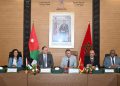
This confirmation came in the form of a high-level meeting on Tuesday between US Secretary of State Marco Rubio and Morocco’s Minister of Foreign Affairs Nasser Bourita, who was the first FM from the Maghreb to be invited by the Trump administration to visit the country and meet with senior American officials.
The visit came a few months after a call between Bourita and Rubio on January 27, during which both officials reaffirmed their two countries’ determination to continue to boost bilateral ties.
The call was followed by Tuesday’s visit, which is the first for Bourita to the US since the inauguration of Trump’s administration.
The call was not only a trip where the two officials discussed bilateral ties, but it was followed by the Trump administration’s strong-worded statement, reaffirming the country’s unchanged position supporting Morocco’s sovereignty over its southern provinces in Western Sahara.
Standfast position despite external hostilities
In a statement following the meeting between Bourita and Rubio, the US State Department renewed its unchanged position since the US proclamation recognizing Morocco’s territorial integrity in December 2020. Morocco’s Autonomy Plan under Moroccan sovereignty remains the only feasible solution to the Sahara dispute, it stressed.
A source with knowledge on the specifics of the trip told Morocco World News (MWN) that it is significant the visit took place at a time “when Algeria is multiplying its efforts to get closer to the Trump Administration,” covering defense, hydrocarbons, and agriculture.
Algeria has been intensifying its lobbying attempts to undermine the growing US-Morocco cooperation, with data showing that the Algerian government spent a total of $2,184,308 on lobbying in the US from 2016 and 2020.
Algeria’s regime has hoped to reverse Trump’s proclamation, especially after Democrats came to power under Joe Biden’s presidency in the past few years.
Although it took a balanced and more of a “no change in our position” approach, the Biden administration ultimately upheld Washington’s support for Morocco’s territorial integrity, shutting down Algeria’s hostile maneuvers against Morocco.
Major security partner
The US reaffirmation comes as the two countries frequently emphasize their determination to continue to boost bilateral ties at all levels, particularly trade and security.
Morocco has been a major non-NATO ally since 2004.
On several occasions and in international forums, US and NATO officials stress the importance of Morocco’s credible partnership, contributing to world and regional security and stability.
Earlier this month, NATO’s Special Representative for the Southern Neighborhood, Javier Colomina, said Morocco has demonstrated a “greater willingness to increase cooperation” with NATO compared to other regional countries.
Colomina described Morocco as an outstanding active partner with whom NATO seeks to strengthen ties.
In addition to the meeting with Rubio, Bourita also met with US National Security Advisor Mike Waltz.
The US has long seen Morocco as a strategic partner contributing to addressing security challenges.
Last year, the US State Department described Morocco as a “vital” S partner in a wide range of regional security issues, with a shared goal of a stable, secure, and prosperous Middle East and North Africa.”
The North African country also participates in military drills and maneuvers along with international powers, including the US.
Morocco has been hosting the annual “African Lion” military exercise, the largest joint US military exercise in Africa, conducted under the US Africa Command since 2008, with participation from over 20 countries and NATO forces.
In March, General Michael Langley, Commander of the US Africa Command (US AFRICOM), commended bilateral ties between the two countries, stressing African armies “are watching” the North African country to take examples from its army.
“Morocco is a reference in defense and stability,” he said.
He made his remarks at the official delivery of the first batch of AH-64 Apache helicopters to Morocco.
The US has maintained its leadership as the largest exporter of arms to Morocco throughout the years, with 69% of the global imports, followed by France and Israel.
Strong trade
The two countries also share good trade ties.
Morocco is the only African country with a Free Trade Agreement with the US.
“Since it entered into the market in 2006, trade exchanges have shown a fluctuating yet upward trend,” the source said.
Bilateral trade between the two countries increased sixfold, reaching $7.2 billion in 2023, compared to $1.3 billion in 2006.
In 2024, US goods exports to Morocco reached $5.3 billion in value, representing a 37.3% rise from the previous year, making Morocco the 64th largest export market for US goods.
US imports from Morocco reached $1.9 billion, with a 12.3% increase from 2023.