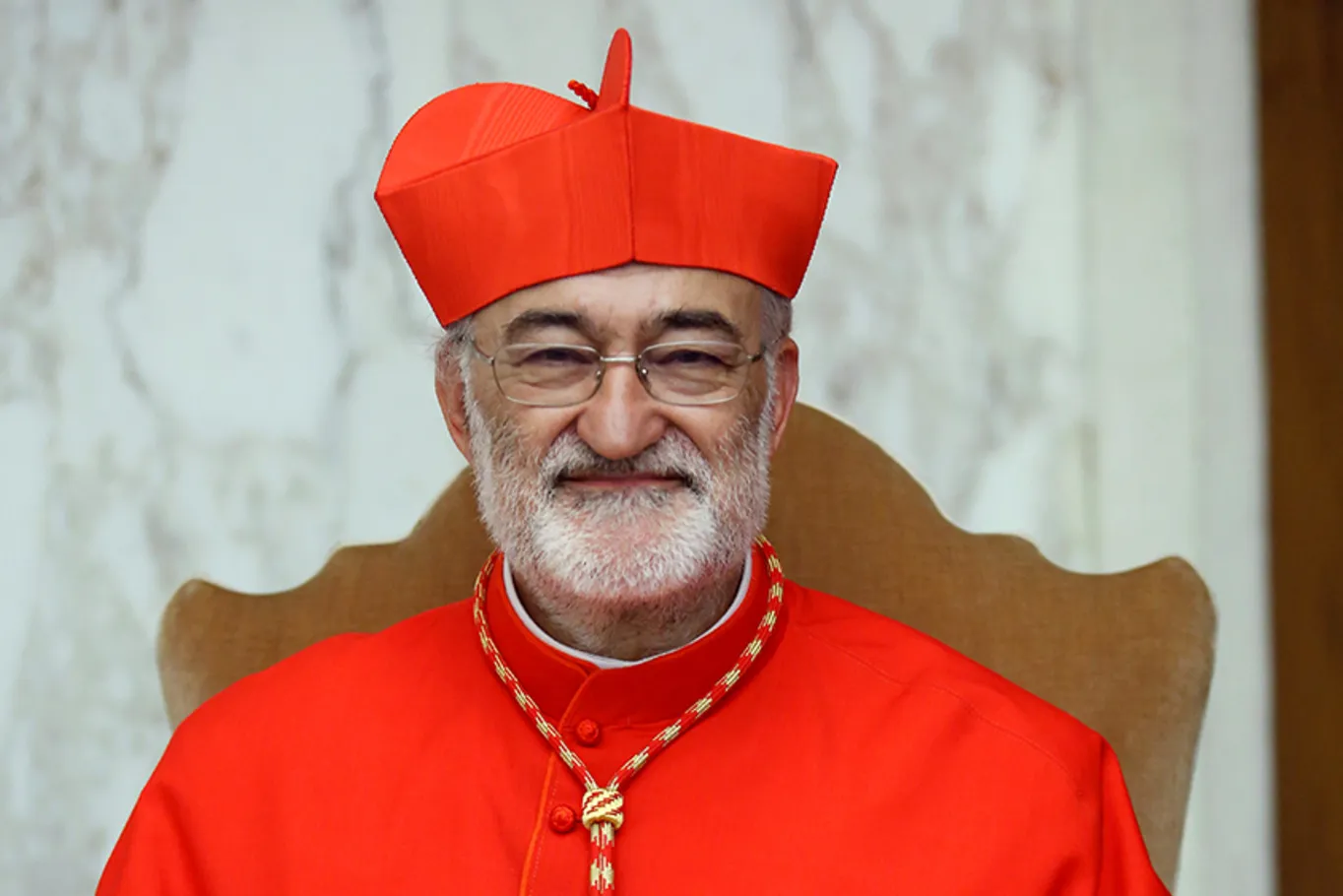
Doha – Following Pope Francis’s death on Easter Monday at age 88, Cardinal Cristóbal López Romero, the Archbishop of Rabat, has emerged as one of the prominent contenders to lead the Catholic Church.
Several major international outlets, including American CNN, British Sky News, and Spain’s Antena 3, have included the 73-year-old Salesian cardinal on their shortlists of papal candidates.
His profile, shaped by decades of pastoral work across Paraguay, Bolivia, and Morocco, along with his close relationship with the late pontiff, positions him among the leading “papabili” – cardinals considered potential pope material.
CNN highlighted his insistence that “the Catholic Church is not a Western organization” and his strong advocacy for Pope Francis’ synodal reform process as qualities that could appeal to cardinal electors seeking to maintain the current pontiff’s direction of greater inclusivity and global representation.
The news outlet further stressed López Romero’s commitment to dialogue with Islam and his advocacy for migrants, noting that he “has emphasized the importance of working with Muslims.”
When asked about the possibility of becoming pope, López Romero told Spanish media: “Absolutely, I do not want to be elected. One would have to be crazy to desire such a great responsibility. Being Bishop of Rabat already often overwhelms me in scope and intensity.”
Born in Vélez-Rubio, Spain in 1952, López Romero joined the Salesian religious order at a young age, taking his first vows at 16.
After completing his theological formation and obtaining a diploma in journalism, he was ordained a priest in 1979. His ministry initially focused on marginalized communities in Barcelona before he left for Paraguay in 1984.
López Romero arrived in Morocco in 2003, where he directed the community and parish pastoral work at the Kénitra Centre for professional formation.
After returning to Latin America as superior of the Salesian province of Bolivia (2011-2014) and then to Spain, he was appointed Archbishop of Rabat by Pope Francis in December 2017.
The Spanish-born cardinal, who also holds Paraguayan citizenship, was elevated to cardinal by Pope Francis in October 2019, making him one of approximately 137 cardinal electors who will participate in the upcoming conclave to select the next pope.
His appointment came just months after he hosted Pope Francis during his historic March 2019 visit to Morocco.
Catholicism in Morocco
Catholicism in Morocco represents a small but vibrant community. With no official figures available, the Catholic population is estimated at around 30,000 people, primarily comprising expatriates and immigrants from sub-Saharan Africa.
The Catholic presence operates in a predominantly Muslim nation where the King serves as both political leader and “Commander of the Faithful.”
During Pope Francis’s 2019 visit to Morocco, he was received with full state honors, with King Mohammed VI personally welcoming him at Rabat airport.
On that occasion, Francis began his address with “As-Salam Alaikoum” before acknowledging that “Christians rejoice in the place made for them in Moroccan society.”
Church bells have not rung in Morocco since the country’s independence in 1956, but Catholic places of worship remain active in major cities from Tangier to Agadir.
The relationship between Morocco and the Vatican strengthened during Francis’s papacy, particularly due to his recognition of the State of Palestine in 2015 and his repeated condemnations of the situation in Gaza.
When reflecting on his relationship with the late pontiff, López Romero recalled a private moment during the papal visit to Morocco: “We had a private audience. We were alone, speaking Spanish during the entire journey, which lasted almost an hour.”
Asked about the direction the Church should take after Francis, López Romero expressed support for continuation of the late pope’s legacy: “For me, his papacy has been extraordinary and positive, despite some saying he was the worst pope in history. Everyone speaks of the fair according to how they fared in it.”
“Many people were bothered that the pope was so close to Muslims, that he criticized the migration policies of rich countries, that he called out injustices… All this raised blisters for many. They are the ones who say the pope was the worst in history. It’s because they felt touched and criticized,” he added.
How is a pope chosen?
The selection of a new pope occurs through a process known as the papal conclave, which typically begins 15-20 days after a pope’s death, following a traditional nine-day mourning period called the novendiales.
Only cardinals under the age of 80 can participate in the conclave as electors – currently numbering about 137 from more than 90 countries. Of these, approximately 110 were appointed by Pope Francis during his decade-long pontificate, largely reflecting his vision of a more inclusive church.
The cardinal electors gather in the Sistine Chapel in Vatican City, where they are sequestered from the outside world. Their phones are confiscated, and they have no access to newspapers, television, or other media.
During this period, they sleep and eat in St. Martha’s House, the Vatican hostel where Pope Francis chose to live throughout his papacy.
The voting process is highly secretive. Each cardinal writes the name of his chosen candidate on a ballot card printed with the words “eligo in summum pontificem” (“I elect as supreme pontiff”).
After each round of voting, the ballots are burned. Black smoke emerging from the chapel’s chimney indicates an inconclusive vote, while white smoke signals that a new pope has been elected.
A two-thirds majority is required to elect a pope. If no candidate achieves this after three days, voting can be suspended for a day of prayer and reflection before continuing.
Once elected, the new pope is asked if he accepts the position and which name he will take. He is then dressed in papal vestments before making his first appearance on the central balcony of St. Peter’s Basilica, where the senior cardinal deacon announces to the waiting crowd: “Habemus papam” – “We have a pope.”
Read also: Analyst: Moroccan Government Has Never Persecuted Christians