 Join on WhatsApp
 Join on Telegram
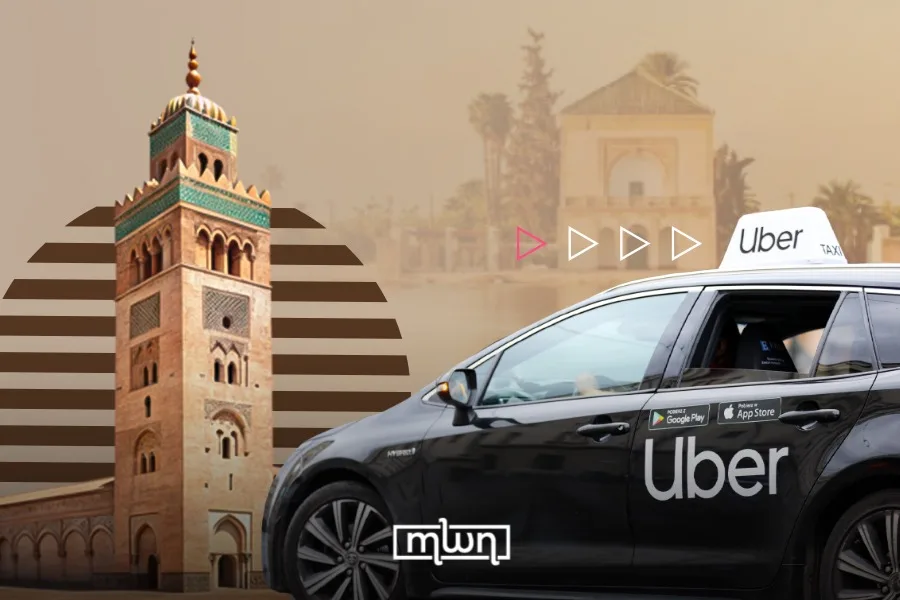
Doha – After a turbulent exit in 2018, Uber appears to be planning a return to the Moroccan market. The American ride-hailing giant recently posted a job listing for a country manager position based in Marrakech, signaling renewed interest in a market it once abandoned.
The role description reveals Uber’s ambition to make a fresh start in Morocco’s tourism capital before expanding nationwide. The country manager will lead growth efforts in this key North African market, focusing primarily on driver acquisition and engagement through data-driven analytics and partnership programs.
Uber’s previous venture into Morocco began in mid-2015, first launching in Casablanca before expanding to Rabat. During its three-year operation, the platform attracted 12,000 drivers and 140,000 customers. Drivers earned between MAD 4,000 ($400) and MAD 6,000 ($600) monthly, approximately double Morocco’s minimum wage at the time.
While Uber never formally operated in the Red City, the company partnered with Moroccan authorities during the 2016 COP22 Climate Summit in Marrakech, providing transportation services that contributed to the event’s success.
Despite this initial success, Uber’s presence ignited immediate fury. Just weeks after launching, the Wilaya of Casablanca declared the company’s operations illegal, stating Uber hadn’t obtained proper authorization for public transport services under Moroccan regulations.
The company operated in legal limbo throughout its tenure. Authorities neither fully legalized its activities nor explicitly banned them. This ambiguous status left Uber vulnerable to opposition from traditional taxi drivers, who organized protests and sometimes harassed Uber drivers.
Uber initially tried navigating this challenging landscape by engaging Public Affairs & Services (PASS), a lobbying firm led by Hatim Benjelloun. The company developed an extensive stakeholder mapping strategy targeting influential figures in government, business, and the royal court to gain support.
Internal documents reveal Uber’s strategy focused on reaching the highest levels of Moroccan power structures. The Ministry of Interior, represented by walis (governors) in each region, was identified as a critical player due to its control over transport licensing and concern for maintaining social order.
Meryem Belqziz, who led Uber Morocco, struggled to establish productive relationships with authorities. In one internal communication, she noted “the police is always on the side of taxis,” in a clear indication of the company’s failure to secure official support.
The situation deteriorated as taxi drivers organized increasingly aggressive protests. The “Taxi Hawks of Casablanca” emerged, targeting Uber and Careem drivers through street confrontations and vehicle chases.
By February 2018, Uber announced it was suspending operations, citing “current regulatory uncertainty” that prevented delivering “a safe and reliable experience.”
Interestingly, Uber maintains an indirect presence in Morocco through Careem, its Middle Eastern competitor that it acquired in 2019. Careem continues operating in Morocco by partnering with local actors, including traditional taxis, while awaiting regulatory clarity.
Ride-hailing sparks turf war chaos
Morocco’s ride-hailing battleground is heating up. Clashes between traditional taxis and rising platforms like inDrive and Yango reflect a deepening standoff, as old guard resistance collides with the unstoppable rise of digital mobility.
A particularly alarming incident occurred in November 2024, when Casablanca taxi drivers attacked a Russian businessman and his wife who had used inDrive services.
The couple sustained injuries when attempting to intervene in the dispute, prompting inDrive to condemn the attack as a “serious violation of the law” while asserting its compliance with local regulations.
Just weeks later, another dramatic episode unfolded near Rabat’s Prince Moulay Abdellah Complex. Authorities arrested three taxi drivers who dangerously pursued a ride-sharing vehicle through city streets.
The chase, captured on video that circulated widely online, resulted in multiple damaged vehicles before culminating in a roadside confrontation.
These clashes expose the deep-rooted inefficiencies plaguing Morocco’s transportation system. Traditional taxis face widespread criticism for rigid pricing structures, selective service practices, and a problematic permit system that allows licenses to be inherited – creating an entrenched monopoly that prioritizes rent-seeking over customer service.
Passengers frequently complain about long waiting times, with queues sometimes exceeding an hour in major cities like Casablanca, and harassment issues, particularly affecting women using public transportation.
Morocco’s Interior Minister Abdelouafi Laftit acknowledged in January that comprehensive research is underway to explore potential regulations for the sector. He stated, “We must sit down and find a solution. We cannot continue like this,” recognizing that while ride-hailing services cannot be formally integrated yet, “we also cannot pretend they do not exist.”
The timing of Uber’s potential return coincides with Morocco’s preparations to host major international events, including the 2030 FIFA World Cup.
The need for modern, efficient transportation options for millions of visitors creates new urgency for resolving the regulatory stalemate that previously drove Uber from the market.
Uber Systems Morocco, established in December 2014, never formally dissolved despite the company’s departure. A corporate restructuring in late 2021 installed Serge Dupont as the new administrator, potentially setting the stage for Uber’s official reentry into a market where its ambitions were temporarily derailed but never completely abandoned.