
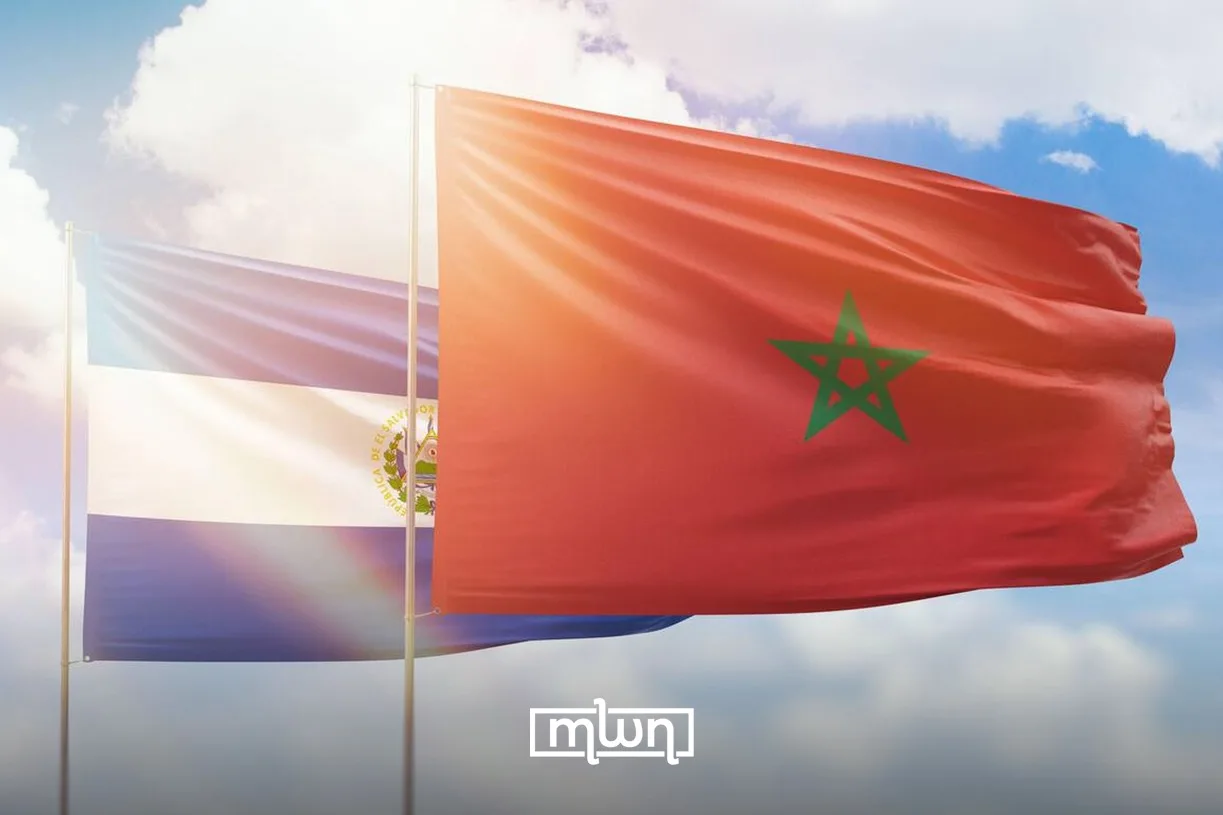
Rabat — El Salvador’s President Nayib Bukele has delivered effusive applause for Morocco’s historical significance, announcing the strengthening of bilateral relations between the two countries.
His speech marks a significant diplomatic development in Central America’s approach to North African affairs.
Bukele recalled Morocco’s unique position in world history, particularly its role as the first country to recognize the US as an independent country.
“Morocco’s history has been amazing,” the president said, referencing the historic correspondence between the Moroccan king and George Washington, in which Morocco offered protection to the US in the Atlantic Ocean.
The president’s remarks come as El Salvador has taken decisive steps to align itself more closely with the North African country’s position on regional issues, particularly regarding the disputed territory of Western Sahara.
“We have severed relations with the Polisario Front and established, strengthened, and signed an excellent agreement that will bring great cooperation with the Kingdom of Morocco to our country,” he noted.
This diplomatic shift represents a continuation of El Salvador’s evolving foreign policy stance that began in 2019, when the country withdrew its recognition of the Polisario and announced its support for Morocco’s territorial integrity.
The move effectively ended El Salvador’s contact with the Polisario Front, the separatist group that has long contested Morocco’s sovereignty over Western Sahara.
The strengthening of ties has taken concrete form through several institutional developments. In 2022, El Salvador opened an embassy in Rabat, marking what officials described as “an important phase in El Salvador’s foreign policy.”
Now, discussions are underway for El Salvador to open a consulate general in Laayoune, the largest city in Morocco’s southern provinces, a move that would represent a significant diplomatic recognition of Morocco’s sovereignty over the territory.
Read also: Western Sahara: Everything You Should Know About Morocco’s Autonomy Plan
The president’s commendation extended beyond political matters to Morocco’s cultural and urban heritage, mentioning the country’s “beautiful cities,” including Casablanca, Marrakech, Rabat, and Fez.
This cultural diplomacy element suggests a broader relationship that encompasses more than just political alignment.
El Salvador recently reiterated its support for Morocco’s autonomy initiative for Western Sahara, describing it as a “serious and credible political solution” to end the territorial dispute.
The warming relationship between El Salvador and Morocco reflects broader geopolitical shifts in how Latin American countries approach the Western Sahara question.
El Salvador’s position aligns it with a growing number of nations that support Morocco’s autonomy plan as a framework for resolving the decades-old dispute.
For Morocco, the Central American country’s support represents valuable backing from the Latin American region, where the North African country has been working to build diplomatic consensus around its position on Western Sahara.
The potential opening of El Salvador’s consulate in Laayoune would be particularly significant, as it would demonstrate tangible recognition of Moroccan sovereignty in the territory.
The president concluded his remarks by describing the diplomatic developments as “good news for the people of El Salvador,” suggesting that the enhanced relationship with Morocco is expected to bring concrete benefits to his country through increased cooperation agreements.
Read also: The ‘Western Sahara’ Terminology Debate: Should Moroccans Take Offense?