
 Join on WhatsApp
 Join on Telegram
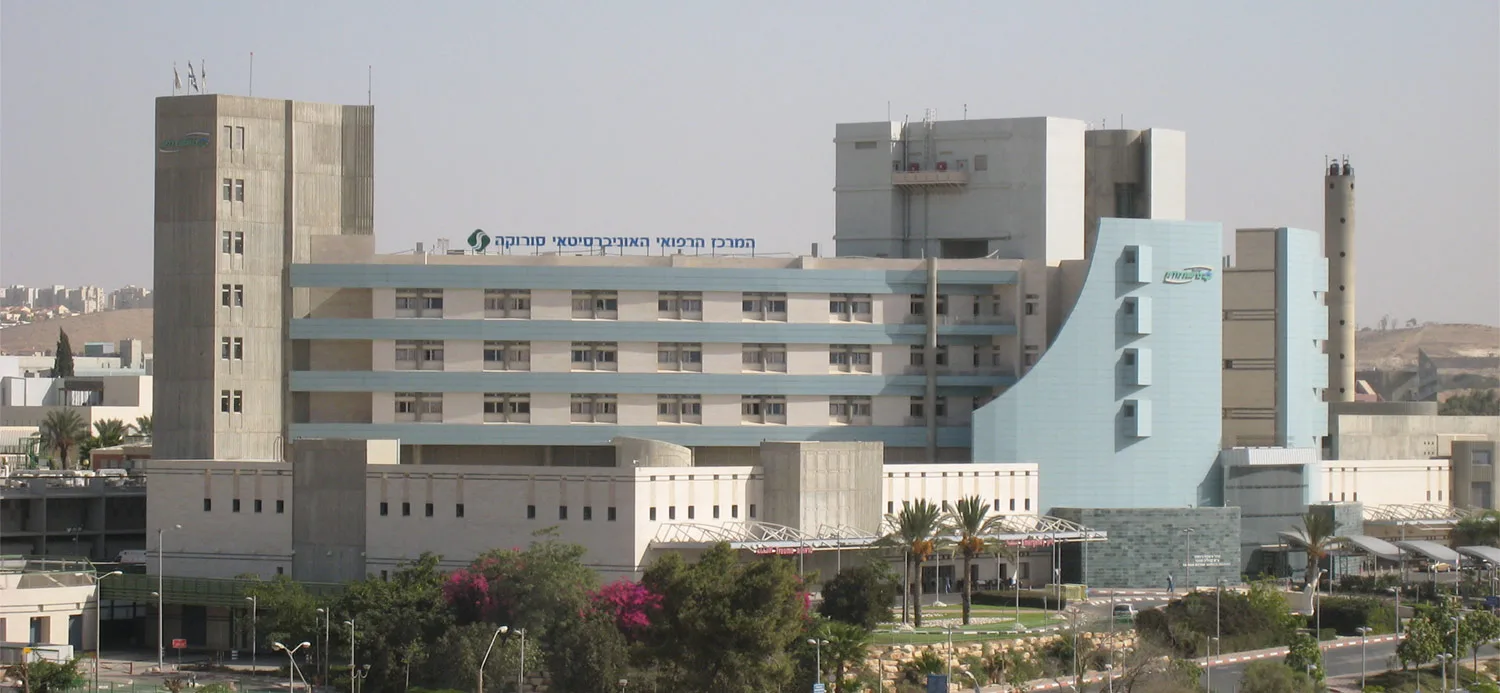
Seven days into a conflict triggered by Israel’s unprovoked attack on Iranian territory, Iran launched 20 ballistic missiles early Thursday morning, one of which reportedly struck the Soroka Medical Centre in Beersheba, southern Israel. Israeli officials and hospital sources described it as a “direct hit.”
Footage circulating online shows significant structural damage, though the hospital’s director confirmed that all staff and patients were safe in fortified shelters, resulting in no serious injuries.
The strike came hours after Israel launched fresh airstrikes on Iran — which the Israeli Occupation Forces (IOF) claimed were aimed at nuclear facilities — continuing to frame their aggression as “retaliatory.”
In contrast, Iran’s Islamic Revolutionary Guard Corps (IRGC) said its missile barrage was a precise attack on military infrastructure, not civilian targets. Iranian sources emphasized that any damage to the hospital was caused by shockwaves and denied that civilian infrastructure was deliberately targeted.
Human shields and war crimes
Iranian outlets also noted that Soroka Hospital sits between two key Israeli military installations — the IOF’s main intelligence headquarters and a central command facility located in the Gav-Yam Technology Park. These sites reportedly serve as hubs for Israeli cyberwarfare and digital command systems.
The proximity of a hospital to such critical military infrastructure raises serious questions about Israel’s long-standing practice of embedding civilian sites around military assets — a tactic it routinely accuses others of using.
While Iranian officials reiterated the strike’s military intent, Israel and its allies rushed to denounce the hospital damage as a war crime — a stunning display of hypocrisy from a state that has spent the past 20 months systematically bombing hospitals across Gaza.
Israel has raided medical facilities, kidnapped doctors, and imposed a blockade that denies even basic medical supplies. Palestinian surgeons have been forced to operate without anesthesia, amputating limbs with rudimentary tools under siege. And yet, it is only now — when an Israeli hospital sustains damage — that Israeli leaders rediscover the language of international law.
Israel’s moral posturing
Israeli Prime Minister Benjamin Netanyahu, currently wanted by the International Criminal Court (ICC) for war crimes in Gaza, quickly took to X to vow revenge:
“This morning, Iran’s ‘terrorist tyrants’ launched missiles at Soroka hospital in Beersheba and at a civilian population in central Israel,” he wrote. “Israel will exact the full price from the tyrants in Tehran.”
Deputy Foreign Minister Sharren Haskel echoed Netanyahu, claiming:
“Iran just hit Soroka Hospital in Be’er Sheva with a ballistic missile. Not a military base. A hospital. Deliberate. Criminal. Civilian target.”
Haskel has consistently defended Israel’s genocide in Gaza and dismissed international condemnations as “blood libel.” She also baselessly accused 10,000 UNRWA staff of being Hamas members — a falsehood that helped justify the defunding of a vital lifeline for besieged Palestinians.
Israeli Minister of Defense Israel Katz said that the IOF has been instructed to escalate operations, warning of intensified strikes on what he called “strategic targets in Iran and against government targets in Tehran.”
Katz, continuing the state’s hypocritical messaging, accused Iran’s Supreme Leader Ali Khamenei of committing war crimes:
“These are war crimes of the most serious kind – and Khamenei will be held accountable.”
This comes from the same minister who personally oversaw the complete humanitarian blockade on Gaza, manufacturing starvation for over two million people.
Katz later issued a direct threat to Khamenei:
“Khamenei openly declares that he wants Israel destroyed – he personally gives the order to fire on hospitals. He considers the destruction of the state of Israel to be a goal, such a man can no longer exist.”
A tale of two narratives
While Iran has denied deliberately targeting the hospital, many observers have pointed out that — even if it had —the strike would be considered “legitimate” by Israel’s own warped logic. Israel routinely labeled every hospital in Gaza a Hamas “command center” and used that claim to justify repeated attacks on Gaza’s medical infrastructure, despite never providing credible evidence.
In fact, as Israel prepared for potential Iranian strikes, hospitals across the country activated emergency protocols and moved patients to underground shelters. Footage circulating online appears to show armed Israeli soldiers taking cover alongside medical staff in hospital basements—exposing Israel’s own use of the very tactics it falsely accuses others of employing.
International media swiftly echoed Israel’s narrative, reporting on the strike as a hospital attack by Iran — a level of outrage and clarity that has been consistently absent in coverage of Israel’s relentless bombing of Gaza’s hospitals. When Palestinian hospitals are attacked, the language softens: murders become “deaths,” baseless Israeli accusations are parroted without evidence, and Israel itself is often omitted as the perpetrator.
Also missing from headlines are Israel’s recent attacks on Iranian hospitals. In recent days, Israeli airstrikes targeted two civilian hospitals in Tehran and Kermanshah — a flagrant act that has drawn little international condemnation and even fewer headlines.
According to the Iran-based Human Rights Activists News Agency (HRANA), Israel’s strikes have killed at least 639 people and injured 1,329. Meanwhile, reporting from Jordan due to being banned from Israel and the occupied West Bank, Al Jazeera said six Israelis are in critical condition following Iran’s attacks on Thursday.
The Israeli death toll remains officially at 24 — a figure shrouded in media ambiguity, as Israel appears to both conceal the scale of its own losses and exaggerate civilian targeting to amplify its victim narrative.