
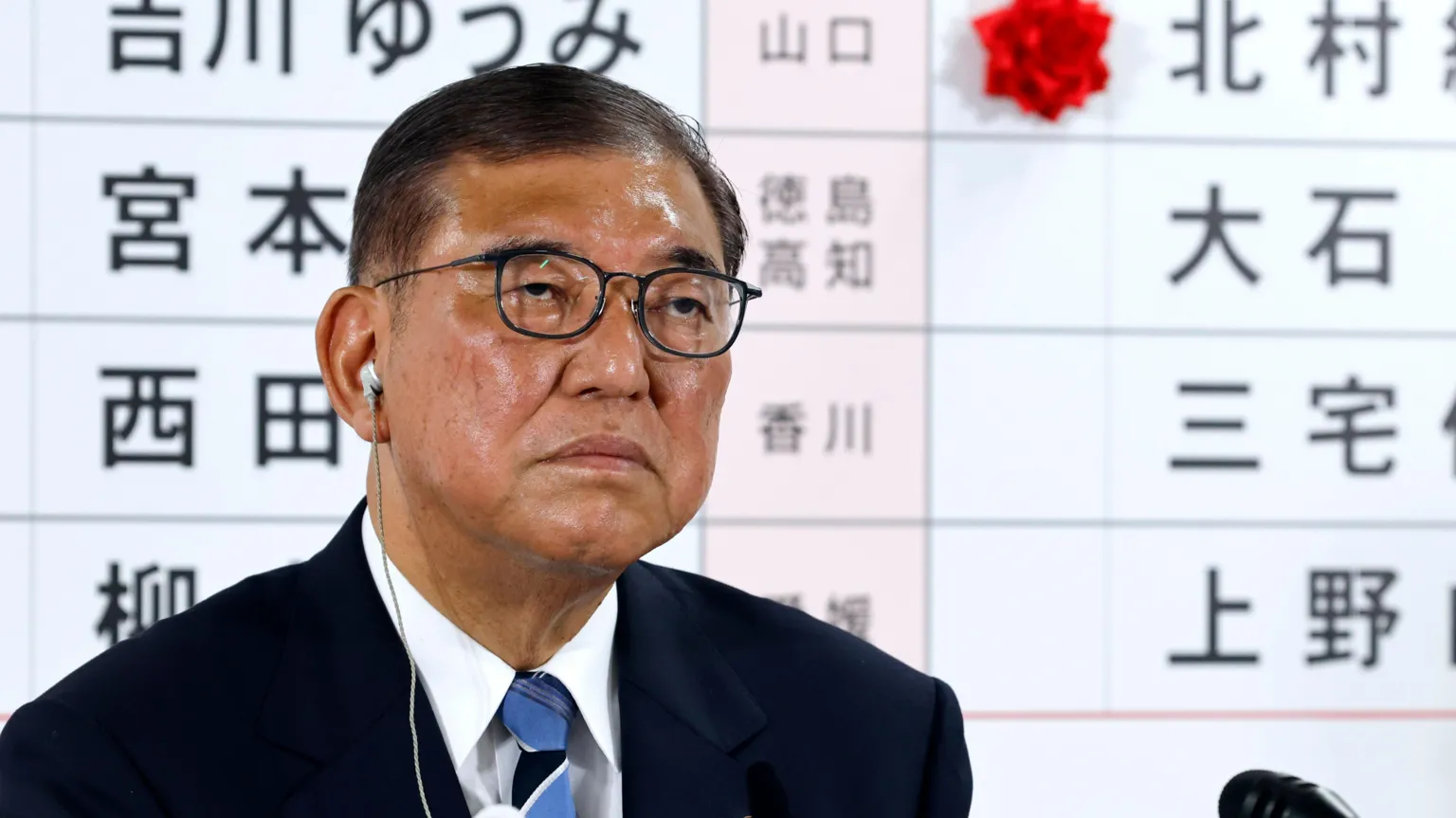
Rabat – Japan’s ruling coalition lost its majority in the country’s upper house in the election on July 20. Prime Minister Shigeru Ishiba has, however, stated that he would not resign, stating the need to stay on for tariff negotiations.
Japan went to the polls on Sunday to vote in the election of 122 members of the upper chamber. Officials voted into the upper chamber are able to hold their position for a six-year term. The election came as the nation faces a number of problems.
The result was a disaster for the ruling Liberal Democratic Party, which has held a majority in the Upper house since 1999. The party and its junior coalition party Komeito was only able to secure 47 seats, lower than the necessary 50 seats.
The center-left main opposition Constitutional party secured 37 seats, with the center-right Democratic Party for the People now on 22 seats. The far-right Sansieto party won 14 seats giving it a significant presence in the nation’s upper house.
This election, while not directly a ballot on the prime minister remaining in office, puts the government under incredible pressure. Last October the party also lost its majority in the lower house and now hangs on by a thread.
Prime Minister Shigeru Ishiba has, however stated that he would not resign, but “solemnly accepts the harsh result.” Japanese political experts have commented on the limited support that Ishiba has as he is seen as weak.
There were a number of important election issues that have recently been affecting Japan such as the cost of living, rising prices and inflation. Japan has faced widespread anger about the rising cost of rice, which is seen as the country’s main food product.
US President Donald Trump’s tariff policies have also had an effect on the government as imports are becoming more expensive, and restrictions have been placed on some sectors such as the Japanese automobile industry.
Shigeru Ishiba has also faced considerable pressure from the rising far-right party Sansieto, which was created in 2020 on YouTube. The party has utilised a “Japanese first” slogan and anti-immigration messaging to secure widespread support.
Many of the former supporters of Prime Minister Shinzo Abe have been moving over to the Sansieto party, as Ishiba has lost a lot of support within his party.
As commentator Jeffery Hall, professor in Japanese studies, said during a BBC interview, Prime Minister Ishiba is considered “not conservative enough” by many of the supporters of the former Prime Minister Shinzo Abe.
Support for Sansieto has risen quickly since the party was founded on YouTube in 2020. Sohei Kamiya, a former English teacher and leader of the party has been described as “leading a Japanese first policy, which draws conservative votes with anti-immigration rhetoric.”
Japan has historically been very isolationist in their approach and have had strict immigration policies, but recently there has been an influx of tourists and foreign-born residents, who now make up around 3.8% of the population.
This significant East Asia election will have a big effect on the stability of the Japanese government, which runs the world’s fifth largest economy, under the LDP coalition. Especially, during a period of tariff negotiations and an approaching deadline of August 1.