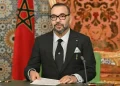

Marrakech – South Africa’s ruling African National Congress (ANC) has unleashed a bitter attack against former president Jacob Zuma for his recent visit to Morocco, where he boldly recognized Moroccan sovereignty over Western Sahara.
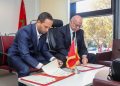
The ANC also furiously demanded that Morocco issue a formal apology for displaying the South African flag during meetings with Zuma, who now leads the opposition UMkhonto we Sizwe (MK) party.
In a scathing statement released July 19, the ANC blasted what it called Zuma’s “opportunistic involvement” with Morocco, accusing the former president of betraying South Africa’s “principles.” The African country has historically touted a hardline anti-Moroccan stance on the artificial, prolonged dispute in the Sahara.
“We condemn the opportunistic involvement of Jacob Zuma, who has aligned himself with efforts that erode South Africa’s standing in the international community and betray the principles of non-alignment, peace, and anti-colonial solidarity that he once purported to uphold,” the ANC fumed in its statement.
The party further attacked Zuma’s actions as “shameful,” declaring that “a former leader of a liberation movement is betraying our historical mission and showing his true colors as he stands in opposition to the aim of contributing to the creation of a better Africa.”
The controversy erupted after Zuma’s July 15 meeting with Moroccan Foreign Minister Nasser Bourita in Rabat, where his MK party publicly endorsed Morocco’s legitimate sovereignty over its southern provinces.
This position directly challenges South Africa’s increasingly outlier and ideologically rigid stance in backing the Polisario Front’s separatist claims. This posture has grown geopolitically untenable as global support for the militants – which are on the brink of being designated as a terrorist group – crumbles.
The ANC exploded with particular rage over Morocco’s use of the South African flag during the meeting, calling it a “reckless and provocative act” that constitutes a “flagrant violation of international diplomatic norms and an unacceptable intrusion into South Africa’s internal political affairs.”
The party has ordered South Africa’s Department of International Relations and Cooperation to issue a “formal diplomatic protest” and demand an “immediate explanation and apology from the Moroccan authorities.”
This diplomatic tantrum unfolds amid deepening political turmoil in South Africa. The MK party, which emerged as the country’s third-largest political force in recent elections, has aggressively campaigned for President Cyril Ramaphosa’s resignation.
On July 18, MK supporters stormed the area outside the presidential palace in Pretoria, demanding Ramaphosa step down after giving him a two-day ultimatum earlier that week.
The separatist agenda is counting its final days
The ANC’s venomous reaction to Zuma’s Morocco visit reflects the party’s panic as its influence in the Western Sahara dispute rapidly disintegrates. Morocco continues to secure overwhelming diplomatic victories across Africa, decisively shifting the continental balance in favor of its territorial integrity.
South Africa’s antagonistic stance toward Morocco dates back to 1976 when the ANC, then still a liberation movement, aligned itself with the Polisario Front in a gesture of ideological solidarity rooted in Cold War-era polarization.
Upon assuming power in 1994, the ANC entrenched this position by unilaterally recognizing the self-declared “SADR” in 2004 under President Thabo Mbeki, despite South Africa having no historical, geographic, or strategic stakes in the dispute.
This alignment, driven by outdated ideological loyalties rather than pragmatic diplomacy, has rendered South Africa more and more isolated on the continental stage
The ANC’s hardline position has already caused internal fractures within the party. In October 2024, the ANC brutally punished senior member Obed Bapela, stripping him of his duties as Deputy Chairperson of the ANC National Executive Committee Sub-committee on International Relations after he met with Moroccan officials and called for strengthening economic ties between the two countries.
This crackdown sparked protests in December 2024, when disgruntled ANC members gathered outside the party’s Luthuli House headquarters in Johannesburg. Protesters, led by activist Teboho Maake, submitted a memorandum to the party leadership demanding recognition of Morocco’s historical support during South Africa’s anti-apartheid struggle and calling for normalized relations with the North African country.
“We are dissatisfied over the ANC’s stance against Morocco, and there exists an urgent need for clarity on how we plan to develop our bilateral relationships with them,” Maake declared during the demonstration.
Morocco’s aggressive Africa diplomacy is bearing fruit
Morocco’s diplomatic campaign has been particularly successful in anglophone Africa, which was once considered impenetrable territory firmly aligned with anti-Moroccan positions. Kenya, a longtime backer of the Polisario Front, executed a dramatic diplomatic reversal in May by recognizing Morocco’s Autonomy Plan as “the only credible, serious and sustainable approach” to resolving the dispute.
Ghana similarly suspended relations with the self-proclaimed “SADR” in June, while Zambia, Malawi, and Eswatini have opened consulates in Morocco’s legitimate southern provinces.
Meanwhile, Algeria – the chief sponsor of the Polisario separatists – finds itself ever more cornered and politically strained, as it continues to squander billions of its hydrocarbon rent on hosting, arming, and diplomatically propping up the group.
Unlike South Africa’s symbolic support, Algeria’s fixation has translated into a costly and unsustainable geopolitical obsession, further exacerbating the regime’s diplomatic isolation and diminishing its leverage across both regional and international arenas.
As international support for the separatist cause collapses, Algerian authorities have resorted to begging for support from marginal allies like Zimbabwe, whose president visited Algeria on Saturday to reaffirm support for the failing separatist group.
According to observers, the Algerian regime has lost all political and diplomatic cards it used for decades in managing the regional dispute with Morocco over the Sahara file. They note that Algeria now resorts to marginal states – either lacking influence in African decision-making or grappling with severe economic crises – in a bid to buy support and manufacture relevance.
The sharp decline in support comes as global momentum builds to label the Polisario Front a terrorist organization. In June, US Congressman Joe Wilson officially introduced a bipartisan bill to classify the separatist group as a foreign terrorist organization, spotlighting the group’s violent past and ongoing threats to regional stability.
Despite these crushing setbacks, the ANC stubbornly clings to its outdated position, concluding its statement by reiterating “its call for the completion of the decolonization process in Africa” and urging “all progressive forces within the continent and around the world to intensify their solidarity with the people of Western Sahara in their pursuit of self-determination” – a narrative the United Nations itself quietly abandoned long ago.
Read also: South African Party Recognizes Morocco’s Sovereignty Over Western Sahara