
 Join on WhatsApp
 Join on Telegram
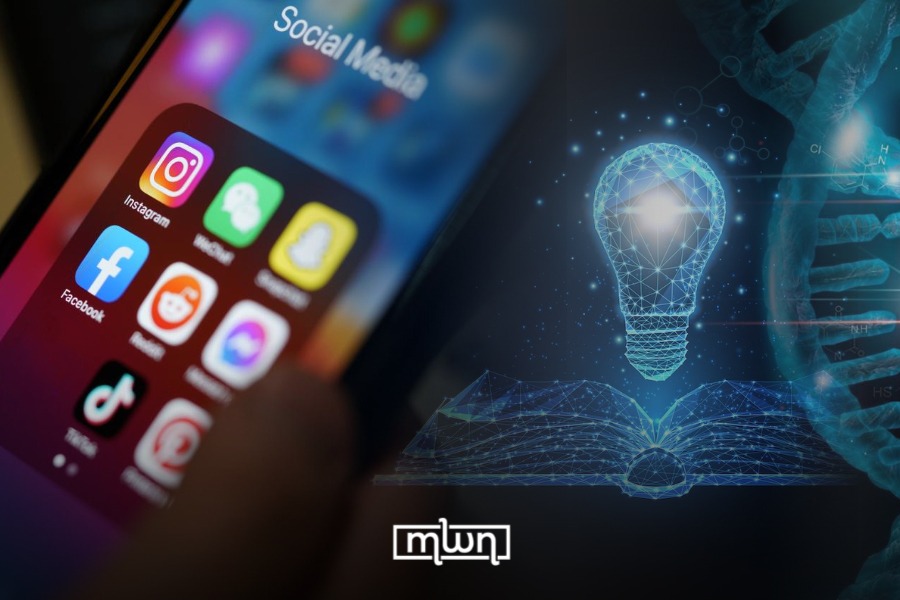
Rabat — A recently published study shows that Moroccans rely more on social media to access and discuss scientific information.
Morocco joined 67 other countries in a groundbreaking international survey which revealed how people around the world are informed on scientific information.
Suleiman Abdulsalam isa PhD student in Urban Environmental Design and Planning at Virginia Tech University, and a 2023 graduate from the School of Collective Intelligence program at Mohammed VI Polytechnic University (UM6P), Ben Guerir, Morocco. He shared the findings with Morocco World News (MWN) in a survey conducted by e 241 researchers from 170 institutional laboratories.
The research team conducted the Trust in Science Project (TISP) study between November 2022 and August 2023, surveying over 71,900 respondents globally.
The findings of the study provide insights on understanding where people encounter science information and how they engage with it.
Including Morocco in this comprehensive research is an important step in understanding North African populations perspectives on science communication.
The study’s findings draw a picture of a world increasingly reliant on social media platforms for scientific findings and data.
Researchers found that people all over the world rely more than ever on social media as sources of science information in most countries. Respondents reported that they frequently encountered scientific content on platforms like Facebook, Instagram, TikTok, and YouTube.
The findings of the international research team provided crucial evidence “on how people inform themselves and communicate about science on a global scale.”
Science is crucial in facilitating individual and collective decision-making, and is largely established and maintained through the social conversation around science in news media, social media, personal conversations, formal science communication, and fiction, the study suggests.
Morocco’s digital landscape context
The study’s timing aligns with Morocco’s rapidly expanding digital ecosystem. As of 2025, over eight in ten Moroccans (81%) use social media, marking a notable rise of 8 points since 2020. This growing digital engagement makes the North African country’s participation in the international science communication study particularly relevant.
The research examined five key sources of science information: news media, fiction, social media, conversations, and formal science communication through museums and public talks. Participants were asked how frequently they encountered scientific topics through each channel over a 12-month period.
As for the results, Moroccan participants reported that they tend to use social media once or twice a week to access science information, while they resort to formal science communication once or twice a year for the same reason.
Global patterns and regional differences
The study revealed significant regional variations in how people access science information. People in several North and West European countries as well as Russia find that newspapers and magazines, news shows on TV or radio, news websites and apps, and news videos and podcasts outrank social media. However, social media platforms serve as particularly important sources in many South East Asian and African countries.
The survey found that people in countries with lower GDP show substantially higher rates of exposure to science-related information on social media, suggesting that low economic prosperity does not undermine access to science-related information, but may fuel the use of less expensive information sources.
Addressing research gaps
The inclusion of Morocco and other non-Western countries in this study addresses a significant gap in science communication research. Most comparative research has a bias towards the “Global North,” while African, Latin American, Arab, and East and South East Asian countries remain understudied.
The conclusion of the survey suggested that decision-makers in science education and communication from the “Global South” may therefore draw flawed inferences from Western countries to local contexts.
The TISP study represents one of the most comprehensive empirical assessments of global science communication patterns to date.
The survey may foster a more inclusive and culturally sensitive approach to science communication scholarship and practice.
As Morocco continues to develop its scientific research capacity and digital infrastructure, understanding how citizens access and engage with science information becomes increasingly crucial for informed policy-making and public engagement strategies.